CREATE
  • Technology
    • BIOTECH
    • COMMUNICATIONS
    • COMPUTING
    • IMAGING
    • MATERIALS
    • ROBOTICS
    • SOFTWARE
  • Industry
    • DEFENCE
    • INFRASTRUCTURE
    • INNOVATION
    • MANUFACTURING
    • POLICY
    • PROJECTS
    • TRANSPORT
  • Sustainability
    • ENERGY
    • ENVIRONMENT
    • RESOURCES
  • Community
    • CULTURE
    • PEOPLE
  • Career
    • EDUCATION
    • INSPIRATION
    • LEADERSHIP
    • TRENDS
  • About
    • CONTACT
    • SUBSCRIBE
No Result
View All Result
CREATE
  • Technology
    • BIOTECH
    • COMMUNICATIONS
    • COMPUTING
    • IMAGING
    • MATERIALS
    • ROBOTICS
    • SOFTWARE
  • Industry
    • DEFENCE
    • INFRASTRUCTURE
    • INNOVATION
    • MANUFACTURING
    • POLICY
    • PROJECTS
    • TRANSPORT
  • Sustainability
    • ENERGY
    • ENVIRONMENT
    • RESOURCES
  • Community
    • CULTURE
    • PEOPLE
  • Career
    • EDUCATION
    • INSPIRATION
    • LEADERSHIP
    • TRENDS
  • About
    • CONTACT
    • SUBSCRIBE
No Result
View All Result
CREATE
No Result
View All Result
Home Sustainability Energy

Water requirements for green hydrogen

Larissa Foster by Larissa Foster
13 August 2025
in Energy, Features
Reading Time: 3 mins read
2
Water requirements for green hydrogen

Australia’s green hydrogen future is not certain. Image: Getty

Green hydrogen plays a key role in Australia’s decarbonisation roadmap and international positioning. Its future in Australia remains uncertain, however, as a web of technological, environmental and governance challenges present an impediment to successful project deployment.

Asemeh Pousti of La Trobe Business School is addressing the potentially fatal gaps in this complex interplay. Harnessing her 20 years’ experience in academia and project development, her unique business decision support model aims to address the sustainable freshwater supply chains required for green hydrogen production in Australia. 

“A key insight of my work is that freshwater, often overlooked, is the critical feedstock for green hydrogen,” she told create ahead of her presentation to Engineers Australia’s Climate Smart Engineering (CSE) 2025 conference from 27-28 August.

The fuel of the future

The Federal Government’s National Hydrogen Strategy has set ambitious green hydrogen production targets, aiming to establish Australia as a major global clean energy exporter.

But as Pousti points out, green hydrogen production demands a significant volume of high-purity freshwater to ensure safe and efficient electrolysis. A large-scale one-gigawatt hydrogen plant producing 400 t of hydrogen per day would require around 10 million L of freshwater – the equivalent of four Olympic-sized swimming pools – to do so.

“In a water-stressed country like Australia, this poses major environmental and planning challenges,” she said. “Australia currently has no operational large-scale green hydrogen facilities, but several are imminent. This makes it an urgent time to ask, do we have a plan for sustainable freshwater supply?”

Freshwater required to produce 400 t of hydrogen
0 million L

A fragmented industry

Key barriers to sustainable production of green hydrogen relate to the siloed nature of the nascent industry. Planning gaps are common and intersectional collaboration is often missing. While chemical engineers are working on improving electrolyser efficiency, others are independently tackling storage, transportation and vehicle design.

Certification and standards are taking the spotlight in regions such as Europe and Japan. Elsewhere, governments such as Australia’s are setting broad strategies without always addressing the policy and resource realities such as water, and brine management from desalination.

“There will be an AI integrated model in the system as well, just to make it a little bit smarter to make optimised decisions and suggestions.”
Asemeh Pousti

“The Australian Government has a hydrogen strategy, and there are amazing incentives,” she said. “But water is basically managed at the state level, so it’s totally fragmented.”

One reason for freshwater’s often overlooked status in the pursuit of a green hydrogen industry is its low cost. Currently the water required to produce one kilogram of hydrogen is less than one per cent of the total cost.

By 2050, this price is estimated to rise to up to 5 per cent of the total cost – but more importantly, Pousti pointed out, this does not address the compelling need for a sustainable supply of water that will make green hydrogen truly “green”.
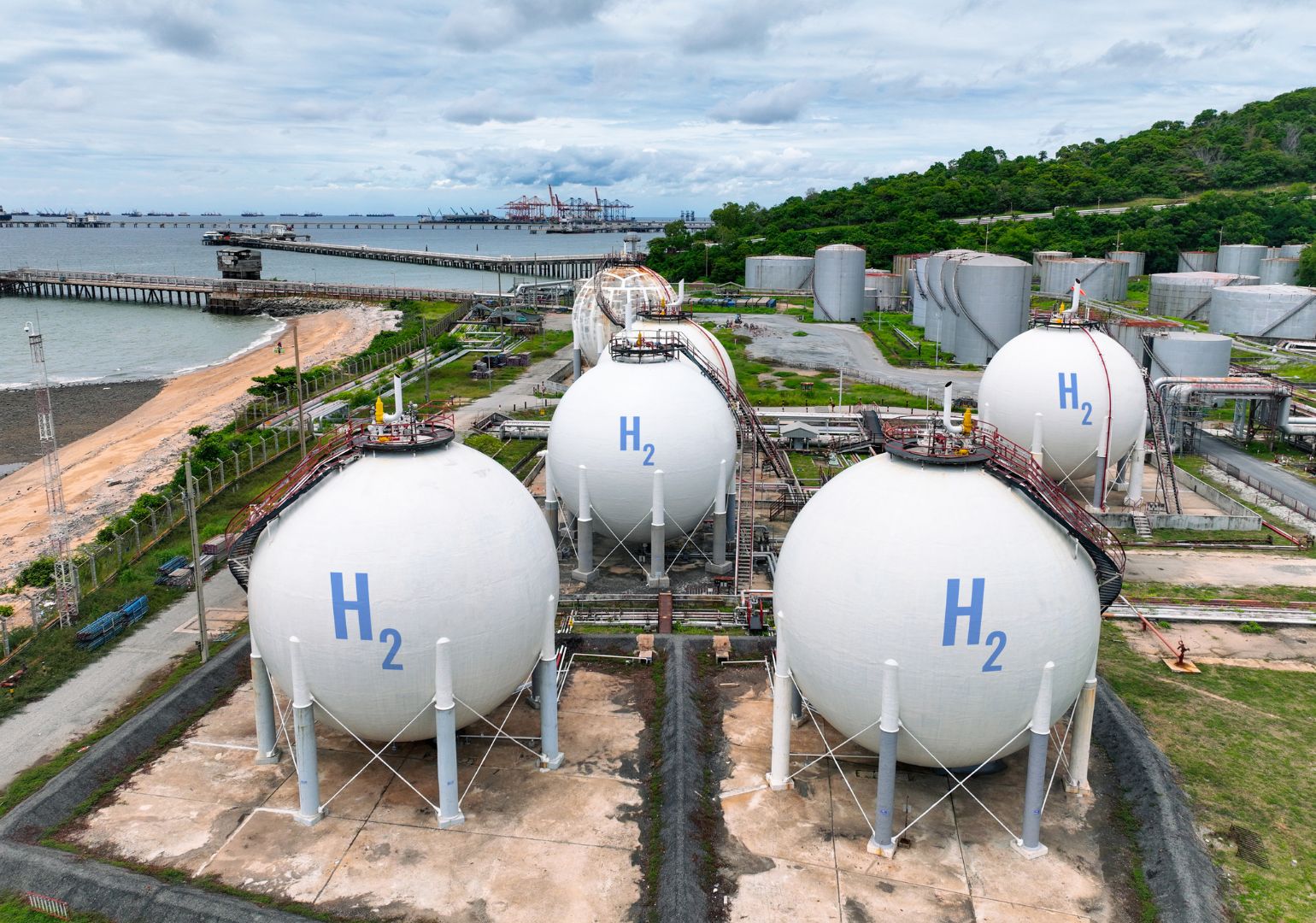

A new model will help water authorities conduct hydrogen plant feasibility studies. Image: Getty

A model for the future

A global first, Pousti’s research is focused on developing a dynamic and flexible model for freshwater allocation, based on real time decision-making. Taking a business development perspective, it aims to address the gaps in current systems by considering a broad range of factors including location, certification and water allocation.

“The model will analyse what type of water sources are available in the location, the weather conditions and any government or state policies on the usage of water, the price and so on,” she explained. “It’s a model for a decision support system, so it will combine all these things and come up with a ranking for the decision-makers.”

“Australia has this great potential when it comes to green hydrogen, but to make this happen, the current fragmented kind of work will not give us a reasonable result.”
Asemeh Pousti

The model will be adaptable around the world and also help water authorities conduct feasibility studies allocating their resources to hydrogen plants and other projects.

“So it has multiple factors, and there will be an AI integrated model in the system as well, just to make it a little bit smarter to make optimised decisions and suggestions.”

The model’s timeline remains an open question. It can only be tested when more green hydrogen plants become operational (“this is my main challenge”) and once launched, it will play just one part in realising Australia’s green hydrogen future, Pousti said.

“Australia has this great potential when it comes to green hydrogen, but to make this happen, the current fragmented kind of work will not give us a reasonable result. So the policy-makers, the scientists, the business developers, they have to all come together to make this happen.”

Tags: water engineeringdecarbonisationgreen hydrogen
Previous Post

Can technology bridge the net-zero skills gap?

Next Post

Fibre-optic finesse

Larissa Foster

Larissa Foster

Related Posts

New engineering competency standard set to meet industry demands
Career

New engineering competency standard set to meet industry demands

27 August 2026
How smart glasses technology could aid visually impaired people
Features

How smart glasses technology could aid visually impaired people

25 August 2026
Are machine swarms the future of robotics?
Features

Are machine swarms the future of robotics?

25 August 2026
Next Post
Fibre-optic finesse

Fibre-optic finesse

Comments 2

  1. Furat Dawood says:
    1 year ago

    Hi Larissa,
    Thanks for sharing the Create Digital piece. After reviewing it, I’m concerned it may leave readers with the impression that green hydrogen must draw on scarce freshwater. In practice, electrolysers need ultra-pure, deionised water at the point of use—but the source water can be seawater, brackish groundwater, recycled municipal water, or rainwater, provided it’s treated (e.g., RO + EDI) to the required purity.
    A few clarifications with numbers:
    1. How much water is actually needed? Chemically, producing 1 kg of H₂ consumes ~9 L of water. Allowing for realistic treatment and process losses, most projects plan on ~10–16 L/kg; designs that include evaporative cooling can sit higher, but closed-loop or dry cooling keeps total make-up low.
    2. Desalination energy is modest relative to the energy in the hydrogen. Modern seawater RO typically uses ~3–5 kWh per m³ of product water; best-in-class new plants are nearer ~<3 kWh/m³. One cubic metre of desalinated water therefore supplies make-up for roughly 60–100 kg of H₂ (depending on whether you assume ~10–16 L/kg), whose chemical energy is ~2.0–3.3 MWh (LHV). Even after conversion losses, that’s a substantial amount of useful energy.
    3. Putting that in everyday terms. The LHV of hydrogen is ~33.3 kWh/kg (HHV ~39.4 kWh/kg). Typical Australian household electricity use is ~18–21 kWh/day (AER benchmarks vary with household size and climate). So 2.0–3.3 MWh of hydrogen energy content equates to roughly ~95–160 homes’ daily electricity before conversion losses.
    4. Context with household water use. Urban Australians commonly use ~300 L of water per person per day (city and season dependent). Against that backdrop, the 9–16 L/kg requirement for green hydrogen (sourced from non-potable supplies) is comparatively small.
    Bottom line: green hydrogen does not need to compete with freshwater if projects tap seawater, brackish aquifers, or recycled sources and treat them appropriately. The water-to-hydrogen numbers are small in context, and the energy penalty for desalination is minor relative to the energy stored in the hydrogen.
    For reference, here’s the article you shared and a technical explainer on realistic water use in green hydrogen (please see Figure 1: IRENA Water consumption of hydrogen in 2050 compared with selected sectors today (billion cubic metres): https://carbonbuddy.substack.com/p/is-the-green-hydrogen-economy-a-threat

    Warm Regards,
    Furat dawood

    Reply
  2. Dr Mohammad Amin Shoushtari says:
    12 months ago

    Thanks sharing this informative interview.

    Reply

Leave a Reply Cancel reply

Your email address will not be published. Required fields are marked *

create is brought to you by Engineers Australia, Australia's national body for engineers and the voice of more than 120,000 members. Backing today's problem-solvers so they can shape a better tomorrow.
  • ABOUT US
  • CONTACT US
  • SITEMAP
  • PRIVACY POLICY
  • TERMS
  • SUBSCRIBE

© 2024 Engineers Australia

No Result
View All Result
  • Technology
    • BIOTECH
    • COMMUNICATIONS
    • COMPUTING
    • IMAGING
    • MATERIALS
    • ROBOTICS
    • SOFTWARE
  • Industry
    • DEFENCE
    • INFRASTRUCTURE
    • INNOVATION
    • MANUFACTURING
    • POLICY
    • PROJECTS
    • TRANSPORT
  • Sustainability
    • ENERGY
    • ENVIRONMENT
    • RESOURCES
  • Community
    • CULTURE
    • PEOPLE
  • Career
    • EDUCATION
    • INSPIRATION
    • LEADERSHIP
    • TRENDS
  • About
    • CONTACT
    • SUBSCRIBE