
Autonomous systems are not merely an aspiration for the future, but a part of day-to-day life. Here are five ways automation is already embedded in some of the country’s most complex engineering operations.
Australian experts in autonomous systems see a bright future for automated technology, from high-tech space and mining operations to aerial taxis that promise to shuttle passengers between Brisbane locations during the 2032 Olympic Games.
But autonomy is more than a theoretical hope; it’s already a part of everyday life. Key industries have embraced digitisation and, as these examples show, independent systems can be integrated into existing operations safely, ethically and responsibly.
1. Rio Tinto: AutoHaul autonomous train
Rio Tinto’s AutoHaul train was a milestone for not just Australia but also the world. Shuttling iron ore from the Pilbara to coastal port facilities about 800 km away, AutoHaul is history’s first automated, heavy-haul, long-distance rail network.
Ever since conducting its debut loaded run in July 2018, the system has seen the 2.4 km long train transport ore from 16 mines to four port terminals. Although AutoHaul is operated by onboard computers as well as from a Perth operations centre, to ensure safety, cameras allow the trains to be constantly monitored and CCTV cameras are in use at public rail crossings.

According to Michelle Keegan, the previous director of the Australian Remote Operations for Space and Earth consortium, automated systems such as these are vital to the efficiency of Australia’s mining sector.
“In Western Australia, we are the largest iron ore producer in the globe,” she said. “We mine four times more iron ore than 20 years ago at the beginning of the iron ore boom, and we weren’t able to get there without being able to automate the equipment.”
2. Ocius: Bluebottle marine drone
Sydney-based Ocius began developing maritime drones in 2007, when a US admiral asked founder Robert Dane if it were possible to create a vessel that could stay at sea forever. Much research and many prototypes ensued, and today the company provides its Bluebottle drones to defence contractors and the Australian and New Zealand navies for such purposes as surveillance, anti-submarine warfare and border monitoring.
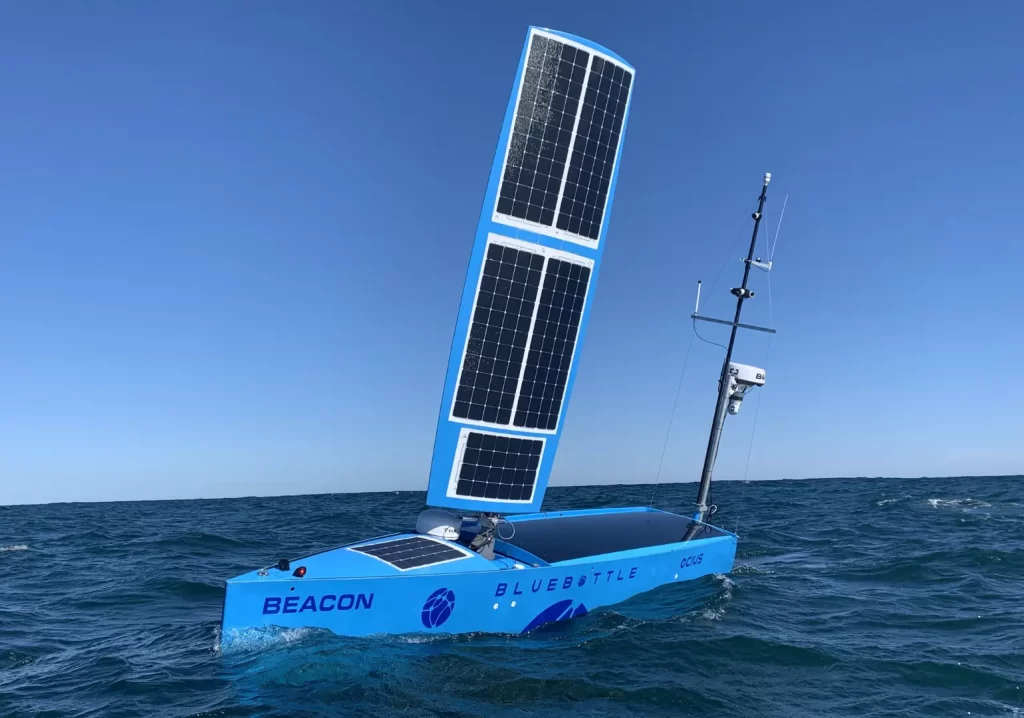
Powered by solar, wind and wave energy, the drones’ most recent record for time at sea is 127 days, and the fleet has traversed 145,000 nautical miles in its lifetime. With a five-knot hull speed and 300 kg payload, the seven-metre-long vessel is still small enough to be launched from a standard boat ramp.
3. SwarmFarm: Agricultural robotics
While many industries see productivity as the primary goal of automation, according to University of Sydney Professor Salah Sukkarieh, agriculture began exploring robotics due to labour shortages.
“It was just about the fact that I can’t get somebody to harvest,” he said farmers were thinking. “I can’t get people to come in and plant or spray.”
However, once those systems were in place, automated systems could use sensors and data processing to improve decision-making, increase yield, or deploy chemicals more precisely.

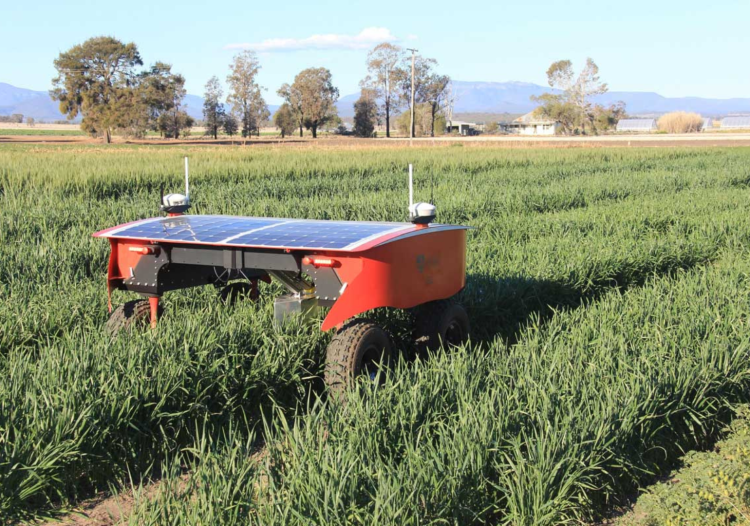
SwarmFarm, a company based in Emerald in Central Queensland, has helped provide all these benefits and more through its collection of agricultural robots. The company delivered Indigo, its first commercial robot in 2018, which ran on the SwarmBot 5 platform, and today it boasts that its autonomous systems have amassed 220,000 hours of operation across 2.1 million ha, saving 5.2 million t of chemicals.
After a recent announcement of $30 million in new funding, SwarmFarm is expanding its local manufacturing as well as eyeing the North American market.
4. Fugro: Subsea operations
Geodata specialist Fugro’s fleet of 12 m Blue Essence uncrewed surface vessels (USV) is helping to reinvent subsea data collection off the coast of Western Australia. Controlled during operations from an onshore centre in Perth, the company says the boats reduce their carbon footprint by 95 per cent compared to traditional survey methods.
In 2021, for instance, the USVs conducted an entirely remote nearshore inspection for Woodside’s North West Shelf Project. Another project saw Fulgro use its Blue Essence fleet to conduct survey campaigns that supported the installation of a 433 km trunkline from Western Australia’s Scarborough gas field to an onshore processing facility in Karratha.
“They moved away from all these large boats with large carbon footprints and lots of people on board to remotely operated assets,” Keegan said.
“Then they have [remotely operated vehicles] operating subsea … these vehicles are basically monitoring the sub-structure and completing maintenance as needed.”
5. Sydney Metro: Driverless network
Sydney Metro incorporates 21 stations across 51.5 km of track, and in an Australian first, that entire network is driverless. Opening in the northwestern suburbs in 2019 and extending into the city in 2024, Sydney Metro’s trains are rated GoA4, the highest grade of autonomy in public transportation.
“GoA4 indicates that it is a fully automated driverless system,” said Kate Ford CPEng, the Trains, Systems, Operation and Maintenance Delivery Director for Southwest at Sydney Metro.
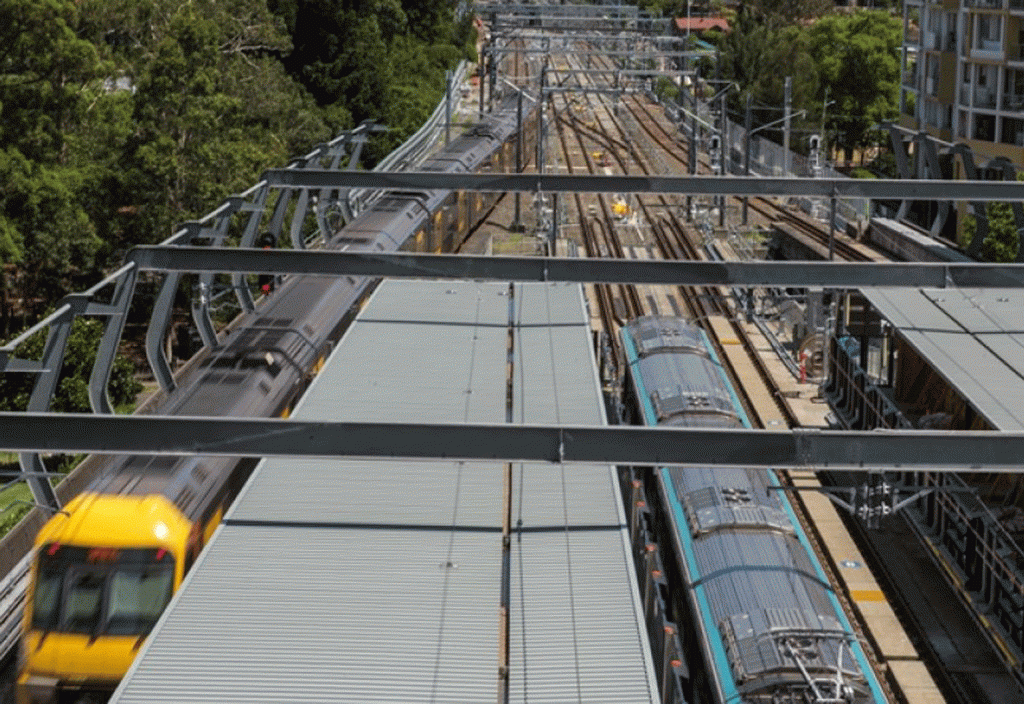
According to Ford, the system’s autonomy delivers benefits in terms of repeatability, efficiency, reliability and safety. Because the train operates without human intervention, it behaves the same way every time, meaning it can incorporate innovation such as regenerative braking.
“You get massive benefits from autonomous systems, but the flip side is obviously it requires far more testing,” she said. “With a fully automated system, everything has to be fail-safe and everything has to be tested to a very high reliability standard to ensure that it can operate autonomously with as little human interaction as possible.”
Early bird registration is now open for Transport 2026, where you can explore regional challenges, building more resilient systems and the future of transport in this country.