CREATE
  • Technology
    • BIOTECH
    • COMMUNICATIONS
    • COMPUTING
    • IMAGING
    • MATERIALS
    • ROBOTICS
    • SOFTWARE
  • Industry
    • DEFENCE
    • INFRASTRUCTURE
    • INNOVATION
    • MANUFACTURING
    • POLICY
    • PROJECTS
    • TRANSPORT
  • Sustainability
    • ENERGY
    • ENVIRONMENT
    • RESOURCES
  • Community
    • CULTURE
    • PEOPLE
  • Career
    • EDUCATION
    • INSPIRATION
    • LEADERSHIP
    • TRENDS
  • About
    • CONTACT
    • SUBSCRIBE
No Result
View All Result
CREATE
  • Technology
    • BIOTECH
    • COMMUNICATIONS
    • COMPUTING
    • IMAGING
    • MATERIALS
    • ROBOTICS
    • SOFTWARE
  • Industry
    • DEFENCE
    • INFRASTRUCTURE
    • INNOVATION
    • MANUFACTURING
    • POLICY
    • PROJECTS
    • TRANSPORT
  • Sustainability
    • ENERGY
    • ENVIRONMENT
    • RESOURCES
  • Community
    • CULTURE
    • PEOPLE
  • Career
    • EDUCATION
    • INSPIRATION
    • LEADERSHIP
    • TRENDS
  • About
    • CONTACT
    • SUBSCRIBE
No Result
View All Result
CREATE
No Result
View All Result
Home Features

Why the future of jet engines is duct-free

Larissa Foster by Larissa Foster
19 March 2026
in Features, Aviation
Reading Time: 7 mins read
0
Why the future of jet engines is duct-free

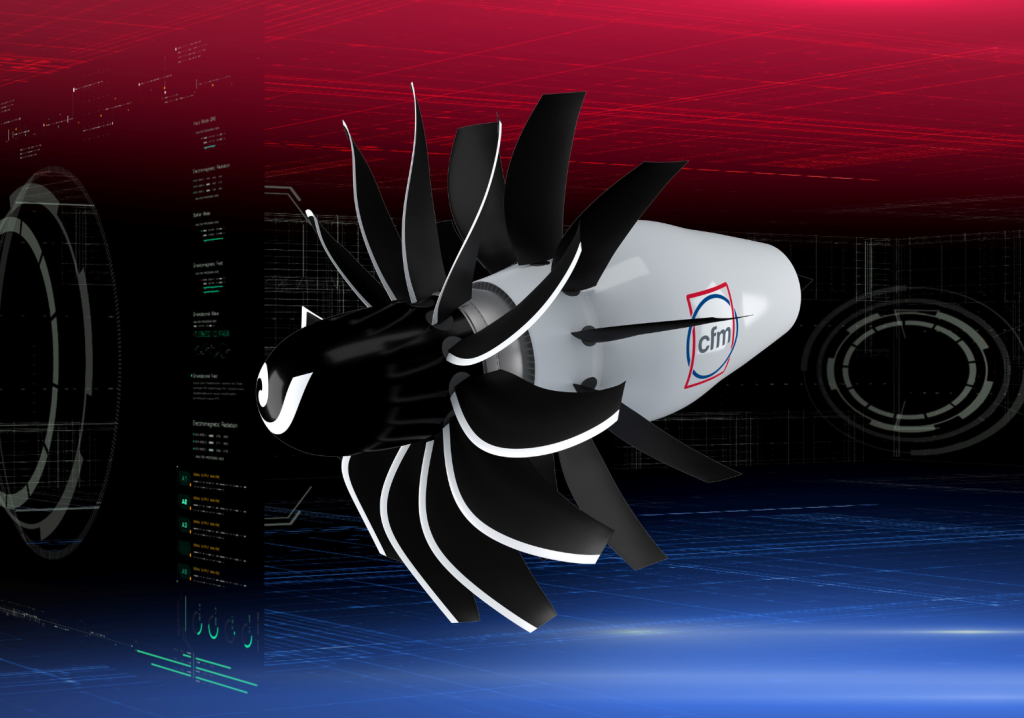
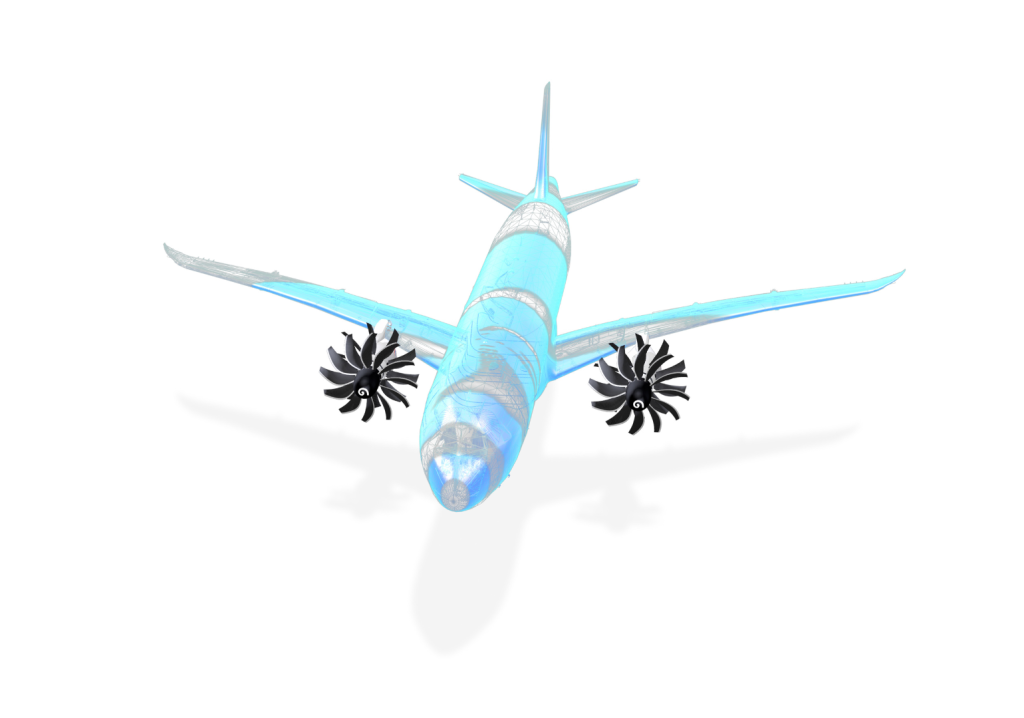
A render of the concept being implemented, unrepresentative of any defined future aircraft configuration. Image: GE Aerospace

From an open-fan design to carbon-fibre composite fan blades, this company is reimagining jet engines.

CFM International is a joint venture between GE Aerospace and Safran Aircraft Engines, and its Revolutionary Innovation for Sustainable Engines (RISE) program is an advanced technology demonstrator that has already achieved numerous breakthroughs in the quest to propel the next generation of aircraft. Weaving open-fan aerodynamics with advanced materials, 3D printing and fuel flexibility, RISE’s novel open-fan engine design promises greater efficiency while significantly reducing emissions.

Since the program was unveiled in 2021, the global efforts of 2000 engineers and a network of partners such as NASA and the US Department of Energy’s National Laboratories have put CFM on track for ground and flight tests this decade.

As Executive Director of the CFM RISE program at GE Aerospace, Alex Simpson, told create: “If you really want to do something different, you have to do some things differently.”

Propulsive efficiency

The innovative heart of the RISE program is its novel open-fan architecture. This new jet-engine design removes the traditional engine duct. Freeing the blades in this way allows for a larger fan size with less drag, to improve fuel efficiency and reduce carbon emissions.

Considered alone, the open fan (or “propfan”) concept is hardly new. But the duct-free experimental engines GE Aerospace and Safran produced in the 1980s, while demonstrating the fuel efficiency of the concept, were bulky, heavy and unbearably loud. The single-stage open-fan engine, by contrast, is on track to achieve a bypass ratio more than five times greater than the most advanced ducted engines, which are reaching the limits of their propulsive efficiency.

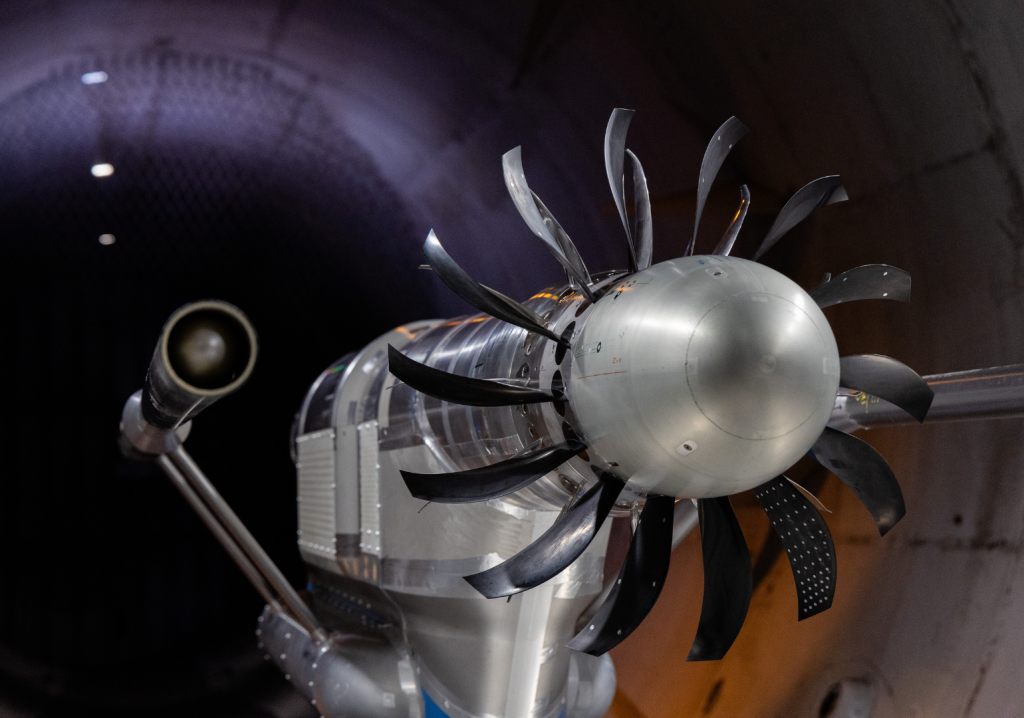
Image: GE Aerospace

“If you look at the history of commercial aerospace, what we’ve done is steadily grow the size of the fan to help with propulsive efficiency. And it turns out you can do only so much when you hold on to having a duct,” Simpson said. “You reach a point where that trade between the efficiency you’re gaining by increasing the fan size, and the weight and drag of the duct balance, each other out.

“To go any further, you have to take a big step – removing the duct.”

Conceptual leap

The RISE program has put the open-bladed fan at the centre of reimagining aviation with the help of significant advances in technology and computing. Its conceptual leap makes the open rotor engines of last century seem like museum pieces by comparison – and it has been achieved almost counter-intuitively by simplifying the architecture. 

“The one we flew back in the 1980s was a counter-rotating open rotor with two rotating blade rows, which is both heavy and complicated,” Simpson said. “Because our design capability has progressed so much, we can go from two rotating fan blade rows to one with a stationary outlet guide vane.”

“The design capability we have today in terms of supercomputing [is] orders of magnitude more capable than they were previously.”
Alex Simpson

A key advantage of the open fan is that this stationary guide vane behind the main fan blade allows a fan – one already unducted and extremely efficient – to fly at the same speed as today’s narrow-body engines and aircraft.

Alex Simpson

“It is, in many ways, a very significant step forward.”

Advanced computing has enabled the CFM RISE team to analyse aerodynamics at an extreme level of fidelity to produce a fan that’s markedly more efficient aerodynamically – and a lot quieter – than its predecessors.

“The design capability we have today in terms of supercomputing, and the fidelity of the design tools we have, are orders of magnitude more capable than they were previously,” Simpson said. “It’s allowing us to explore the physics in much finer detail than we’ve been able to up to this point. It’s hard to overestimate just how significant a step up that is in terms of capability.”
Reduction in fuel consumption and carbon dioxide emissions compared to other engines
0 %

Next-gen materials

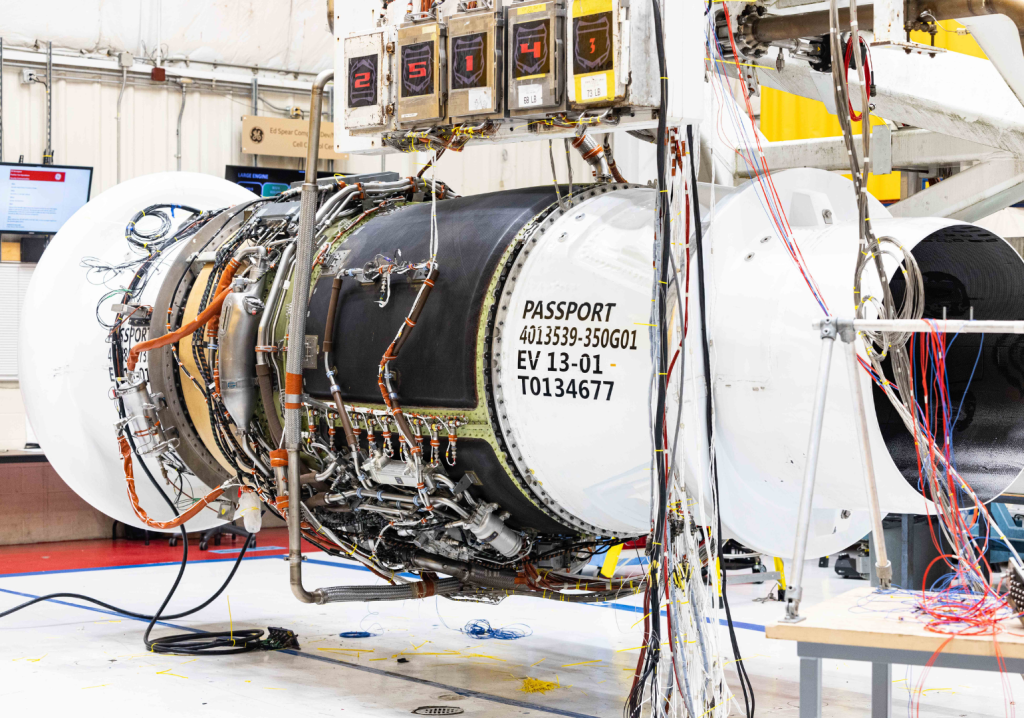
Adding to the supercomputing expertise are the breakthroughs in composite technology GE Aerospace has been making since before the 1990s. Advancements in materials and manufacturing help enhance the engine’s performance and reduce its production costs.

Rather than being made of metal, the fan is equipped with carbon-fibre composite blades that are lighter, stronger and more durable than jet engines, with the blades made from all-metal alloys.

“It turns out that having a very large fan requires it to be very light – and a composite fan blade is key to drawing on that field of experience. We can now have an open-fan engine with a much better aerodynamic and acoustic design, with a light composite blade that sets you up for success on the architecture.

“Only GE Aerospace and CFM have that capability.”

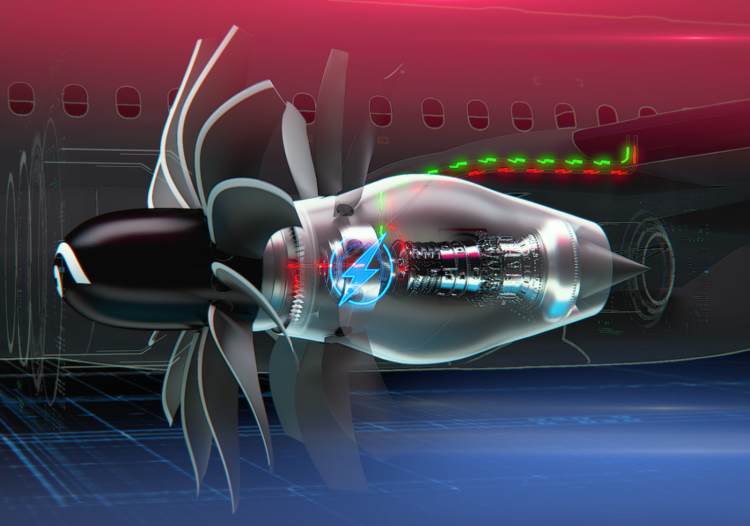
GE Aerospace technologies have been developed across decades. Image: GE Aerospace

As well as the open-fan design and carbon-fibre composite fan blades, the RISE project is reimagining the materials at the core of the engine. The open fan’s compact core, which houses the compression and combustion modules, is comprised of ceramic matrix composites (CMCs). Lighter than steel yet capable of withstanding extremely high temperatures, CMCs present a groundbreaking material for the hot section of a commercial aircraft engine.

“This material fundamentally has a great temperature capability and is lighter than metals, so we can use it as a replacement for components where it is appropriate to be weight-saving and give additional thermal capability. If you can cut down the amount of cooling needed, you’re being more efficient.” 

Furthermore, the core is being designed and tested for compatibility with alternative, next-generation fuels, including unblended sustainable aviation fuel. This has the same chemical composition as common jet fuel, but, instead of being made from fossil-based sources, it comes from renewable sources.

Image: GE Aerospace

CFM also continues to advance hydrogen-combustion technology. The integration of hybrid-electric technology in the RISE program is another key pursuit: GE Aerospace is currently developing a hybrid-electric system, including projects in partnership with NASA, that will further reduce the dependence on liquid fuels.

Simpson noted that the composite fan, CMCs and fuel alternatives reflect advancements in materials and manufacturing pioneered by GE Aerospace and Safran across years of research and development.

“It’s an example of how long-range this business is. We develop these technologies over decades.”

Visualising the open-fan design. Image: GE Aerospace

From lab to flight deck

Essential to the RISE program is the pursuit of a reduction in fuel consumption and carbon dioxide emissions by more than 20 per cent compared to today’s most efficient engines, towards a target of net zero by 2050. The global aviation industry currently accounts for about 2 per cent of global carbon emissions, a figure that will likely increase as commercial aviation expands. 

“It’s ambitious, and historically a significant step for a single generation,” Simpson said. “Typically, in the previous generations we’ve done 15 per cent, so a 20 per cent fuel burn goal over today’s state-of-the-art engines is a big deal.”

Composite fan blade flight hours made since 1995
0 million

Trust in simulation

So will the revolutionary potential of open fans become an aviation reality? The fidelity of supercomputing simulations and extensive wind-tunnel testing to date suggests the commercial launch of open-fan technology is a matter of when, not if.

US National Laboratories has been a crucial partner in this pursuit. Its supercomputing has changed the nature of testing and simulation to advance open-fan design and capabilities. 

“We can iterate less in the experiment and trust the simulation earlier than we would historically. That allows us to take bigger steps sooner,” Simpson said. “Setting up an experiment is an extraordinarily involved and labour-intensive task, so if you can trust a simulation in these more complex spaces, it can save you a lot of time. It’s very exciting as an engineer to see so many technology maturations coming along as per plan.

“I don’t have a lot of big risks that I’m still overly concerned about at this point. I think we have the engineering challenges well in hand, and I think we’ve got the right architecture to get us to where we want to go.”

This story was originally published in the November 2025 edition of create with the headline ‘Blades of glory’.

Discuss the latest aerospace developments with the experts at the International Council of the Aeronautical Sciences.

Tags: engine designaviationAustralian innovationplane design
Previous Post

From Antarctic ice to Australia’s Chief Scientist

Next Post

Whitepaper: When power quality matters

Larissa Foster

Larissa Foster

Related Posts

New engineering competency standard set to meet industry demands
Career

New engineering competency standard set to meet industry demands

27 August 2026
How smart glasses technology could aid visually impaired people
Features

How smart glasses technology could aid visually impaired people

25 August 2026
Are machine swarms the future of robotics?
Features

Are machine swarms the future of robotics?

25 August 2026
Next Post
Whitepaper: When power quality matters

Whitepaper: When power quality matters

Leave a Reply Cancel reply

Your email address will not be published. Required fields are marked *

create is brought to you by Engineers Australia, Australia's national body for engineers and the voice of more than 120,000 members. Backing today's problem-solvers so they can shape a better tomorrow.
  • ABOUT US
  • CONTACT US
  • SITEMAP
  • PRIVACY POLICY
  • TERMS
  • SUBSCRIBE

© 2024 Engineers Australia

No Result
View All Result
  • Technology
    • BIOTECH
    • COMMUNICATIONS
    • COMPUTING
    • IMAGING
    • MATERIALS
    • ROBOTICS
    • SOFTWARE
  • Industry
    • DEFENCE
    • INFRASTRUCTURE
    • INNOVATION
    • MANUFACTURING
    • POLICY
    • PROJECTS
    • TRANSPORT
  • Sustainability
    • ENERGY
    • ENVIRONMENT
    • RESOURCES
  • Community
    • CULTURE
    • PEOPLE
  • Career
    • EDUCATION
    • INSPIRATION
    • LEADERSHIP
    • TRENDS
  • About
    • CONTACT
    • SUBSCRIBE