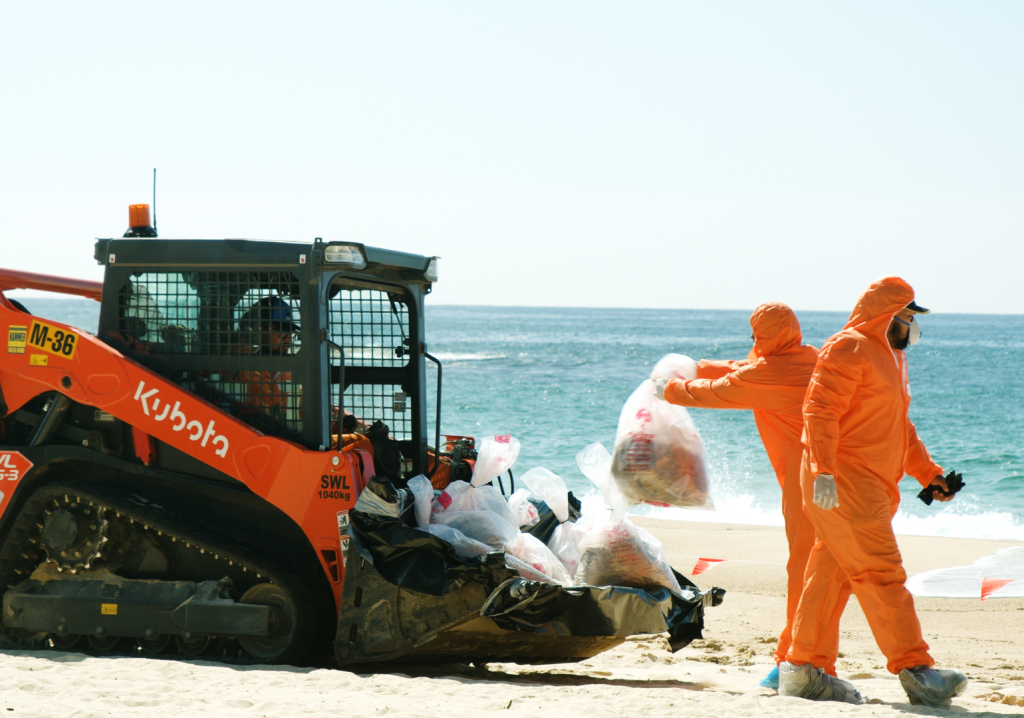
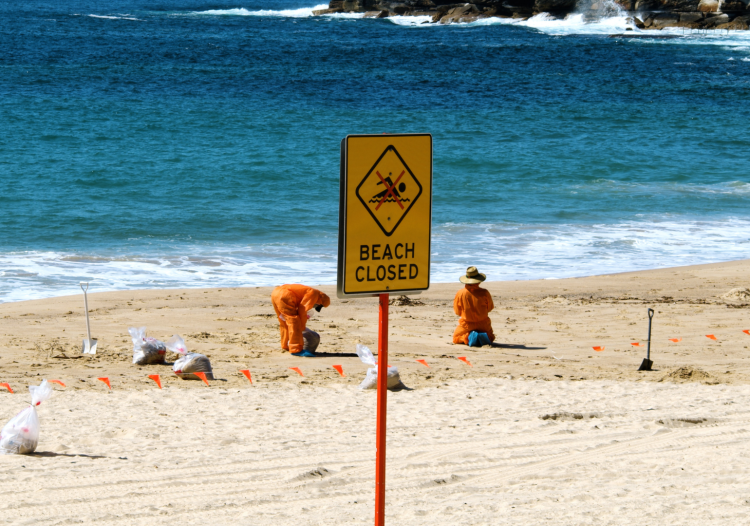
When debris balls, dubbed “fatbergs” by the media, washed up on Sydney beaches, attention was drawn to the mechanics of the Malabar Wastewater Treatment Plant and its complex subsea engineering challenges.
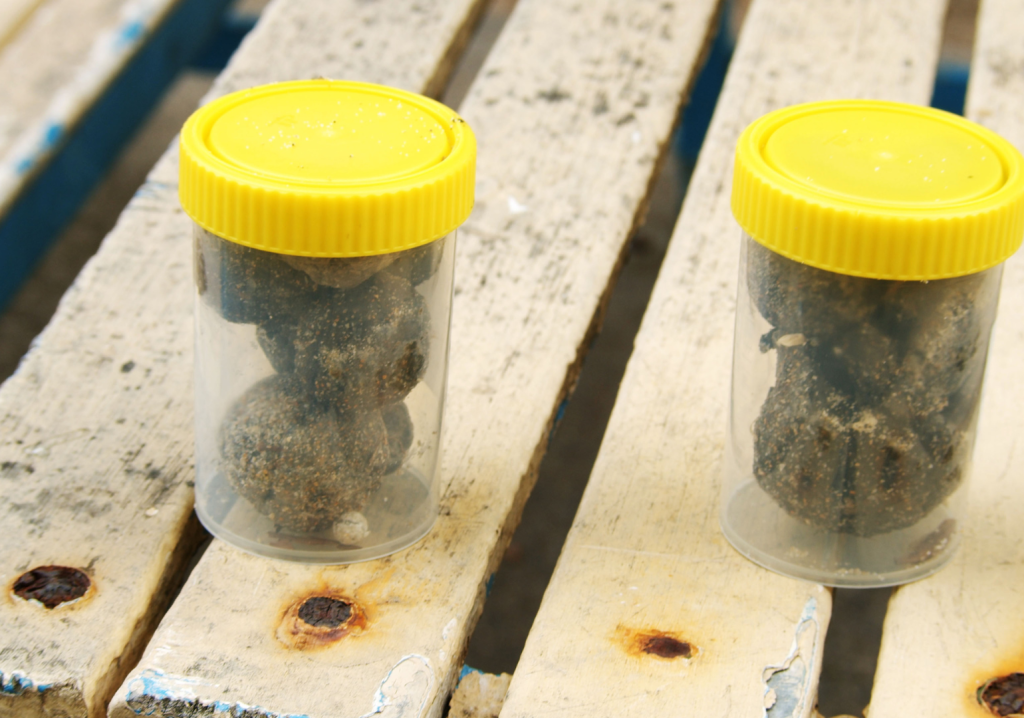
When clusters of dark, sticky debris balls washed up on Sydney beaches in late 2024 and early 2025, engineers began investigating potential causes in the search for a solution.
The NSW Environment Protection Authority (EPA) conducted a comprehensive investigation, announcing in April 2025 similarities between the debris balls and samples taken from Sydney Water’s wastewater treatment plants.
“While we are yet to determine exactly what caused the pollution incidents to occur when they did, we can say the composition and the characteristics of the debris balls are consistent with a land-based sewage source,” said EPA Director Operations Adam Gilligan.
“The community has been eager for answers and to assist in our ongoing investigation we’ve established a Wastewater Expert Panel to provide independent scientific advice to the EPA and other NSW Government agencies.”

Professor Stuart Khan FIEAust, Head of School of Civil Engineering at The University of Sydney, was appointed chair of the panel.
“We still don’t know with certainty what is causing the problem,” Khan told create. “There’s a hypothesis at the moment, and if that is correct then it’s a big issue.”
That hypothesis focuses on the accumulation of fats, oils and grease (FOG) within the Malabar deep-ocean outfall system.
“It’s important to point out that nobody has actually seen a debris ball released from the diffusers of the deep water ocean outfall of the Malabar Wastewater Treatment Plant.
“This is educated guesswork right now. We’re convinced they have a wastewater source, but whether they have actually come from the outfall itself, we’re not yet sure.”
Analysing the root cause
The Malabar Water Resource Recovery Facility covers a vast catchment extending from the Parramatta River to Campbelltown to the coast. Effluent flowing in from this catchment is screened and primarily settled, then conveyed through a decline tunnel to a deep ocean outfall. This outfall extends around three kilometres offshore, discharging via seabed diffusers.
Operating continuously, on a dry-weather day the flow is approximately 500 ML per day. When it’s raining, this figure can double. However, while bulk wastewater flows out to the deep-water diffusers, FOG behaves differently.
“We’re talking about fats, oils and grease, which float,” Khan said. “FOG migrates toward the highest point in the confined system.”
The hypothesis is that the FOG – the worst-case scenario being a sticky mess measuring around 28 m in length and with a diameter of about four metres – is floating in the upper regions of the decline tunnel, possibly against the “bulkhead”, the upper entry to the tunnel, itself most often underwater.
Inspection challenges are significant. The tunnel is submerged, steeply declining below the surface of the ocean, continuously flowing and extremely hazardous. Even at low tide, most of the structure is still immersed.
“If somebody fell into it, you’d never recover them,” Khan said.
Engineering a solution
In February 2026, the EPA announced a Pollution Reduction Program that requires a range of significant works from Sydney Water, including:
- Removal of FOGs from the bulkhead area of the deep ocean outfall
- Education campaigns for groups including cafes and restaurants to reduce the amount of FOG entering the wastewater system
- Long-term upgrades at Glenfield and Liverpool treatment plants to take some load off Malabar
- A system to capture debris overflowing from the sewer during severe wet weather events
- A study into the formation and weathering of debris balls to make it easier to track them
- Consideration of AI or other technology to monitor for the formation of debris balls
The first task is far from straightforward.
“It won’t be an easy job,” Khan said. “It has never been done before, so it will require some innovation. It will be a costly process and potentially quite a bit of work around managing risk to personnel.”
Why not simply open the bulkhead at low tide and clear it?
As Khan said, environmental, geometric and hydraulic conditions complicate matters. Removal will likely require specialised mechanical systems that may not yet exist.
“We’re not talking about people going down with shovels. We’re talking about major machinery doing highly specialised work in the ocean, to identify and remove this material.”
Even remote inspection technologies introduce their own risks in the outfall tunnel environment.
“A free-swimming drone introduces major risk as it means putting a machine into the outfall, and you really don’t want solid materials in the outfall. If it caused a physical blockage, you would have some very serious problems.”
A remotely operated system would have to be tethered and designed to avoid introducing further debris, potentially causing Sydney’s biggest plumbing problem.
Does this put pressure on legacy infrastructure?
While Sydney’s wastewater infrastructure is showing signs of beginning to approach its limits, Khan said, the solution is not necessarily to build bigger.
Instead, the concept of reducing flows to plants such as Malabar is beginning to win recognition as the best next step.
“The way to do it is to pull as much of the wastewater out of those sewers, or prevent it going in, from as far west in Sydney as possible, then treat and reuse that wastewater for beneficial uses that actually increase Sydney’s water security,” he said.
The debris ball challenge is a signal, not a solution. With asset ageing, hydraulic complexity, environmental challenges and urban growth, the real solution must come at a system level.
“It’s about identifying the mechanism and engineering a solution that is safe, practical and resilient for a growing city.
“If we can prevent having to discharge so much through the system, and treat and reuse it instead, it addresses the pollution problem and the water security problem, and it makes Sydney less vulnerable to drought.”
Debris transport in rivers and along coastlines poses serious problems to human health, but solutions are possible.