

As artificial intelligence transforms engineering, a new generation of engineers is required to not just develop intelligent technology, but to make it work reliably and safely in the real world.
When an electric vehicle rolls off a production line, why shouldn’t it start itself and drive autonomously to its next destination within the factory?
After all, the technology already exists for vehicles to self-drive on public roads. Why shouldn’t it also navigate inside a manufacturing environment?
For mechatronics design engineer and Queensland University of Technology (QUT) graduate Luis Beyrer, this is an excellent example of how opportunities in artificial intelligence (AI) aren’t just about developing new algorithms.
For engineers, those opportunities are often about finding innovative ways to apply technology that already exists, he said.
“The application of AI and ML sees its biggest wins in lateral thinking, in the small stuff rather than the next big thing, the next big, new algorithm or model” said Beyrer, who researched robotics integration during an internship and thesis project with BMW in Germany.
That research showed him that the rapid expansion of AI and machine learning (ML) across sectors is creating demand for a new type of engineer. It is also potentially removing essential experience and knowledge, Beyrer said, as it takes over repetitive, low-level work.
Engineering around the algorithm
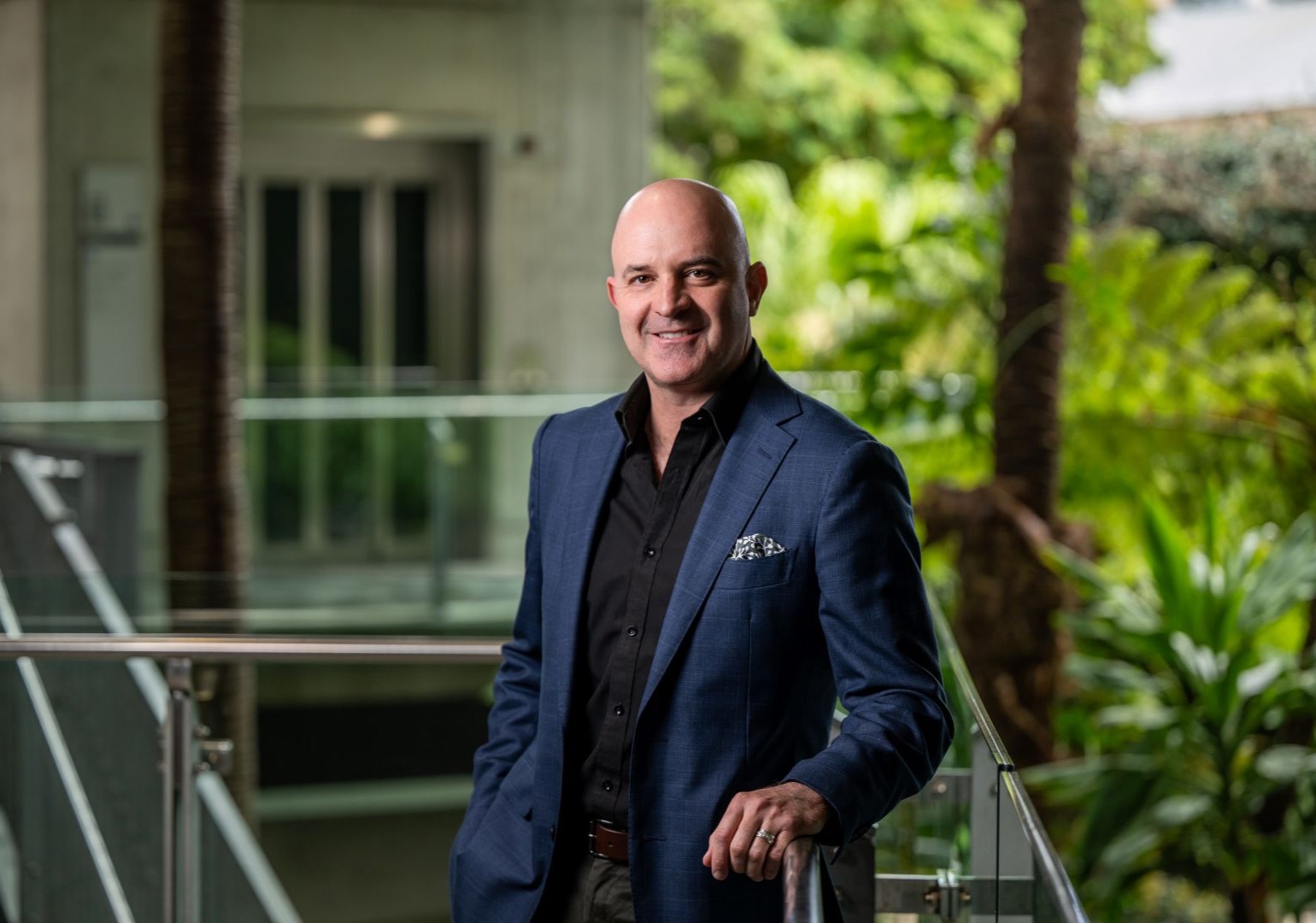
Engineering has entered a period of massive transition, said Professor Clinton Fookes FIEAust CPEng, Head of QUT’s School of Electrical Engineering and Robotics. It’s less about using AI tools and more about ensuring people and technology can co-exist safely and productively.
“Engineers are about building complex systems that do stuff,” he said. “AI is just another tool.”
What is changing, he said, is that AI is increasingly embedded within those systems, influencing the way tools, vehicles and sensors interpret information and make decisions.
This means engineers will need knowledge and expertise beyond what many have today to bring these systems into the world.
“Building the model is the easy part,” Professor Fookes said. “Getting the model to integrate into a real-world system, making it work reliably, making it deal with real-world challenges and looking at the critical safety aspects. That is the hard part and that is the engineering part.”
QUT mechatronics graduate and machine learning engineer Nifemi Olasheni-Akib has encountered similar challenges in industry.
“Working as a machine learning engineer has taught me that getting something to work is very different from understanding why it works,” he said.
“Optimising ML systems requires looking beneath the surface, understanding trade-offs and recognising when improvements don’t generalise. AI can accelerate the process, but it doesn’t replace the engineering judgement needed to make systems reliable.”
What is this new engineering role? Professor Fookes calls it the machine learning systems engineer.
“The word ‘systems’ is important here because machine learning is just one part of a broader system,” he said. “You need to know how and where the technology plugs into the broader system, when you can use it, when you can’t use it and how you can connect it to humans.”
Such engineers, he said, must understand everything from sensors and data pipelines to computing hardware, control systems, human interaction and long-term maintenance. That breadth means technical skill alone isn’t enough: systems thinking, adaptability and the ability to collaborate across disciplines matter just as much.
The good, the bad and the ugly
Systems influenced by AI and ML are already remarkably diverse, Professor Fookes said.
He is currently working with mining and infrastructure solutions company Orica, for example, on agentic AI systems for its mobile equipment operating in mines, to improve safety and efficiency.
Elsewhere, AI is enabling predictive maintenance of infrastructure such as bridges and stormwater pipes, advance warning of potential failures in industrial machinery and more effective baggage screening for aviation security.
“Humans are great decision makers, but they’re very poor detectors,” he said.
AI can take on repetitive monitoring tasks, leaving engineers to focus on problems that require judgement.
The technology’s potential, however, does not come without risk. One of the biggest issues, Professor Fookes said, is “distribution shift”, when an AI model in the real world encounters conditions different from those on which it was trained.
A system that performed perfectly in a laboratory might fail when exposed to dust or vibration. Professor Fookes pointed to underwater robots, where changing water clarity can affect sensor performance. In mining environments, vibration and sensor drift create additional complications.
Then there are computing constraints. AI and ML systems aboard satellites, robots and other physical devices will often have limited processing power.
Most importantly, when these systems operate around people, the consequences of poor performance or failure can quickly become serious.
The solution to all of these challenges, Professor Fookes said, is rigorous engineering, including testing systems across all relevant environments and conditions.
“AI isn’t magic,” he said. “It’s not self-certifying.”
Engineering judgement remains essential
For Professor Fookes, these challenges explain why engineering education has to evolve.
Having also spent several years teaching introductory programming at QUT, Olasheni-Akib believes preserving opportunities to develop foundational skills is increasingly important.
“Much of the learning happens in the process of solving problems, making mistakes and debugging,” he said.
“As AI makes it easier to arrive at solutions, we need to ensure students aren’t missing out on the experiences that develop genuine technical understanding and engineering judgement.”
QUT is the first university in Australia to offer a major in Machine Learning Systems within an accredited undergraduate engineering degree. The major prepares graduates to design, implement and manage machine learning-based engineering systems that are safe, reliable and responsible, with career paths spanning power systems, robotics, manufacturing, mining, telecommunications, transport, defence and biomedical engineering.
For engineers already in the workforce, QUT’s Master of Robotics and Artificial Intelligence, Master of Advanced Manufacturing and Master of Biomedical Systems and Technology offer routes into AI-enabled engineering.
Professor Fookes will explore these issues further in an upcoming Engineers Australia webinar on the good, the bad and the ugly of AI in engineering.
“When it is being deployed in the real world,” he said, “AI will always need engineers.”
Join Professor Clinton Fookes’s webinar, AI in engineering – The good, the bad and the ugly, 10am AEDT on 11 November.