

Australia’s future workforce challenge is no mystery. The numbers are already set out in our demographic charts. More people. More infrastructure. Fewer engineers.
Simon Kuestenmacher is Co-Founder and Director of Research at The Demographics Group. He is a global keynote speaker and columnist with a focus on demographics, workforce trends and social change. This article is an adaptation of his keynote address at Engineers Australia’s Climate Smart Engineering (CSE) conference 2025.
Australia’s population will increase from 27.6 million in 2025 to 31.2 million by 2035. That is almost four million extra people who will need homes, transport networks, schools, hospitals and reliable power.


At the same time, the 85-plus population will double. Our aged care system is already under pressure, and the demand for climate-resilient health and housing infrastructure will intensify. Engineers will be central to delivering it.
The retirement cliff
The problem is that many of the engineers we rely on today are approaching retirement. Twenty per cent of engineering managers and nearly 12 per cent of civil engineers are already over 55.
Compared to baristas, for instance, where just four per cent are over 55, the engineering profession faces a far steeper cliff.


When these professionals retire they will take decades of experience with them. The pipeline of new engineers is not large enough to replace them. Every unfilled role means delays to bridges, wind farms and hospitals.
Gen Z to the rescue?
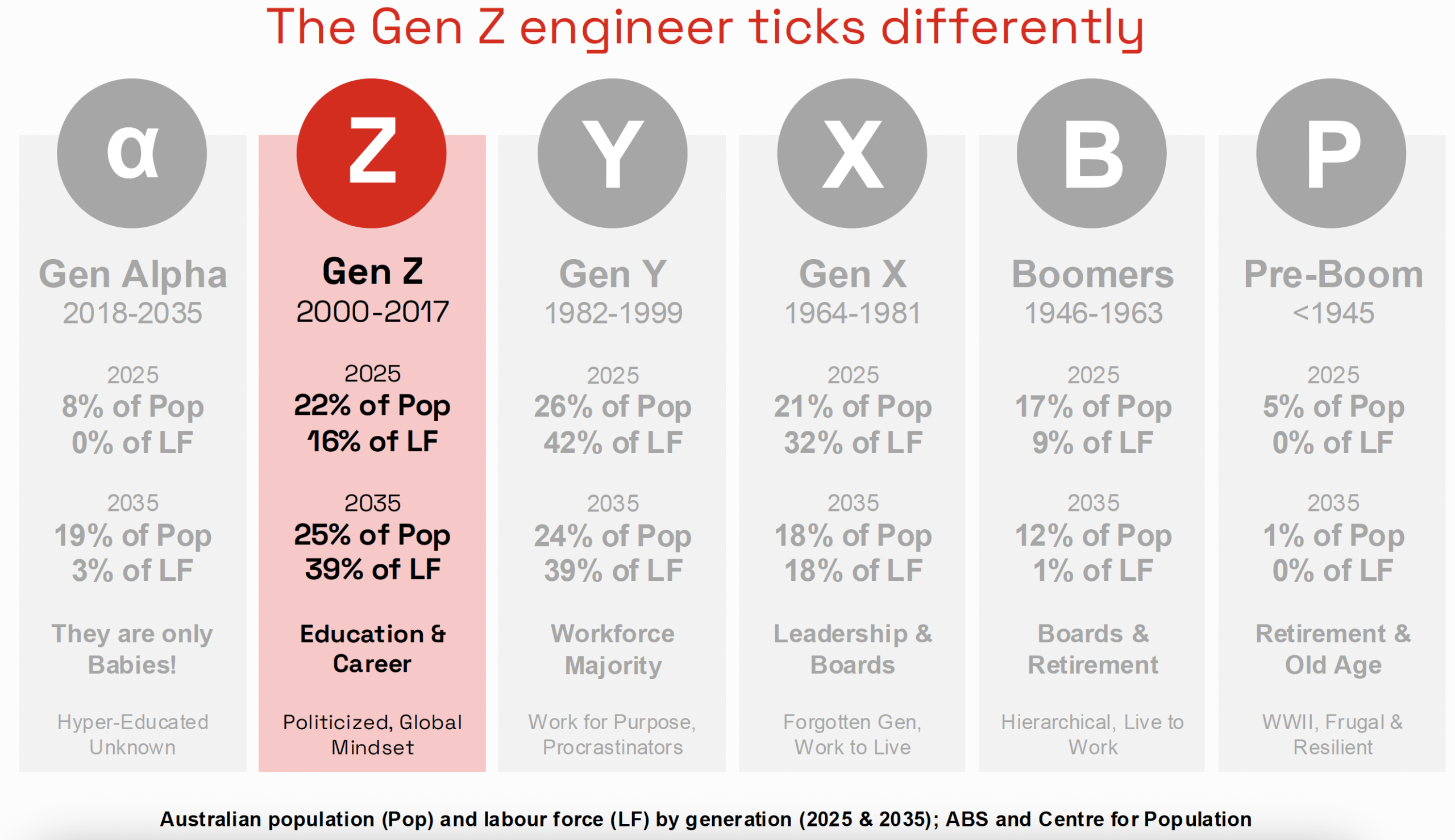
By 2035, Generation Z will make up 39 per cent of the workforce. They are entering the profession at exactly the right moment.
But the younger generations think differently. Purpose matters more than pay. Employers who can show how an engineering role contributes to net-zero targets or resilient cities will be more successful at retaining them.

Skills for tomorrow
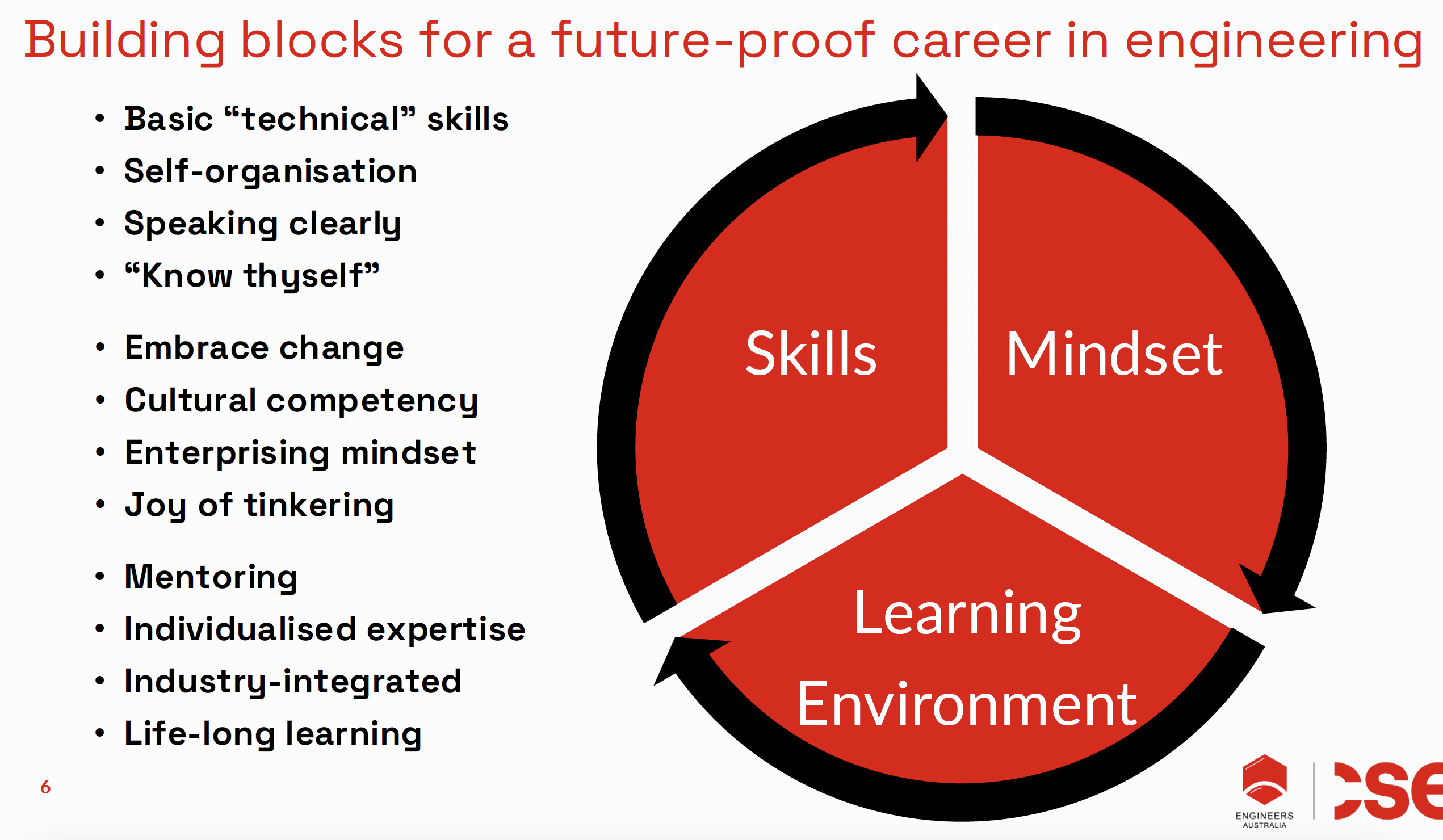
Engineering in the 2030s will require more than technical brilliance. Future engineers will need cultural competency, resilience, strong communication skills, and the ability to work comfortably with artificial intelligence and automation.

The call(s) to action
From the point of view of a demographer, it seems the path to success is fairly well lit. I see three clear actions.
1. Supercharge STEM
With more than 31 million people to support by 2035, Australia needs a larger pipeline of engineers. Too few students take mathematics and science in school, and too few continue to study engineering at university. Without change, retirements will outpace new entrants.
2. Retain Generation Z engineers
They will soon form nearly 40 per cent of the labour force. Their loyalty comes from purpose and mentoring, not just salary. Employers who connect their work to larger national goals will succeed.
3. Integrate migrants and international students
Migration is essential to Australia’s workforce. International engineering students should be seen as future colleagues, not just as fee payers. They are critical to filling roles as older engineers exit.
Why does this matter?
Engineers are nation builders. Without them Australia can not decarbonise heavy industry, expand renewable energy or build the infrastructure needed for a population that is both larger and older. Every skills gap slows climate action, housing delivery and transport upgrades.
Engineers are also the first responders to Australia’s demographic and climate realities. They do not just build bridges; they build resilience.
The numbers are clear. The challenge is set. Now it’s up to Australians.
Join Engineers Australia by 30 September and save $105 on membership. Visit engaus.org/getsaving for more information.