

A first of its kind for the region, the new battery energy storage system at Darwin’s Channel Island power station presented a unique engineering challenge. But it soon proved it could provide essential grid services traditionally supplied by a gas turbine.
Soon after the Channel Island Battery Energy Storage System (BESS) was commissioned, an external network event caused two of the power station’s largest generators to trip offline.
The event provided a significant real-world demonstration of the capability of the first grid-forming battery in the Darwin-Katherine Interconnected System (DKIS), the Northern Territory’s largest electricity network.
The battery responded to the trip immediately, injecting power to stabilise it and prevent extended blackouts.
“It responded exactly as it was expected to,” Boyd Hillebrand MIEAust CPEng, Principal Electrical Engineer at Territory Generation, explained. “In response to a major system event, the battery saved the day. So that was a very good test case.”
This was a particularly important outcome as the DKIS is an island network, meaning it exists and operates independently of the national electricity grid. As an island network, the DKIS must maintain system stability without support from the national electricity grid. The BESS provides a new way of supporting essential grid services.
Replicating essential grid services with batteries
The Channel Island BESS project, delivered by Territory Generation in partnership with principal contractor Hitachi Energy, was awarded the Northern Project of the Year at the 2026 Engineers Australia Excellence Awards. Its main engineering objective was to provide essential grid services traditionally completed by an ageing industrial gas turbine.
“The brief was to make this battery provide these essential grid services as well as, or better than, the existing gas turbine,” Boyd said.
The project first required extensive modelling and tuning of the battery’s capabilities.
Before construction began, a significant level of effort went into the modelling of the technology and into its responses to the constantly changing needs of the network.
Working with Hitachi Energy, the project team used this modelling to inform how the BESS control system was configured. The control software allows the battery to function as a virtual synchronous machine, responding in a similar way to a traditional generator to help stabilise the network when conditions change.
But the way it adds power to the network is of vital importance. Because they don’t have rotating parts, batteries don’t provide physical inertia. Instead, the virtual synchronous machine imitates the stabilising behaviour of a large, spinning generator.
Engineers had to optimise this inertial response, enabling the battery – which is actually a collection of 192 individual battery racks – to inject power rapidly to correct the frequency.
It had to respond rapidly enough to stabilise the system without creating instability in the other generators connected to the network. This required detailed power system modelling as part of the connection process to understand how the BESS would respond under different network conditions.
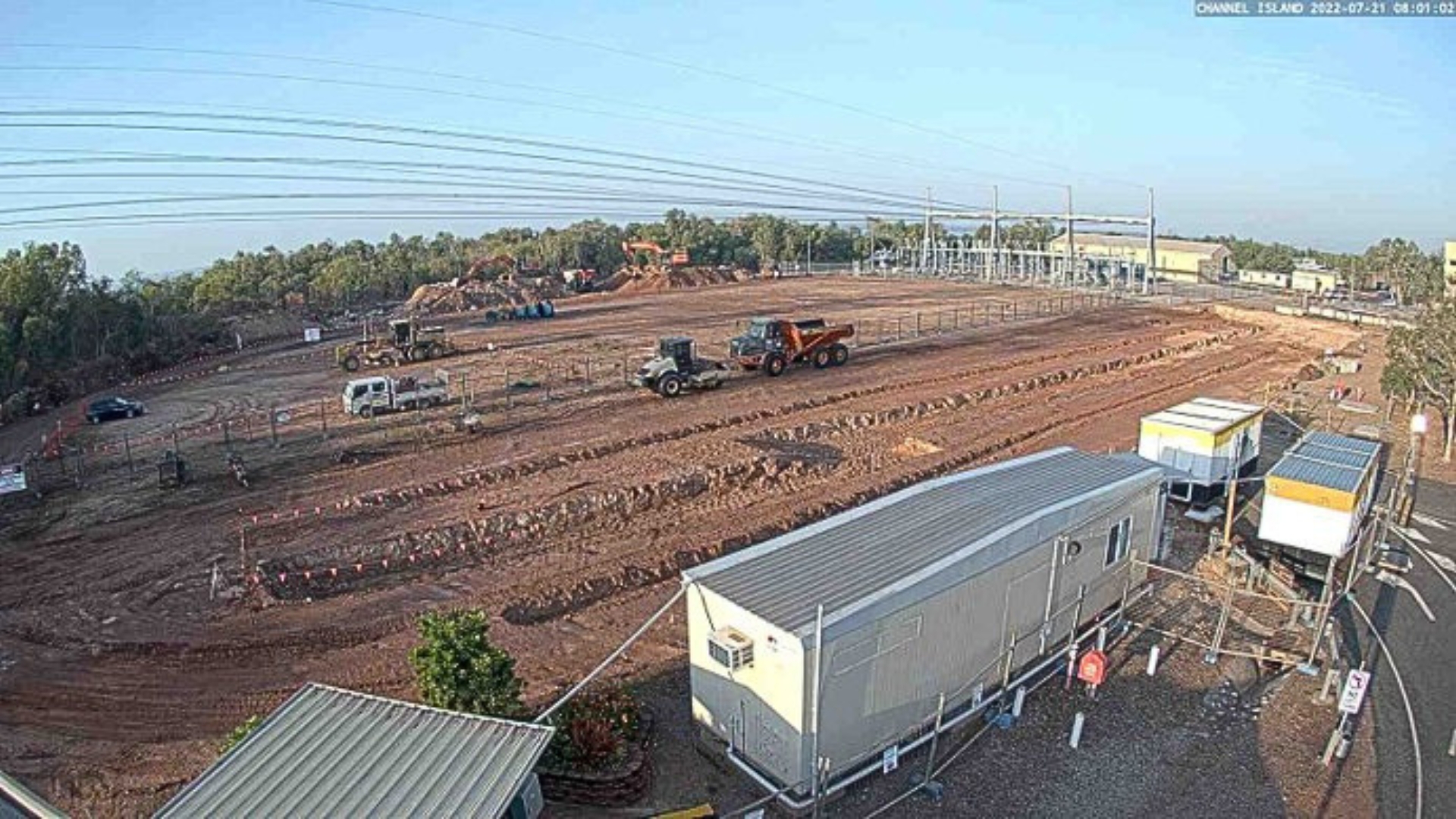
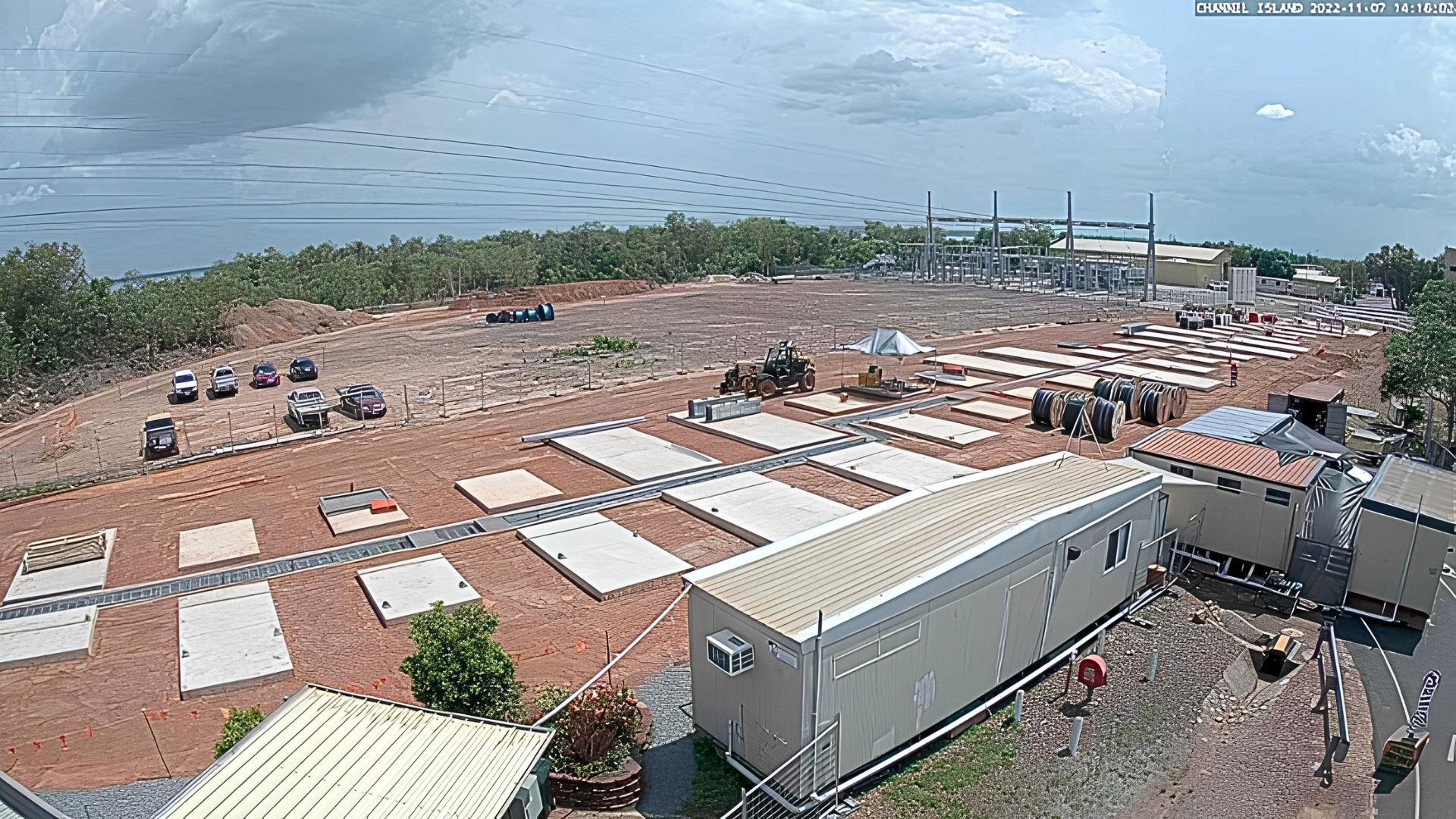
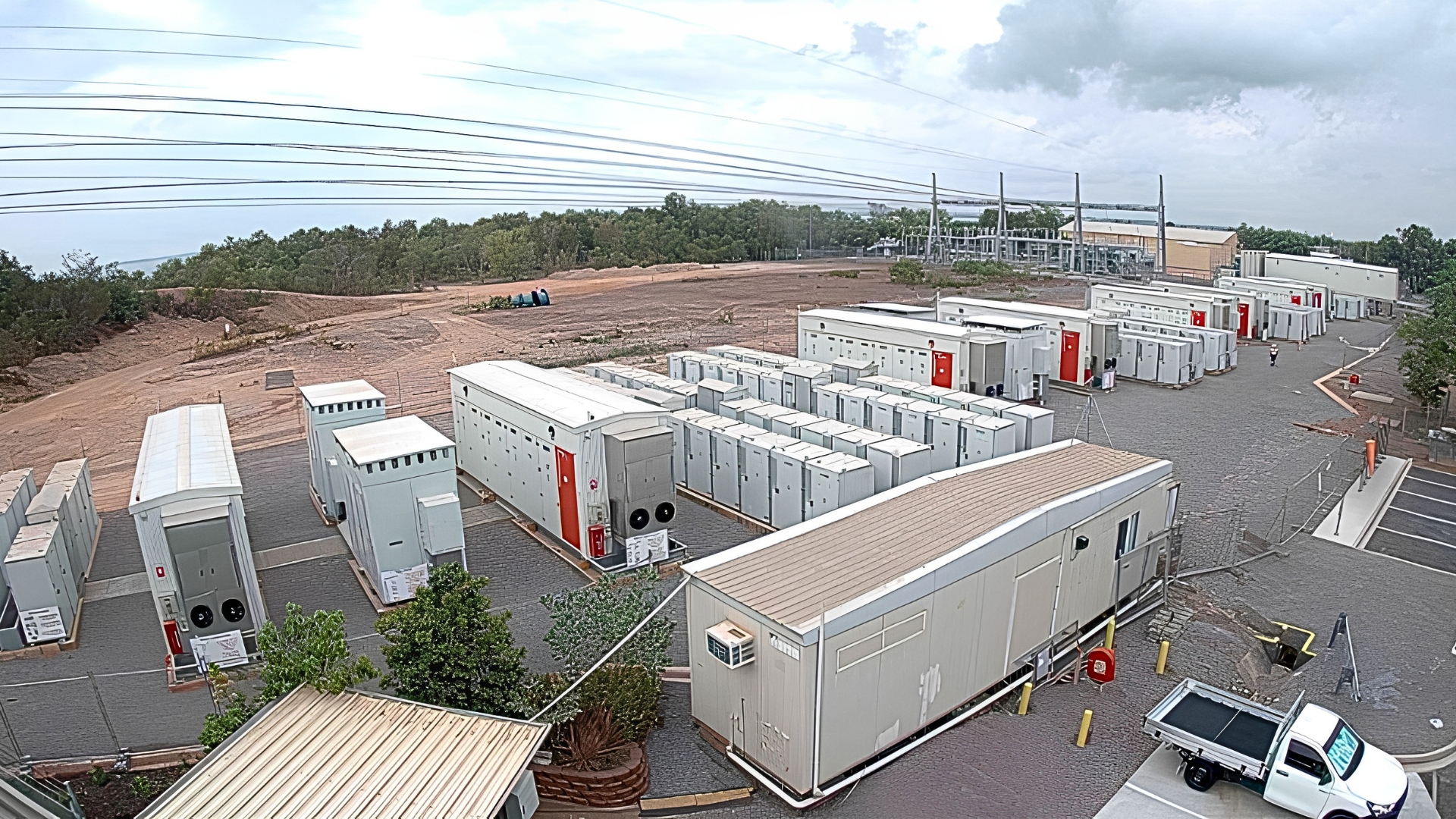
That same modelling enabled engineers to analyse different operating scenarios and identify relevant control settings long before the battery was ever connected to the network.
Getting those settings right was critical. “If the settings weren’t properly tuned, there was a risk of introducing instability into the network,” Hillebrand said.
New technology, 40-year-old network
While the modelling broke new ground, integrating the battery into a power station approaching 40 years old brought new challenges.
Engineers had to repurpose an existing connection point, modifying a 132 kV switchyard and its electrical protection systems. The ageing infrastructure came with its own, unique problems.
“With infrastructure that has been modified and upgraded over many years, it was important to verify the existing equipment and connections against the drawings,” Hillebrand said.
The engineering team painstakingly verified existing equipment and connections, collaborating closely with the substation’s owner, Power and Water Corporation.
“You really need to go through an as-building process to make sure everything functions the way that you expect it to,” he said.
All of this happened within a live network, as the station continued to supply electricity to the Darwin-Katherine network.
Modifying the battery connection point required temporarily disconnecting one of the station’s auxiliary power supplies, leaving just a single transformer operational.
“We made sure that we had backups of backups for critical station power,” Hillebrand said.
Lessons for the future
Commissioning confirmed the accuracy of the modelling. The subsequent unexpected generator trip demonstrated the battery’s ability to stabilise the network in place of traditional gas-fired spinning reserve capacity.
Beyond its considerable fuel savings – a primary driver for the battery technology – the battery now helps manage demand peaks by avoiding unnecessary turbine starts.
Territory Generation is already applying the experience to future projects.
“One of our biggest learnings was that the modelling time and effort is absolutely imperative. We are focusing on making sure that we’ve got the modelling side of things well understood.”
Celebrate the outstanding projects driving the construction pipeline with the Engineers Australia Excellence Awards. Gala Dinner registrations are now open.