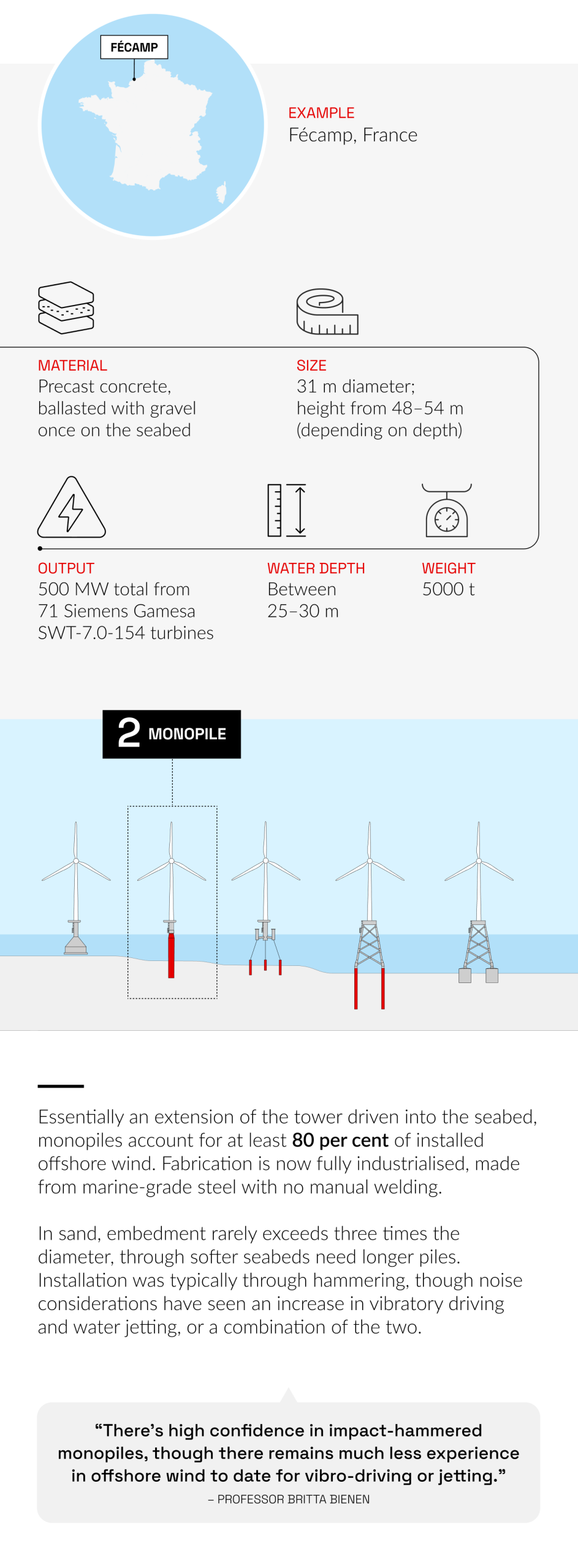
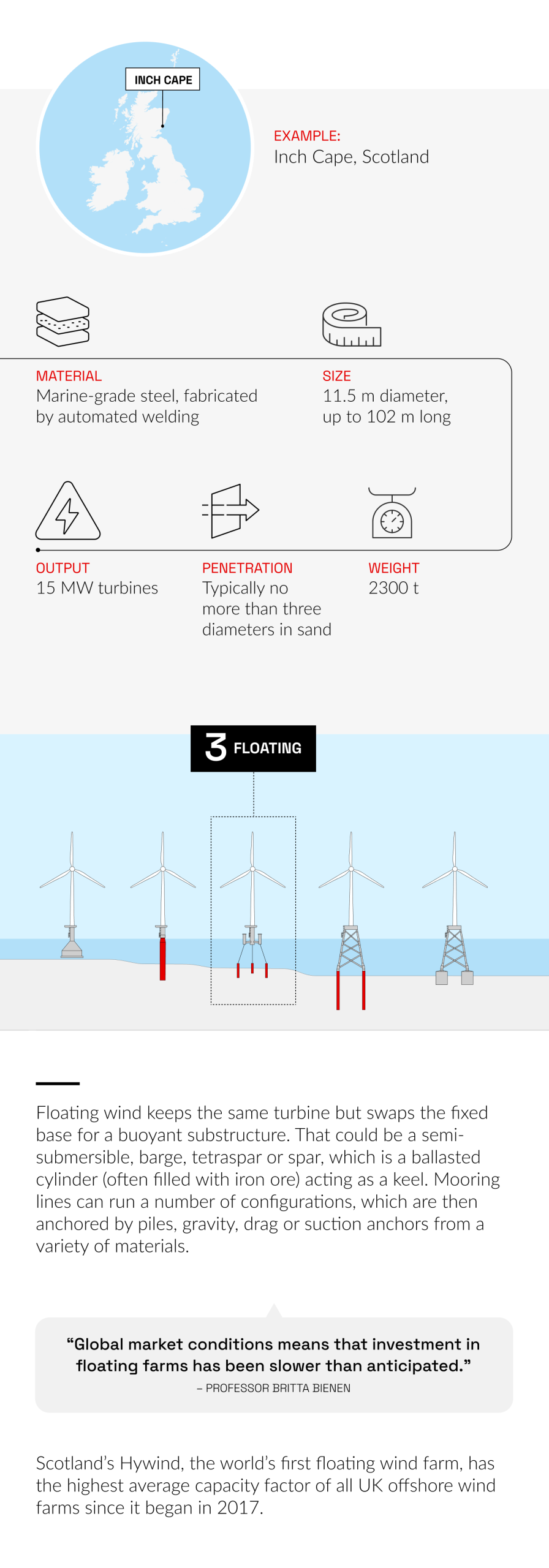
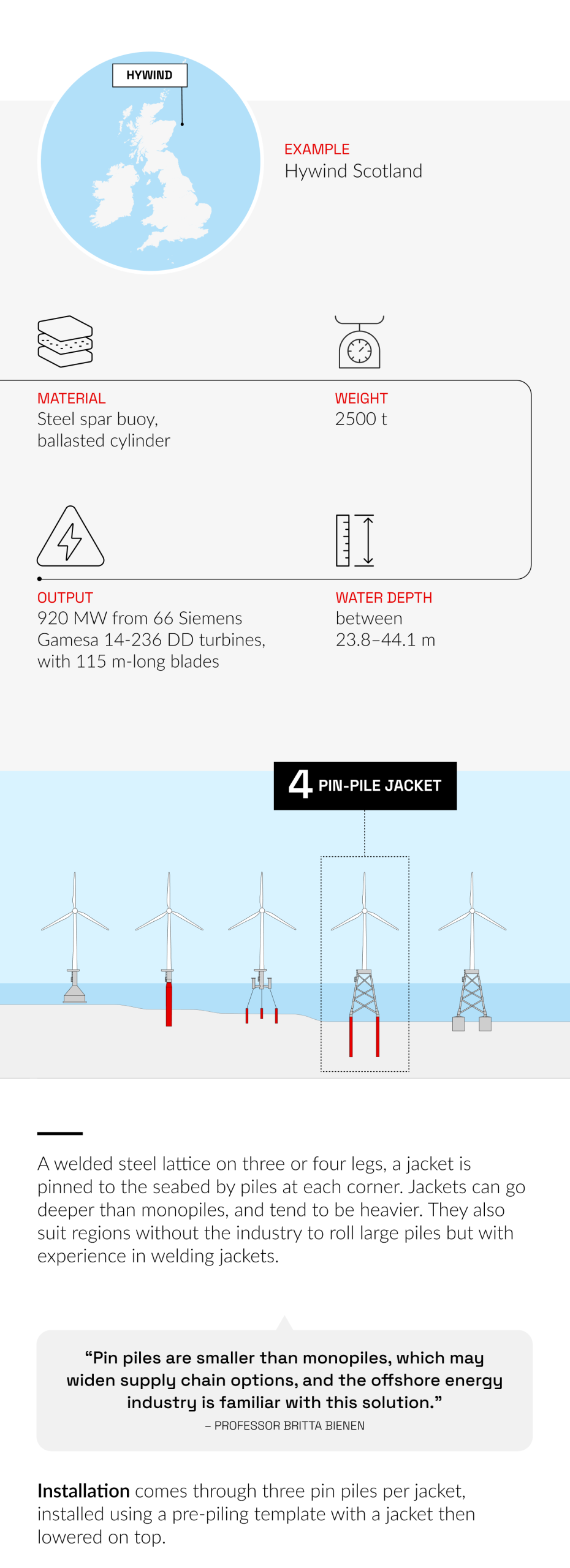
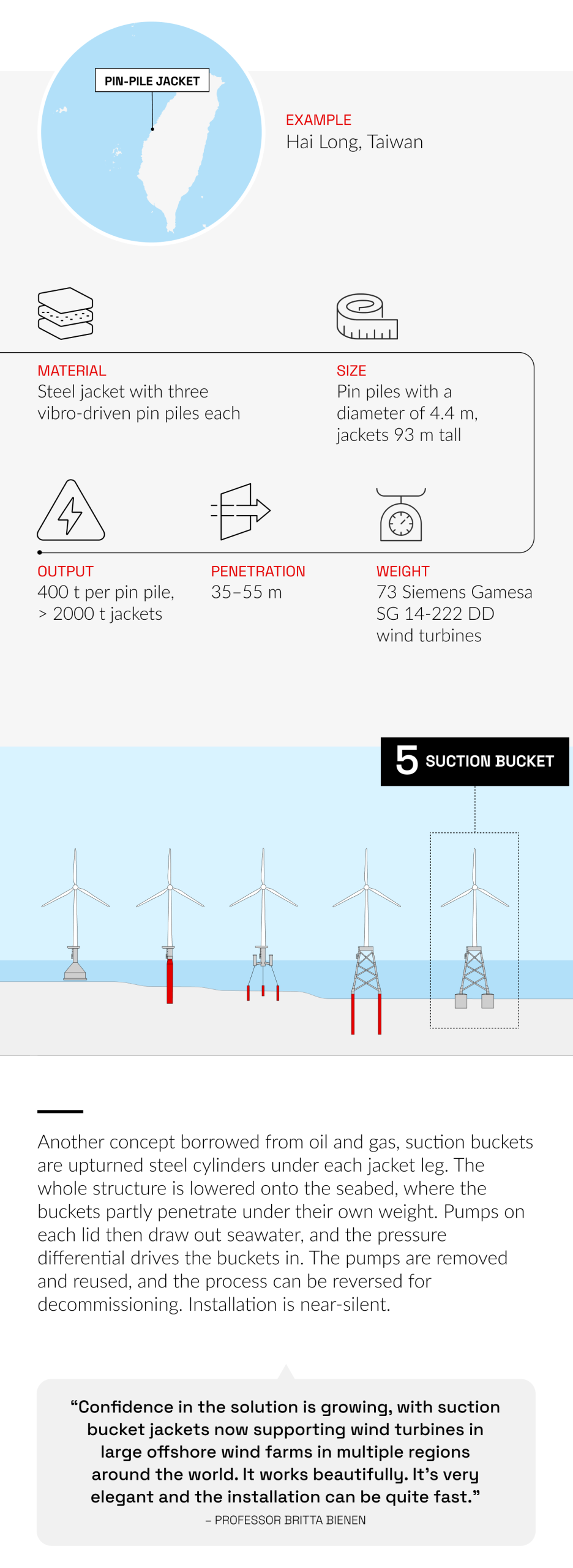
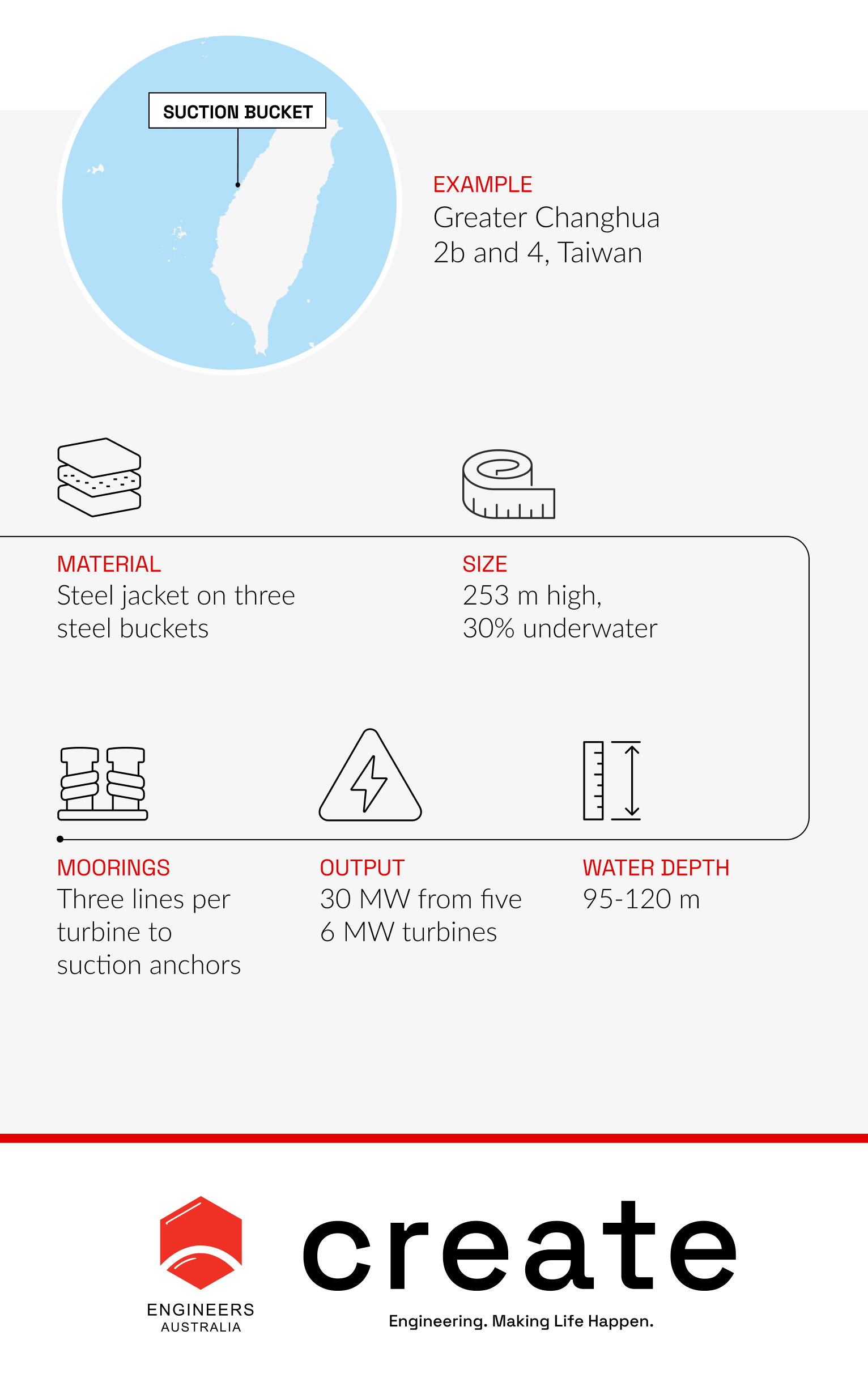
As offshore turbines get larger, the foundations supporting them have had to keep pace. As Australia prepares to invest in offshore wind farms, create looks at how the options compare.
By Elle Hardy and Heath Dunn
The world’s first offshore wind farm was built off the coast of Denmark in 1991, and the technology has evolved enormously since.
Globally, the total operational offshore wind capacity reached more than 84 GW by the end of 2024, with that number expected to increase five-fold to about 420 GW by 2035.
In August 2026, the Victorian Government announced it was calling the nation’s first offshore wind auction, aiming to produce two GW per year, or enough to power 1.5 million homes. Given a single offshore wind turbine can provide up to 66 GWh of energy per year – powering 10,000 households – it opens up capacity for serious investment and jobs in the growing sector.
“Offshore wind is an established solution. It’s a generation old, and is being deployed at commercial scale,” said Professor Britta Bienen from the University of Western Australia’s Oceans Institute.
The engineering challenge starts with the structure itself.
“An offshore turbine is relatively light, but most of its weight sits up high on a slender, dynamically sensitive structure,” Bienen said. “The foundations must resist not only that weight, but the loading from wind, wave and current loads, earthquakes – even typhoons and ice, depending on the location.”
The inbuilt tolerances are strict, with total permanent tilt capped at 0.5 degrees over the entire design life, which typically involves 25-30 years of operation, with tight installation tolerances and typically only an additional 0.25 degrees allowed after installation.
“Compared to an oil platform, an offshore wind turbine has much lower self-weight and is dynamically a lot more sensitive,” Bienen said. “With an oil platform, you have a one-off asset, whereas in an offshore wind farm you might be designing 100 foundations in a single array.”
Water depth, seabed conditions and supply chains all shape which foundation gets chosen. “At the end of the day, it all comes down to risk management.”
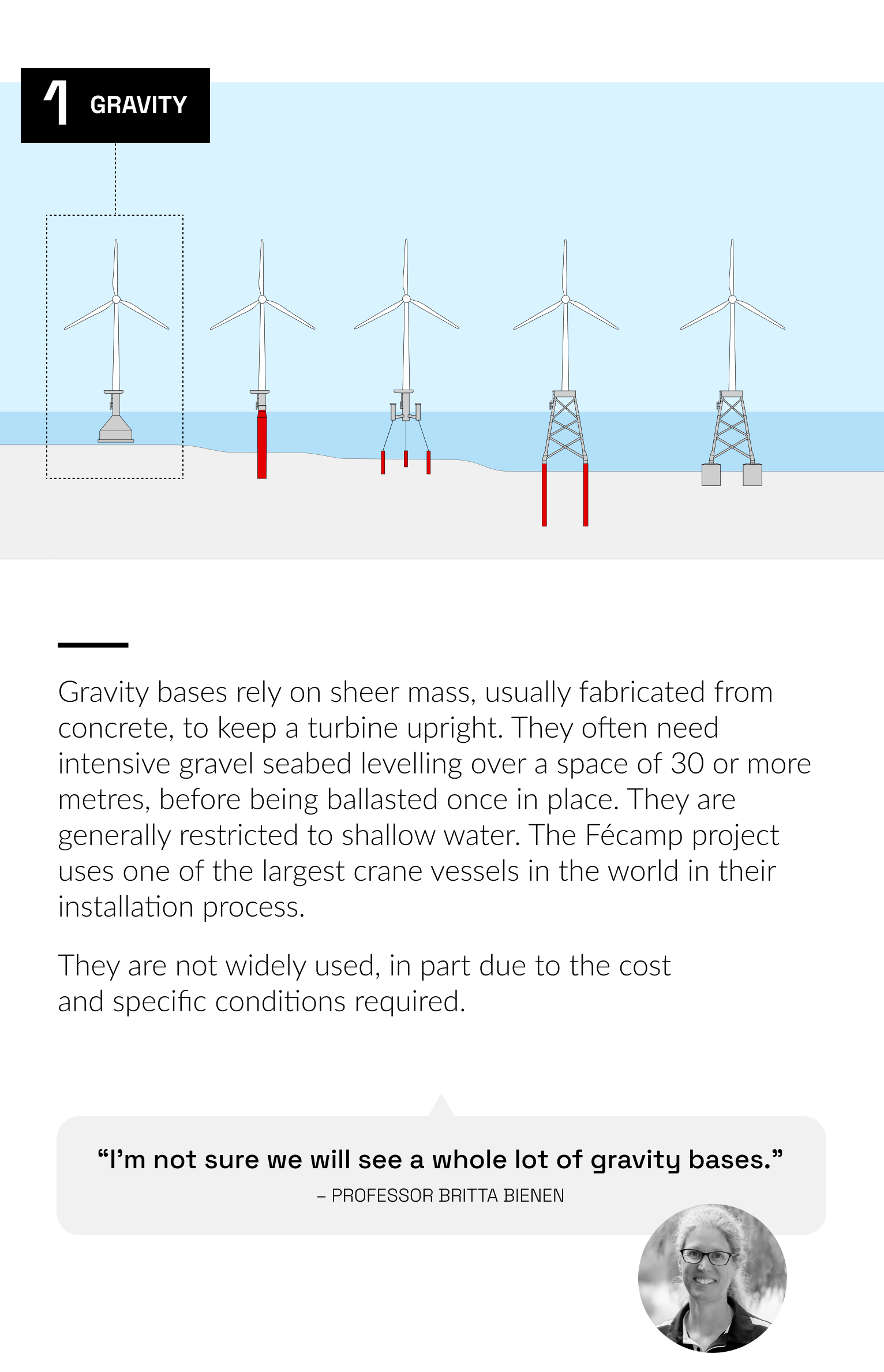
create takes a closer look at the different ways engineers are handling the complex task of securing wind turbines to seabeds, with the pros, cons and where the technology is going next.

Down under
Australia’s offshore experience in oil and gas will help engineers ready themselves for the offshore wind industry, with geotechnical engineers cognisant about carbonate sediments in the North West Shelf and Bass Strait.
“It shows very clearly that once a challenge has been identified, it can be addressed,” Bienen said.
What Australia lacks, she said, is experience installing large monopiles at scale. “You really want full confidence when you select your foundation concept and installation method. There is no going back after you’ve gone into fabrication.”
Not all the hurdles for offshore wind are technical. Bienen pointed to the long-term, bipartisan policy support that is required for all major infrastructure as key to setting the foundations for a stable investment climate.
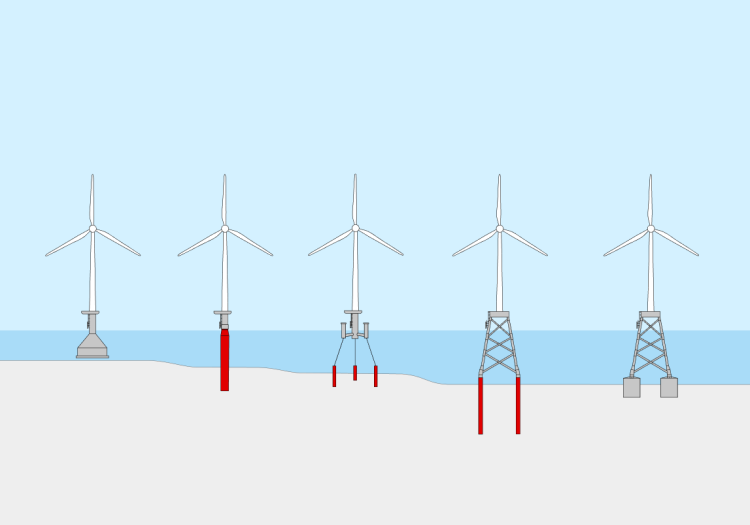
The feature diagram was adapted from Ghost456, CC BY-SA 4.0, via Wikimedia Commons, and is licensed under the Creative Commons Attribution-Share Alike 4.0 International license.
ON-DEMAND WEBINAR: Dredging in offshore wind farms