

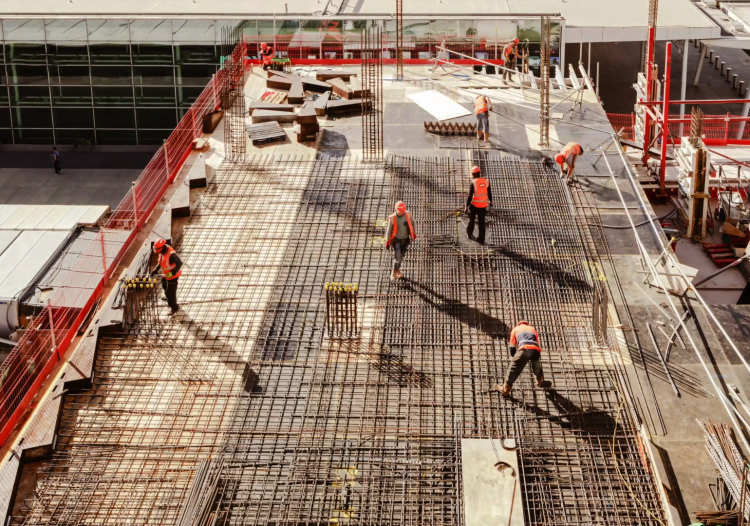
The technical solutions to decarbonise concrete already exist. The barriers are market-based and, unless we tackle them directly, we will not achieve the step-change that decarbonisation demands. Clare Tubolets, CEO of SmartCrete CRC, looks at the real obstacles in the way of a low-carbon concrete future.
SmartCrete CRC is a Cooperative Research Centre dedicated to helping Australia unlock the potential of sustainable concrete. Over the last five years we have seen the enormous progress being made in materials science, mix design and asset management, showing me that the barriers to decarbonisation are not technical but market-based.
Here are the eight reasons we’re not making progress.
1. Supply chain complexity and risk
The first barrier is the complexity of our supply chain. Concrete is made, transported, specified, procured and placed by a whole ecosystem of players, and each carries risk differently. Right now, we do not have the appropriate risk sharing frameworks to support the uptake of novel products.
If a low-carbon concrete does not have 50 years of performance data, who carries the risk? Without a clear answer, contractors and clients are hesitant. That lack of shared responsibility is stopping us from embracing solutions we know can work.
2. Fragmented procurement
State governments and local councils are the biggest procurers of concrete in Australia. Yet every single one of them has different requirements in their procurement policies. For suppliers and contractors, this fragmentation makes it extremely difficult to scale up change across the sector.
If we are serious about decarbonisation, we need harmonised procurement frameworks and stronger leadership from our public sector clients.
3. Skills and knowledge gaps
There is a huge imbalance in how knowledge is distributed across the sector. Engineers are generally well informed, but our clients and tradespeople are not. This information asymmetry means that even when good solutions exist, they do not get used because the people making decisions do not have the right knowledge at the right level.
One of my priorities is creating systems where information is shared in a way that empowers every stakeholder to make better choices.
4. Performance testing bottlenecks
We simply do not have time to wait decades for generic exposure testing on new materials. If we insist on traditional testing protocols, we will miss the window for meaningful change. That is why we urgently need accelerated ageing tests and updated performance methodologies that align with our decarbonisation timelines.
Without these, new materials will stay stuck in the lab while the climate clock keeps ticking.
5. High material investment costs
Even when new concretes are technically sound, the cost of bringing them to market is high. Novel binders, processing plants and additives all require significant capital investment. Industry alone cannot carry that burden.
The government will need to play a role in de-risking investment if we want these products to scale. Without that support, many promising technologies will never move beyond pilot projects.
6. Policy and legislative barriers
I have seen brilliant circular economy ideas blocked by outdated regulation. One example is crumb rubber. Using waste tyres as aggregates offers strong performance benefits and a clear environmental case. Yet in some states, tyres are only classified as waste, not as industrial products. That means they cannot be reused in concrete, only sent to landfill.
When regulations designed for one purpose prevent innovation in another, we lose opportunities. We need more agile policy settings that encourage sustainable practices instead of shutting them down.
7. Weak incentives and market signals
At present, the safeguard mechanism only penalises process emissions at cement plants. It does not extend down the supply chain to where concrete is actually used. That means there is little financial motivation for contractors or clients to prefer low-carbon options.
We should be exploring how programs such as the Australian Carbon Credit Unit scheme could reward low-carbon specifications. For example, if a project replaces Portland cement with a geopolymer blend, the carbon savings are real and measurable. Why not recognise and reward that through carbon credits?
8. Geographic and material access challenges
Finally, there is the problem of geography. Australia is vast, and not every region has access to supplementary cementitious materials or alternative binders. A concrete producer in Adelaide may have very different opportunities compared to one in regional Queensland.
This lack of agility in our supply chains creates uneven access to low-carbon materials. Any national strategy must account for these regional disparities so that sustainable options are available everywhere, not just in capital cities.
Seeing the bigger picture
The biggest lesson I have learned is that our barriers are not scientific. They are systemic. Engineers and researchers, myself included, often love diving into technical detail. But we must zoom out. We need to see concrete decarbonisation as a complex system problem.
That is why I urge my colleagues to shift the way we respond to innovation. Too often, the instinct is to say no because the framework or the data is not quite there yet. Instead, we should be asking: what would make this a yes?
If we can change that mindset, we can harness the solutions that already exist and put them to work.
Clare Tubolets is the CEO of SmartCrete CRC, a Cooperative Research Centre dedicated to helping Australia unlock the potential of sustainable concrete.


Needs to include Cyber guarantee. IEC62443