With mounting evidence that micro and nanoplastics have breached biological barriers, the engineering profession must pivot towards a precautionary, science-led approach to material transparency and regulatory standards.
The history of engineering is, in many ways, the history of materials. From the Bronze Age to the Information Age, our ability to manipulate matter has defined human progress.
The 20th century belonged to synthetic polymers. These long-chain polymers are now globally ubiquitous and integrated into almost every facet of modern society: infrastructure, telecommunications, agriculture and health care.¹
But as we advance through the 21st century, we are discovering that our reliance on these materials has created an unforeseen and pervasive biological challenge.
Recent scientific evidence suggests a startling reality: the human body has become a repository for plastic waste. Humans are ingesting microplastics every single day through various exposure pathways, including water, food and air.² For engineers, this represents an urgent call to action.

Balancing the undeniable utility of synthetic polymers with the growing body of evidence regarding risks to human and ecosystem health is perhaps one of the most pressing engineering challenges of our time.³ While the impacts of macro-plastics – large, visible debris – are well-documented, the behaviour of microscopic and nanoscopic plastics within biological systems requires significantly more research and engineering-led assessment.
The challenge is no longer simply detecting microplastics. Increasingly, it is about how institutions, regulators, industry and engineers respond under conditions of evolving evidence and uncertainty. Monitoring capability is advancing rapidly, and decision-making capability must evolve alongside it.
I have previously provided evidence regarding plastic pollution to the House of Representatives Standing Committee,⁴ included in the final report Drowning in Waste, released in May 2024.⁴⁻⁵ Furthermore, I have explicitly called for life-cycle controls via international forums such as the Intergovernmental Negotiating Committee on Plastics Pollution.⁶ The challenge facing engineers is not choosing between plastics and progress. It is ensuring that future progress is designed with a fuller understanding of risk.
Reproductive presence
The risk profile of micro and nanoplastics (MNPs) is more complex than simple ingestion and excretion.
Detection studies continue to expand, animal studies provide evidence of potential biological effects, and questions regarding causation and long-term human health outcomes remain areas of active research.¹⁷ While causal relationships with disease outcomes remain under investigation and uncertainties remain regarding exposure, dose-response relationships, and long-term health effects, there is enough evidence to warrant precautionary action, source reduction and continued investigations.¹⁷ There is a critical need to investigate the transfer of toxic compounds released either from the plastic itself or from pollutants that the plastic has concentrated from the surrounding environment. These microscopic particles can act as vectors for pathogenic species, creating a multifaceted threat to human health.
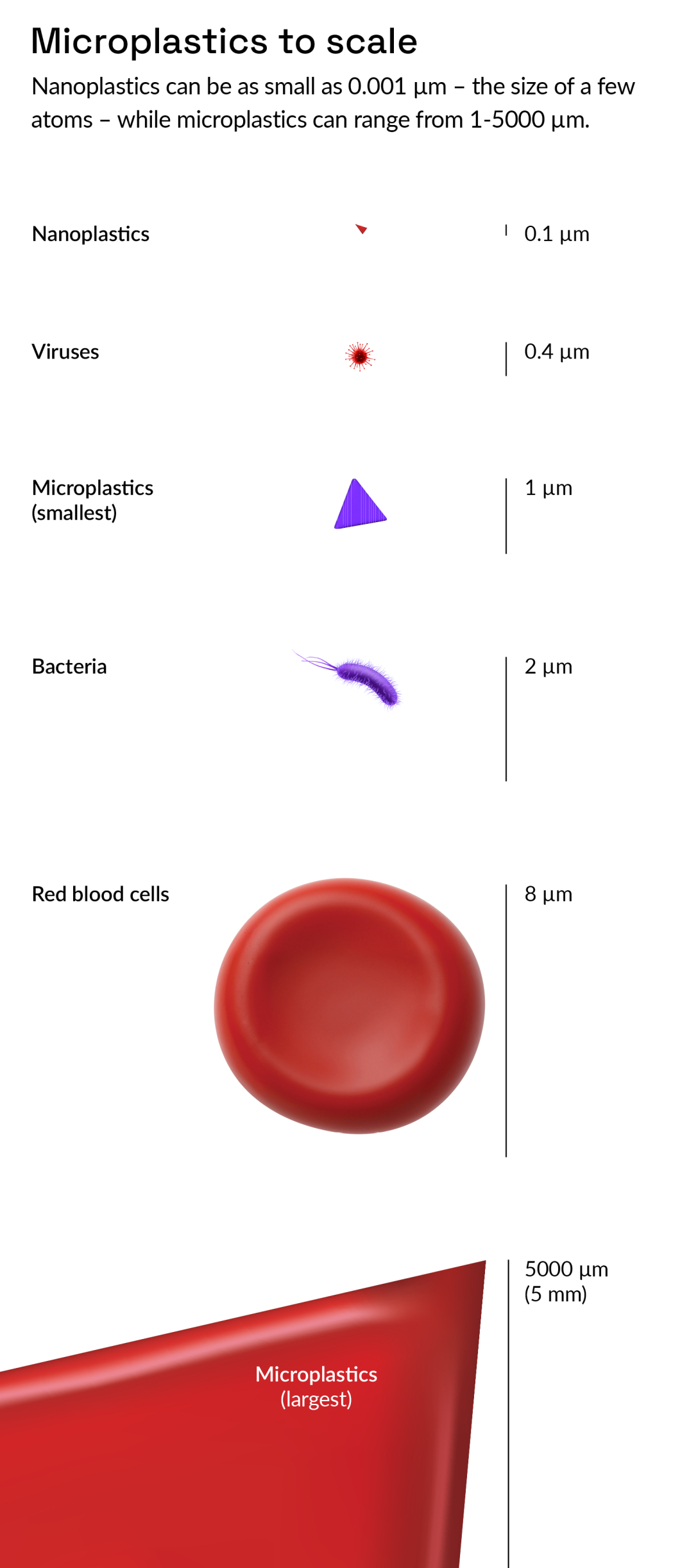
Nowhere is this threat more visible than in reproductive health. Emerging evidence indicates a widespread presence of MNPs within human reproductive systems, with sightings in placental tissue, ovarian follicular fluid and reproductive organs reported at recent international conferences.⁷˒¹³⁻¹⁹
Mechanistic studies have shown that these particles interact directly with mitochondria and endoplasmic reticulum structures, even causing the deformation of intracellular components in placental tissue.
Observational studies have identified correlations between higher MNP burdens in the placenta and reduced fetal growth metrics, such as smaller head circumference and an elevated risk of prematurity. In males, MNP presence has been detected in testes and reproductive fluids, with animal models demonstrating impaired spermatogenesis.
Cardiovascular and endocrine
The heart and vascular systems are also on the front lines. International research has recently detected microplastic particles within arterial plaque, reporting an association between the presence of microplastics in plaque and an increased incidence of cardiovascular events, including myocardial infarction and stroke.⁸
Although causality has not yet been established, these findings reinforce the need for continued research and precautionary risk assessment.
The ability of these particles to cross biological barriers suggests they can distribute systemically throughout the body, challenging previous assumptions regarding biological compartmentalisation.
Microplastics should not be viewed solely as particles. They represent a combination of physical particles, associated chemicals and biological interactions whose cumulative impacts are still being investigated.
Beyond physical particles, chemical additives pose a major threat. Many polymers contain additives such as plasticisers and flame retardants that exhibit endocrine-disrupting properties.⁹ With more than 16,000 chemicals currently used in plastics – many without full toxicological profiling – the engineering profession must advocate for a risk-based, life-cycle approach to avoid regrettable substitution.¹⁰
This shifts the discussion beyond waste management alone. Long-term risk reduction may depend as much on influencing material selection, product design and supply chains as on managing particles and plastic associated chemicals after release.¹⁶ Product stewardship, source control, monitoring and treatment all have important roles to play.
Medical device safety
For engineers working in the biomedical sector, the findings are particularly pertinent.
Stents, catheters and other implantable materials represent a direct exposure pathway. These materials may cause foreign-body-associated infections or degrade and shed micro-fragments over time. Engineers Australia recommends engineering-led reviews of polymer-based medical devices to assess chemical interactions, shedding risks and the feasibility of safer alternatives.
Recommendations
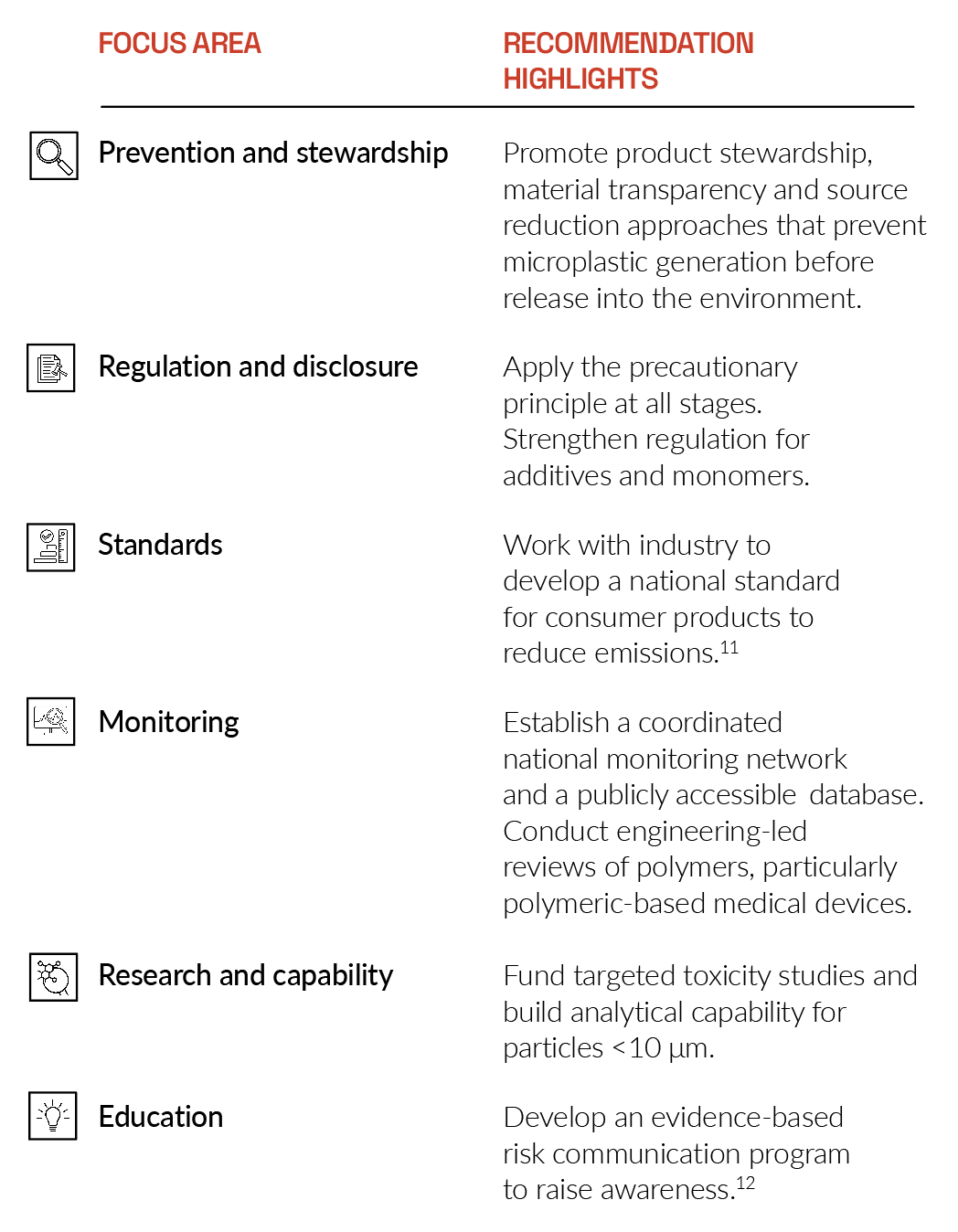
The response required cannot be undertaken by any single organisation or profession. It requires collaboration across the full life cycle of the plastic value chain, from material selection and product design through to use, recovery and end-of-life management. However, engineers are uniquely positioned to influence outcomes through the systems they design, the materials they specify and the standards they help shape. Engineers Australia has therefore proposed six recommendations that can strengthen prevention, transparency, monitoring and informed decision-making.²⁰
International alignment
Encouragingly, jurisdictions around the world are already moving from awareness to action. The European Union has already advanced restrictions on intentionally added microplastics and is progressing frameworks for materials transparency.¹¹ Adapting these elements to the Australian context would reduce regulatory ambiguity and promote industry compliance.
A national standard could set clear specifications for design, composition, shedding and durability. While standards, monitoring and treatment remain critical, international experience increasingly points towards prevention. Product stewardship, material transparency, safer-by-design approaches and source reduction are often more effective than attempting to remove contamination once it has entered environmental systems.
As we look to the future, the engineering profession must champion the precautionary principle. We must move beyond managing waste at the end of its life and start managing risk at the beginning of the design process. Through consistent standards, robust monitoring and a commitment to safer-by-design principles, we can help ensure that the materials of the future do not compromise environmental or human health.
READ: The hidden microplastics risk in “green” plastic
Every era of engineering is ultimately judged by how well it balances innovation with responsibility. Plastics transformed modern society and will continue to play a role in our future. Yet the emergence of microplastics within environmental and human systems reminds us that every material carries consequences beyond its intended use.
Insights gained through my 2026 Churchill Fellowship examining leading approaches across Europe, North America and Asia demonstrate that effective responses require more than monitoring alone. They require fit-for-purpose analytical methods, transparent governance, precautionary decision-making and a commitment to prevention at source.
Engineers have faced large-scale challenges before. We have improved drinking water systems, improved air quality, strengthened chemical safety and redesigned infrastructure in response to emerging evidence. Microplastics represent the next chapter in that vein. The challenge is not to wait for complete certainty, it is to apply the best available evidence, embrace transparency and design systems capable of reducing risk while enabling innovation. Through safer-by-design approaches, better standards, robust monitoring and informed material choices, engineers can help shape a more sustainable future where technological progress, environmental and human health advance together. The question is not whether we can respond. It is whether we choose to lead.
Dr Kala Senathirajah FIEAust CPEng is the Chair of Engineers Australia’s College of Environmental Engineering Board.
This article originally appeared in the August 2026 edition of create with the headline, “Microplastics, major problems”.
References
- Pilapitiya, P.G.C. and Ratnayake, A.S., (2024) The world of plastic waste:
A review, Cleaner Materials, 11. - Senathirajah, K. et al., (2021), Estimation of the mass of microplastics ingested. Journal of hazardous materials, 404.
- Galgani, L. and Loiselle, S.A., (2021) Plastic pollution impacts on marine carbon biogeochemistry, Environmental Pollution, 268.
- Engineers Australia (2022), Submission to the inquiry into plastics pollution into Australia’s waterways.
- Commonwealth of Australia (2024), Drowning in Waste: plastic pollution in Australia’s oceans and waterways.
- Engineers Australia (2024), Environmental College Chair represents us at international plastic pollution negotiations.
- Conference in the European Parliament (2026), Nanoplastics: Threat to Human Health and Climate Stability.
- Goldsworthy, A. et al. (2025) / Zhang, Y. et al. (2025), Scoping review on
CVD and MNP-induced cardiac events. - Endocrine Society (2024), Latest science shows endocrine disrupting chemicals in plastics pose health threats globally.
- Monclús, L. et al. (2025), Mapping the chemical complexity of plastics. Nature, 643.
- EU Commission (2023), Regulation 2023/2055-Restriction of
microplastics intentionally added to products. - Senathirajah, K. et al., (2025), Suburban engineering series – webinars on a sustainable future beyond plastic.
- Ragusa, A. et al. (2021). Plasticenta: First evidence of microplastics in human placenta. Environment International, 146, 106274. DOI: https://doi.org/10.1016/j.envint.2020.106274
- Ragusa, A. et al. (2022). Raman Microspectroscopy Detection and Characterisation of Microplastics in Human Breastmilk. Polymers, 14(13), 2700. DOI: https://doi.org/10.3390/polym14132700
- Seewoo, B.J., Goodes, L.M., Thomas, K.V. et al. How do plastics, including microplastics and plastic-associated chemicals, affect human health?. Nat Med 30, 3036–3037 (2024). https://doi.org/10.1038/s41591-024-03287-x
- Monclús, L., Arp, H.P.H., Groh, K.J. et al. Mapping the chemical complexity
of plastics. Nature 643, 349–355 (2025). https://doi.org/10.1038/s41586-
025-09184-8 - Seewoo BJ, Goodes LM, Mofflin L, Mulders YR, Wong EV, Toshniwal P, Brunner M, Alex J, Johnston B, Elagali A, Gozt A, Lyle G, Choudhury O, Solomons T, Symeonides C, Dunlop SA. The plastic health map: A systematic evidence map of human health studies on plastic-associated chemicals. Environ Int. 2023 Nov;181:108225. doi: 10.1016/j.envint.2023.108225.
- Zhao, Y. et al. (2023). Microplastics in human testes and semen: emerging evidence and implications for reproductive health.https://doi.org/10.1016/j.scitotenv.2023.162713
- Han, H., Xu, B., Pei, X., & Fu, X. (2026). Advances in Male Reproductive Toxicology of Nanoplastics: Potential Risks to Human Reproduction—A Systematic Review. International Journal of Molecular Sciences, 27(7), 3191. https://doi.org/10.3390/ijms27073191
- Engineers Australia (2026), Submission to the inquiry into the impact of microplastics and other toxics on human health.