
The greatest gains from industrialised construction come from creating the conditions that make repeatable production possible.
Sarah Slattery is Director of Partnerships and Innovation at national property and construction advisory firm Slattery.
We don’t think of Australia as a manufacturing nation. But construction is manufacturing.
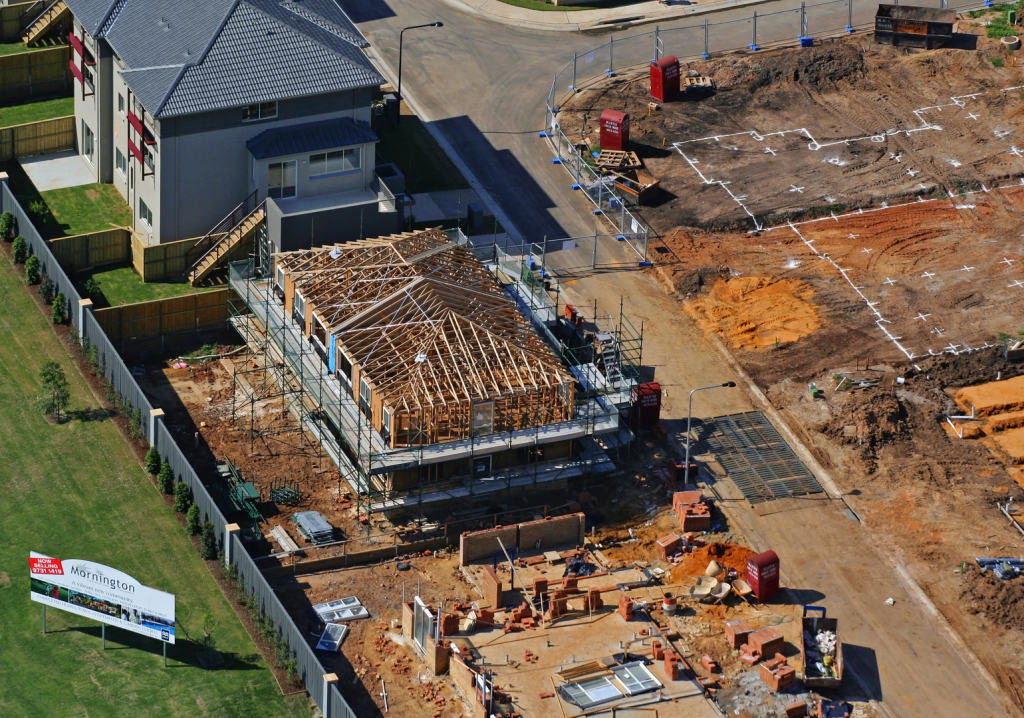
Conventionally, we treat every new building as a prototype. The construction “factory” moves to each new site and production starts before the design is fully resolved. The industry has spent years trying to think outside the box to improve productivity.
Industrialised construction asks us to look inside the box instead. Thinking inside the box means looking at the whole kit of parts. Once we do, many of the challenges – such as labour shortages and skills gaps – become solvable system design problems.
The seven lessons, at a glance
- Industrialised construction is not a single solution.
- Standardisation creates the conditions for industrialisation.
- Repetition, not the first project, unlocks the value.
- Industrialisation needs pipeline certainty.
- Industrialisation requires repeatability before scalability.
- A shorter program creates more choices.
- Modular construction can mean low-carbon, but not always.
The industry has no shortage of terms for building differently: modern methods of construction, prefabrication, modular construction, offsite manufacturing and design for manufacture and assembly, among others. They are often used interchangeably.
The term industrialised construction describes something broader than manufacturing more of a building offsite. It means applying greater standardisation, repeatability and integration across the entire process of design, procurement and delivery.
Case study 1: European modular construction system
Slattery benchmarked traditional in-situ concrete construction in Australia against two overseas industrialised construction approaches.
The first was a European factory-manufactured timber building system. This system produces highly finished, integrated building components – essentially a “kit of parts” – that are transported flat and assembled on site.
The second was volumetric modular construction, whereby three-dimensional modules are manufactured and fitted out offsite, then transported and assembled onsite. This means transporting considerably more volume, including the air inside each module. It also introduces transport, logistics and installation considerations.
Both approaches were tested on the same hypothetical mid-rise residential development: basement, ground-floor retail and seven apartment levels, approximately 5,200 m². The analysis accounted for Australian conditions, including the National Construction Code, fire and acoustic requirements, climate, supply chains and labour markets.
The factory-manufactured timber system cost 3.8 per cent less than traditional construction and reduced the program by 43 per cent.
Volumetric modular construction reduced the program by 23 per cent but came with an 8.5 per cent cost premium.
In other words, one method delivered both cost and time benefits; the other traded higher cost for time.
Cost and program against traditional construction
In the graphs below, bars left of the baseline mean lower cost or a shorter program. The timber system reduces program time by 43 per cent and cost by 3.8 per cent.
Meanwhile, volumetric modular reduces program time by 23 per cent and adds 8.5 per cent to cost.

Case study 2: Australian modular schools program model
Slattery tested how the economics of permanent modular construction could change across a program of repeat school projects for a state education agency.
We compared traditional delivery with an initial modular project and a mature modular program, assuming a standardised “kit-of-parts” design library that could be reused across successive projects. This captured the higher setup costs of early adoption, then tested how repetition could reduce design effort, consultant fees, preliminaries and construction costs as the program matured.
We estimated that the first modular project would cost 7.4 per cent more than traditional delivery, reflecting upfront design development, factory setup, learning-curve inefficiencies and limited market competition.
By the fifth repeat project, total project cost was estimated to be 11 per cent below the traditional baseline.
Facility construction costs fell by approximately 27 per cent between the first and fifth modular projects, as repetition improved design reuse, procurement and factory production.
Repetition drives value across the program
The first project typically costs more than traditional delivery:
Whereas later projects are less expensive than traditional delivery:
This amounts to a reduction in total project cost between build one and build five of 17 per cent.
Case study 3: United States failed factory model
Founded in 2015, Katerra set out to industrialise construction by vertically integrating the entire delivery process. Backed by more than $2.9 billion, the company promised to reduce construction programs by 30–50 per cent.
Katerra sought to implement modern technology at every stage of delivery, from architectural design and engineering to manufacturing, procurement, construction and project management. It even developed its own software platform and manufactured building products ranging from windows to heating, ventilation and air conditioning systems.
At its peak, Katerra employed 7500 people and operated an assembly factory in Phoenix, Arizona. The company also opened a 25,000 m2 cross-laminated timber (CLT) manufacturing facility in Spokane, Washington, increasing North American CLT production capacity by 50 per cent.
However, rapid expansion across multiple products, services and markets increased complexity faster than Katerra could standardise and integrate its operations. Katerra filed for bankruptcy in 2021.
Katerra attempted to apply a Silicon Valley disruption model but underestimated just how variable the construction industry is. The real opportunity for industrialisation is in focusing on the elements that can be standardised and repeated at scale, not in trying to industrialise everything at once.
Repeatable processes
Industrialised construction asks engineers to think differently before anything gets built.
The greatest gains from industrialised construction do not come from taking construction offsite and making buildings in boxes. Instead, they come from creating the conditions that make repeatable production possible.
Read Slattery’s full report on industrialising construction.