
CREATE
  • Technology
    • BIOTECH
    • COMMUNICATIONS
    • COMPUTING
    • IMAGING
    • MATERIALS
    • ROBOTICS
    • SOFTWARE
  • Industry
    • DEFENCE
    • INFRASTRUCTURE
    • INNOVATION
    • MANUFACTURING
    • POLICY
    • PROJECTS
    • TRANSPORT
  • Sustainability
    • ENERGY
    • ENVIRONMENT
    • RESOURCES
  • Community
    • CULTURE
    • PEOPLE
  • Career
    • EDUCATION
    • INSPIRATION
    • LEADERSHIP
    • TRENDS
  • About
    • CONTACT
    • SUBSCRIBE
No Result
View All Result
CREATE
  • Technology
    • BIOTECH
    • COMMUNICATIONS
    • COMPUTING
    • IMAGING
    • MATERIALS
    • ROBOTICS
    • SOFTWARE
  • Industry
    • DEFENCE
    • INFRASTRUCTURE
    • INNOVATION
    • MANUFACTURING
    • POLICY
    • PROJECTS
    • TRANSPORT
  • Sustainability
    • ENERGY
    • ENVIRONMENT
    • RESOURCES
  • Community
    • CULTURE
    • PEOPLE
  • Career
    • EDUCATION
    • INSPIRATION
    • LEADERSHIP
    • TRENDS
  • About
    • CONTACT
    • SUBSCRIBE
No Result
View All Result
CREATE
No Result
View All Result
Home Sustainability Environment

As water’s value rises, the Murray–Darling is being re-engineered

Chris Sheedy by Chris Sheedy
12 February 2026
in Environment, Features
Reading Time: 6 mins read
0
As water’s value rises, the Murray–Darling is being re-engineered

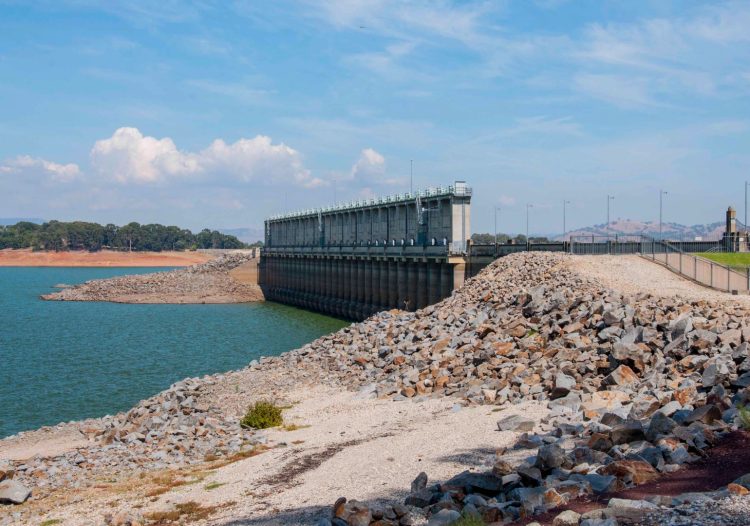
Hume Dam, upstream of Albury in NSW. Image: Fifteen50

When the perceived value of water changes, so does everything else, from the structure of farms to the survival of towns to the engineered solutions that make it all possible. Nowhere in Australia is this felt more keenly than the Murray–Darling Basin.

Engineers working in the water systems of the Murray–Darling Basin (MDB) are confronted by challenges that are equal parts ecological, economic, infrastructural and expectational. As the region changes at a pace driven by water’s scarcity and rising value, all of those issues demand engineered solutions.

Civil engineer Garry Smith, Director of DG Consulting, a water management and water policy consultancy, said the MDB’s most significant advances have come from a much sharper focus on efficiency.

Modernisation has delivered major gains, he said. Improvements across rural networks mean they are “much more efficient now as a result of a lot of this work that has been undertaken to recover water losses”.

“As the value of water increases, some industries become less viable.”
Nathan Heinrich MIEAust

Those savings don’t just reduce waste. They also strengthen the basin’s resilience in dry years, keeping communities functioning during low-flow periods.

But there is still plenty to do. Nathan Heinrich MIEAust, Director and Principal Engineer of Fifteen50 Consulting, an environmental advisory and engineering firm specialising in land management and water resource projects, explained the breadth of the MDB challenge, using the example of a farm.

“As the value of water increases, some industries become less viable,” Heinrich said. “Some industries and various commodities rely on cheap, plentiful water. Dairy and rice are examples. In those industries, as commodity prices aren’t keeping pace with the rising cost of water, we’re seeing consolidation as big farms get bigger and move water around more efficiently.”

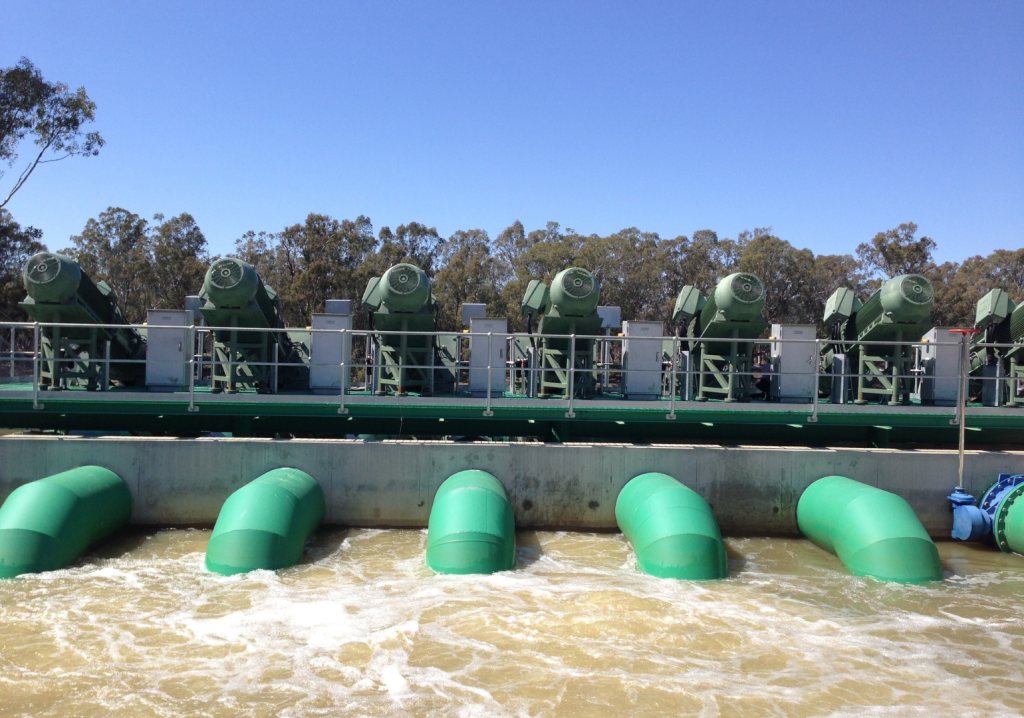
Hattah Lakes Pump Station, downstream of Robinvale in Victoria. Image: Fifteen50

Instead of channels and flood irrigation, they are shifting to pumps and sprinkler irrigation, to offer greater control over smaller amounts of water.

In fact, entire production systems are changing.

“Where dairy farms may have practiced extensive grazing … as water economics shift they instead look at ways to produce more from each megalitre, increasing intensity by confining dairy cattle to feed barns or pads and implementing high-output, irrigated fodder and grain production systems,” Heinrich said.

“Rice production in Australia is already the most water-efficient in the world, and yet the industry is continually implementing ways to improve their tonnes-per-megalitre production. Aerobic rice production, rice that doesn’t require paddy inundation, is an example of the Australian industry pursuing greater efficiency to remain competitive in a future with less water.”

Such changes flip processes on their head, as well as the infrastructure supporting them. Farms represent a microcosm of the changes occurring across the MDB.

So what solutions are engineers bringing to the table to help satisfy the region’s thirst?

Advanced control technology

Some of the MDB’s biggest efficiency gains have been delivered by automation, Smith said. The thousands of kilometres of water channels once relied on manual, wooden drop bars to control flow. Many have now been retrofitted with flume gates, powered by solar-driven electric actuators. 

“They allow very precise measurement of flow and also adjustment of flow very frequently,” Smith said.

Combined with remote control capabilities and real-time telemetry, flows can now be balanced far more accurately, significantly improving operational efficiencies.

There is also less water theft as automated regulators and metering mean authorities can better measure the water balance through each channel, and remote sensing combined with satellite imagery can make it possible to see which large dams on privately owned farms are being filled outside of those farms’ permitted windows.

Earthworks at Gayini Nimmie Caira, Lower Murrumbidgee. Image: Fifteen50

Closing the water system

More common than high-tech solutions to boost water efficiency is simple and effective engineering. One of the most transformative shifts in the MDB has been the move from open and often earthen channels to lined pipes and pressurised systems.

In some regions, Heinrich said, “old channel run schemes have experienced losses as high as 90 per cent, and the pipe systems have recovered all of that”.

“So, 90 per cent of the water released from headworks was being lost to seepage and evaporation. These are systems that were built 50 to 100 years ago. Modernising them has realised those water savings.”

“The Goulburn-Murray Water Connections Project … created long-term average water savings of 433 GL per year, which is roughly the amount of water the city of Melbourne uses in a year.”
Garry Smith

Smith agrees, adding that pipelining major channels is not always feasible or cost effective. Instead, in some areas significant water savings have been achieved through the implementation of new technology for improved management and control of the networks, upgrading to more accurate electronic metering, decommissioning of redundant channels and strategic installation of high-density polyethylene lining to reduce seepage and leakage losses.

“For example, the Goulburn-Murray Water Connections Project modernised the Goulburn Murray Irrigation District and created long-term average water savings of 433 GL per year, which is roughly the amount of water the city of Melbourne uses in a year,” Smith said.

Precision water delivery

Environmental water managers are expected to operate with the same efficiency as irrigators, requiring investment in new infrastructure.

Nathan Heinrich MIEAust. Image: Fifteen50

“They are seeking infrastructure solutions to use water more efficiently and ensure the environmental water gets to the high-value assets that they want to maintain,” Heinrich said. “The managers of that environmental water are, indeed, irrigators of environmental assets and are incentivised to be efficient in the same way consumptive users are.”

Key engineering elements include smart regulators and weirs and other infrastructure that allows precise control of flows, including pump stations and pipelines, levee banks, channel structures, drains and culverts to reduce waste.

The engineering challenge lies in the precision required, Heinrich said. Every litre lost represents lost ecological opportunity.

Wastewater re-use and circularity

As competition for water increases, towns and industries are turning to recycling and reuse. However, wastewater varies enormously across the MDB, with geographical locations experiencing their own unique challenges.

Outside one town, Heinrich said, “all the wastewater goes to a lagoon system for evaporation. The water quality is very poor, so it’s not economical to reuse it”.
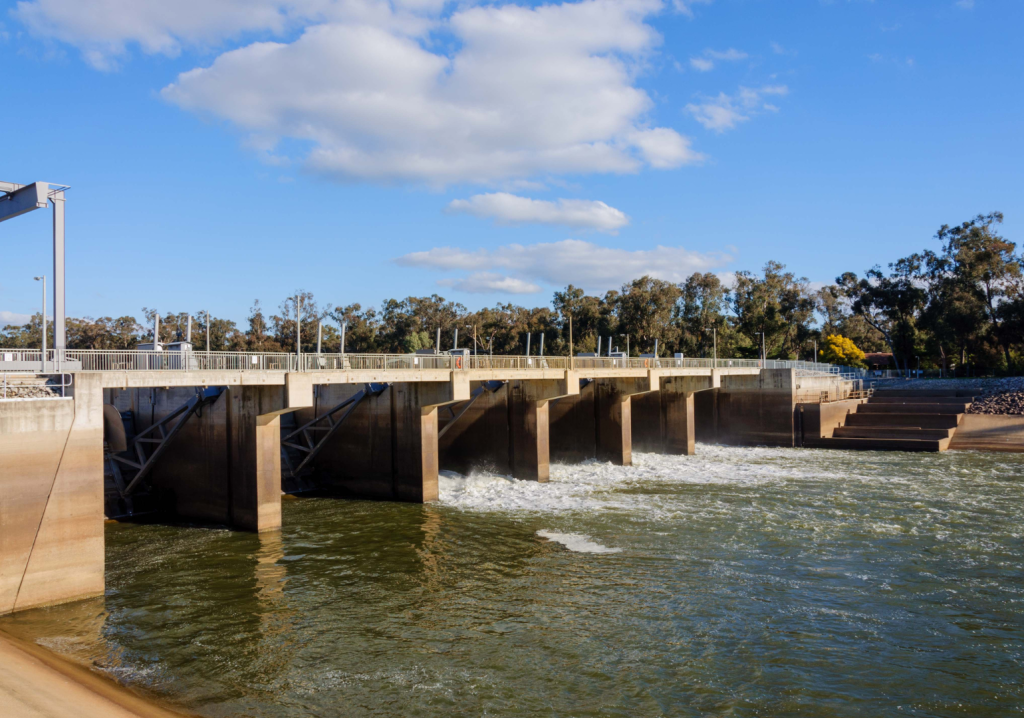

Torrumbarry Weir in Victoria. Image: Fifteen50

In this instance, shallow saline groundwater infiltrates the sewer network, making the resulting wastewater unsuitable for agricultural or industrial reuse.

However, in another town the situation is entirely different, with wastewater being treated through reverse osmosis for recycling and reuse for non-potable purposes.

As is the case across the water sector: “If you don’t have a market for it at the price it costs to produce it, it undermines the whole basis for building that treatment infrastructure.”

The future of the basin

The water management processes, policies and infrastructure in the MDB are having positive results. In fact, water managers from other countries look to the region for certain aspects of best practice.

“We’ve just got to be quicker,” Heinrich said. “The landscape of water and how it’s managed, licensed and allocated is shifting fast, as is water supply through the changing climate, as is the value of the water, as are community expectations, and more.

“As engineers, we’re trying to keep up and adapt. The planning, designing and building process needs to continue to accelerate to keep up with the rapid pace of change. It’s a great challenge.”

Learn about the state-of-the-art satellite remote sensing technologies being used in water engineering.

Tags: water engineeringriver engineeringAustralian environment
Previous Post

What the Iberian blackout tells Australia about reactive power

Next Post

Breaking point: South Korea’s department store disaster

Chris Sheedy

Chris Sheedy

Chris Sheedy is a professional writer whose work has taken him to the UK, USA, Europe and China. He has a fascination with big things - ideas, organisations, infrastructure, achievements, brands - and the people and processes required to make them a reality.

Related Posts

New engineering competency standard set to meet industry demands
Career

New engineering competency standard set to meet industry demands

27 August 2026
How smart glasses technology could aid visually impaired people
Features

How smart glasses technology could aid visually impaired people

25 August 2026
Are machine swarms the future of robotics?
Features

Are machine swarms the future of robotics?

25 August 2026
Next Post

Breaking point: South Korea’s department store disaster

Leave a Reply Cancel reply

Your email address will not be published. Required fields are marked *

create is brought to you by Engineers Australia, Australia's national body for engineers and the voice of more than 120,000 members. Backing today's problem-solvers so they can shape a better tomorrow.
  • ABOUT US
  • CONTACT US
  • SITEMAP
  • PRIVACY POLICY
  • TERMS
  • SUBSCRIBE

© 2024 Engineers Australia

No Result
View All Result
  • Technology
    • BIOTECH
    • COMMUNICATIONS
    • COMPUTING
    • IMAGING
    • MATERIALS
    • ROBOTICS
    • SOFTWARE
  • Industry
    • DEFENCE
    • INFRASTRUCTURE
    • INNOVATION
    • MANUFACTURING
    • POLICY
    • PROJECTS
    • TRANSPORT
  • Sustainability
    • ENERGY
    • ENVIRONMENT
    • RESOURCES
  • Community
    • CULTURE
    • PEOPLE
  • Career
    • EDUCATION
    • INSPIRATION
    • LEADERSHIP
    • TRENDS
  • About
    • CONTACT
    • SUBSCRIBE