
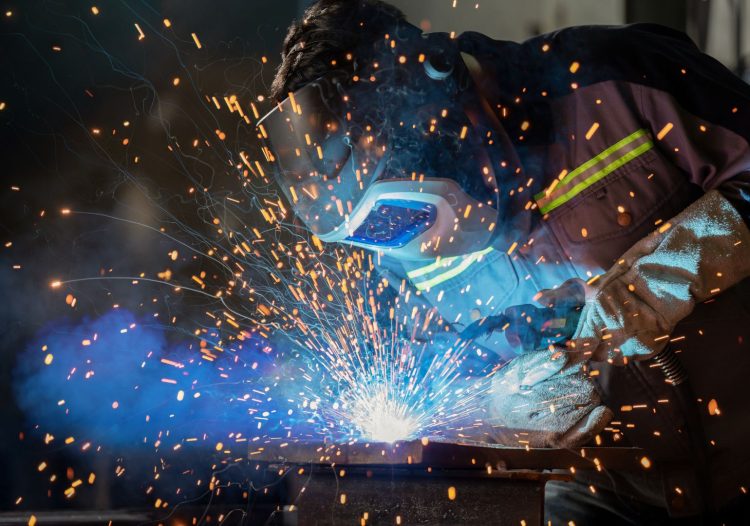
Australia’s industrial future depends on its ability to do more than extract and export. The National Reconstruction Fund is charged with rebuilding the country’s capacity to manufacture technologies and materials at scale.
Despite its fair share of innovations, Australia is famous for its struggles translating world-leading ideas into commercial realities. Established in 2023, the National Reconstruction Fund (NRF) aims to change that reputation by investing in industrial capability to diversify and transform Australia’s economy.
With more than a thousand applicants for funding to date, someone with experience in rigorous governance and with a commercial, future-focused mindset is vital to guide investment decisions in the national interest.
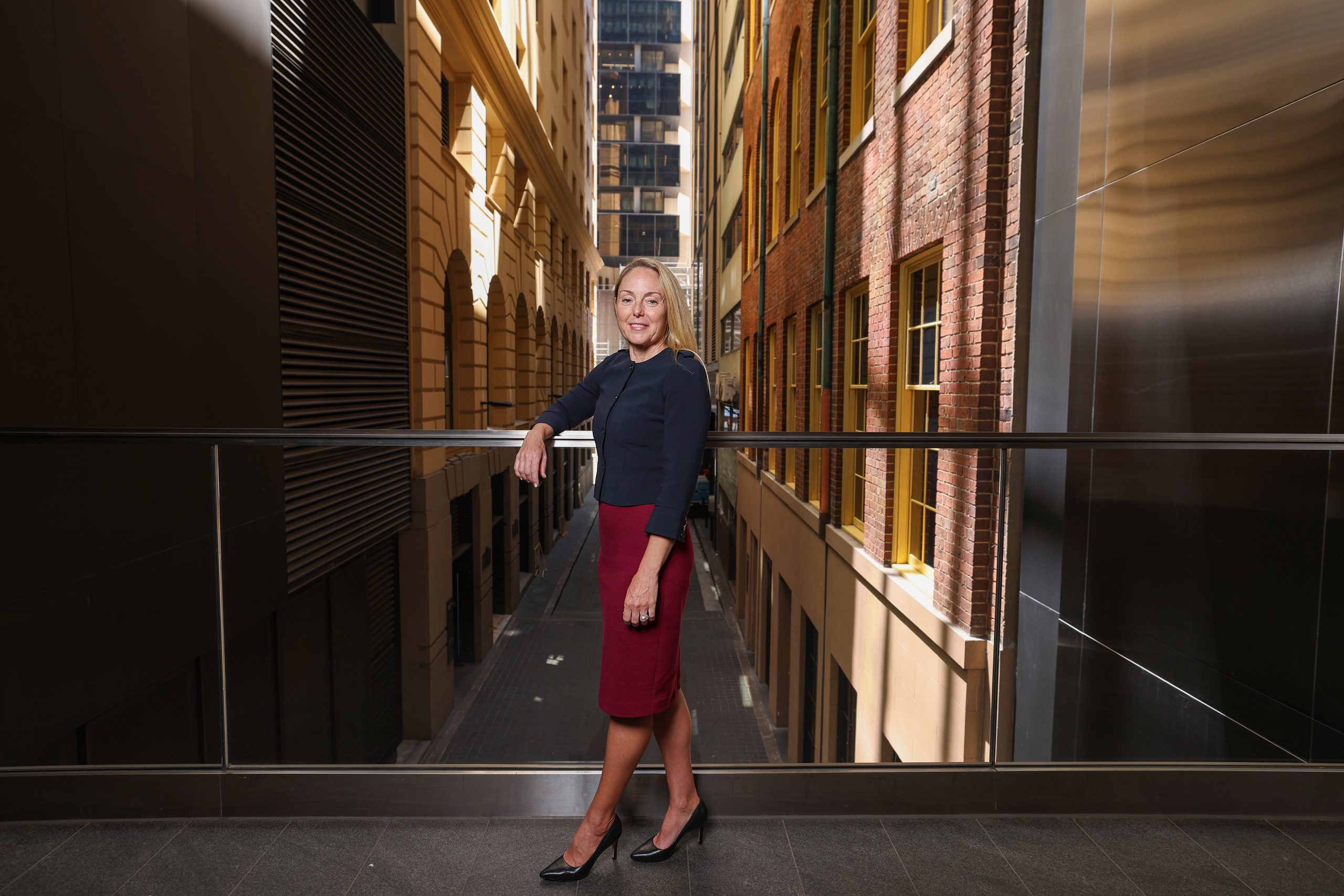
That’s Chief Investment Officer Mary Manning, a veteran fund manager with decades of private sector experience who has stepped into the government space for the first time. That breadth and depth of experience matters when the goal is to turn ambition into sovereign industrial capability.
For Manning, the NRF is more than another investment fund. It’s an opportunity to shape Australia’s industrial story.
“It’s about building capability,” she told create. “We can actually help the country make things again.”
The NRF invests across seven priority sectors: renewables; enabling capabilities; defence; transport; resources; agriculture, forestry and fisheries; and medical science. These are known internally by the acronym REDTRAM.
Though the idea is simple – using government investment to prime the innovation pump – the execution is much more complex. The NRF can invest across both debt and equity, from senior secured lending to early-stage venture capital requiring a critical eye sensitive to long-term outcomes.
The goal is to develop sovereign capability by ensuring Australia can produce and scale critical technologies on its own terms.
Taking intelligent risks
Backing innovation means embracing uncertainty. For Manning and her team, that means balancing commercial returns with national interest.
“We’re a commercial fund, not a grant program,” she said. “We have a return benchmark – the five-year government bond rate plus 300 basis points – so every deal must stand on its own merits.”
But risk, she said, isn’t a deterrent; it’s part of the design. “The National Reconstruction Fund Corporation Act 2023 identifies areas where we can take higher risk.”
These areas include national security, new and emerging technologies and industries, and projects with longer-term horizons. “Private investors often can’t go there because their funds are shorter-dated. That’s where we step in.”
What you end up with is a diverse portfolio in terms of industry, but also across the risk spectrum. Some projects are low-volatility industrial expansions; others, such as quantum computing or hypersonic flight, may take a decade to commercialise.
“It’s about constructing a portfolio that works as a whole. Some investments will outperform. Others won’t make it. But together, they move Australia forward.”
Collaboration by design
Amid the broad scope and intertwining complexities, collaboration is a core priority.
Again, “collaboration is written into the Act”, she said. “We must collaborate with other Specialist Investment Vehicles – Clean Energy Finance Corporation, Northern Australia Infrastructure Facility, Export Finance Australia, Future Fund and Australian Renewable Energy. We share intelligence, compare deal flow and coordinate impact.”
And that cooperation extends beyond government. “The NRF wasn’t set up to crowd out private capital. It’s here to crowd it in. For every dollar we invest, we aim to bring in at least one dollar from the private sector.”
Sometimes that crowding-in effect goes global. “Foreign direct investment matters just as much. If international partners co-invest, we expand the whole pie rather than just reshuffle slices.”
It’s an approach Manning says is uniquely Australian in spirit – pragmatic, networked and open. “The NRF can be the anchor investor that gives others confidence to join in.”
Making the big decisions
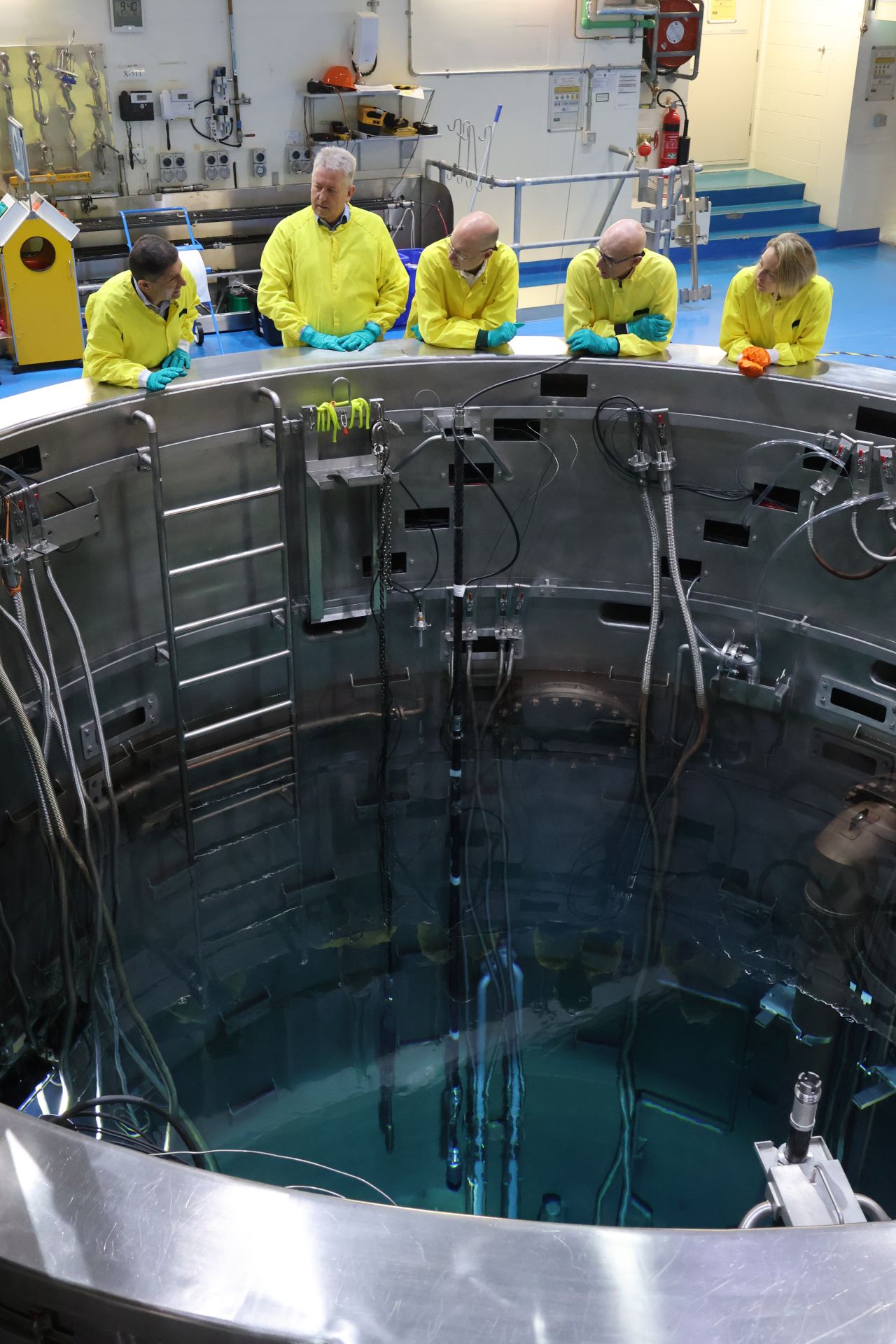
With thousands of decisions required, systems are everything. Behind the scenes, Manning has built an investment process designed to rigorously interrogate applications.
“We’ve had more than a thousand proposals. Only a handful make it through. So we start with two simple questions: ‘Can we?’ and ‘Should we?’”
“Can we?” is a legal test. The project must fit within the NRF Act, one of the seven sectors and be primarily Australian-based. “Should we?” is the real debate. “That’s where we weigh the investment thesis against the risks.”
Each proposal passes through multiple phases of due diligence, from a one-page “phase zero” summary to full-scale 50-page investment papers for board approval.
“It’s a tightly engineered process. We actually have an engineer on the team who designed our investment decision funnel – what goes in, what comes out and all the decision gates in between.”
So far, 16 investments have made it through that funnel. Among them are projects that reflect both the ambition and diversity of the fund.
One early-stage investment supports Hypersonix, a hydrogen-powered aircraft company developing scramjet engines that can reach Mach 5 speeds without emitting carbon dioxide.
“It’s high-risk, high-potential and 100 per cent Australian engineering,” Manning said.
At the other end of the spectrum is Arafura Rare Earths, developer of the Nolans Project, north of Alice Springs.
“Our $200 million equity investment helps unlock the critical minerals that feed wind turbines and batteries. It’s a complex project with over a billion in debt and a billion in equity, but the impact on jobs, regional development and supply-chain resilience is enormous.”
The contrast between a small hydrogen startup and a billion-dollar mining operation shows how broad the NRF’s remit truly is.
“That breadth and depth is what makes the work so intellectually rewarding. It’s rare to have a $15 billion multi-asset fund investing from Series A venture capital to large-scale infrastructure.”
Seven disciplines
Collaboration isn’t just an external priority, but also an internal necessity.
“For every proposal, we bring together people from seven disciplines – investment, finance, legal, environmental-social-governance, impact, technical and risk,” Manning said. “That can make things more complex, but it also leads to better decisions. You’re constantly learning from people who know different things than you do.”
That cross-functional model, she believes, mirrors the way engineering teams work – multidisciplinary, iterative and evidence-driven.
Understanding complexity is vital. “It doesn’t have to be chaotic. Handled properly, it leads to stronger outcomes.”