
The biggest barrier is often not invention, but proving new materials will perform safely for decades. From low-carbon concrete to composite bridge decks, innovators are accelerating testing and reshaping approval pathways without compromising public trust.
Concrete is sometimes referred to as the second most consumed substance on earth, after water. In Australia alone, an estimated 29 million m³ of concrete premix is made annually.
Globally, manufacture of its key ingredient, cement, contributes between 7 and 8 per cent of all carbon dioxide emissions, chiefly through converting limestone into clinker (the key ingredient in cement) and the heat required to do this.
Some experts express frustration at the pace of concrete greening in relation to our national decarbonisation targets: 62–70 per cent below 2005 levels by 2035, and net zero by 2050.
“As new concretes get developed, how do we get them out of the laboratory and into practise more readily, more quickly?” Professor Stephen Foster told create.
The Professor of Structural Engineering at UNSW has a biography listing more than 400 publications in the field of structural concrete and concrete materials, awards for his contributions, and numerous standards development roles.
“It can take 15 years for something that’s been developed in the laboratory to find its way to a standard, if we’re generous, and we don’t have 15 years.”

Clare Tubolets, CEO of the SmartCrete Cooperative Research Centre (CRC), said Australia has led the world in research on geopolymers, which don’t use cement as a binder and contain much less embodied carbon.
“We have 40 years under our belt of understanding how that material functions, and you can’t get a commercial geopolymer in Australia,” she said. “We could keep putting money into testing these new whiz-bang concrete mixes. But until we actually have a market that’s ready to adopt them, it’s just flushing money down the toilet.
“Or it’s giving that research to other countries, because geopolymers are being very happily adopted in, say, the UK, the US or other major markets. If you look at the quantity of research that’s been done, Australia has done about 80 per cent of all the research in geopolymers. It’s our research money that’s now supporting development in the rest of the world. Are we happy with those spillovers?”
Concrete isn’t the only corner of the built environment where progress is slow, and standards development often gets cited as an impediment. Dr Ali Mohammed CPEng, Technical Lead at Wagners Composite Fibre Technologies, agreed that standards development was cautious and deliberate.

“It’s very careful work,” he said. “We understand it’s a slow process, but we need to see [it through].”
Timber dream
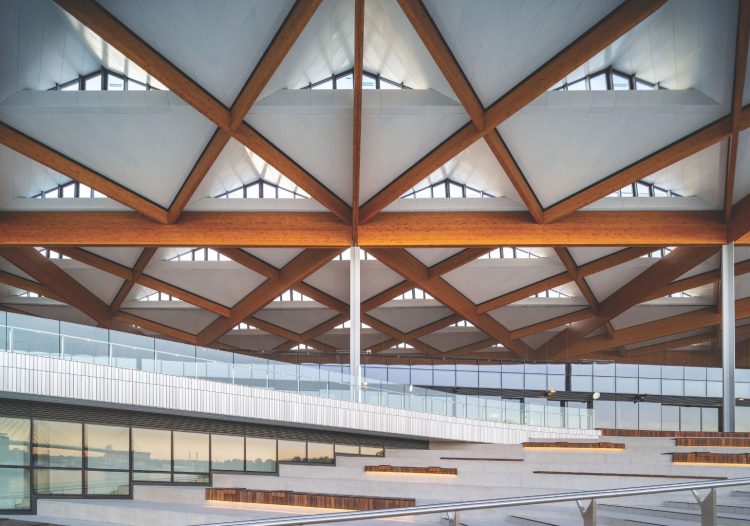
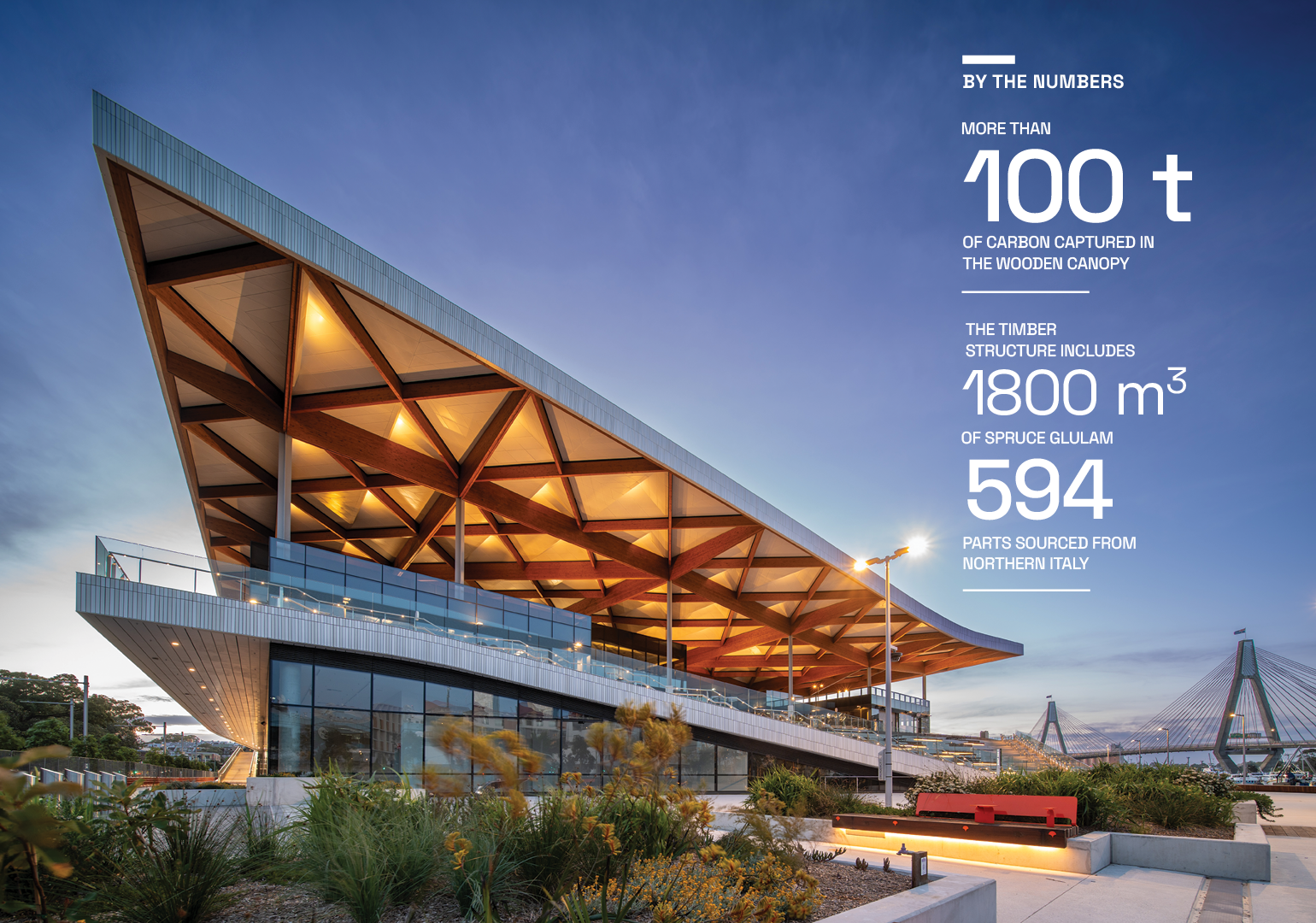
The new $836 million Sydney Fish Market opened to the public in January. Media coverage noted the expectation of six million visitors a year, with superlatives such as the most significant Sydney landmark since the Sydney Opera House, and the building with the biggest timber roof by mass in the Southern Hemisphere. The 200 m floating roof came about due to a commitment to turning a timber dream into reality, said Graham Babcock, Buildings Market Lead – Australia at Mott MacDonald.
“During that initial reference design, we looked at many options in terms of what the roof structure could be,” he told create. “In terms of materials, we looked at concrete, steel and timber in various primary and secondary structural arrangements, but timber was the one we were most passionate about, given the form, function and environmental conditions.”
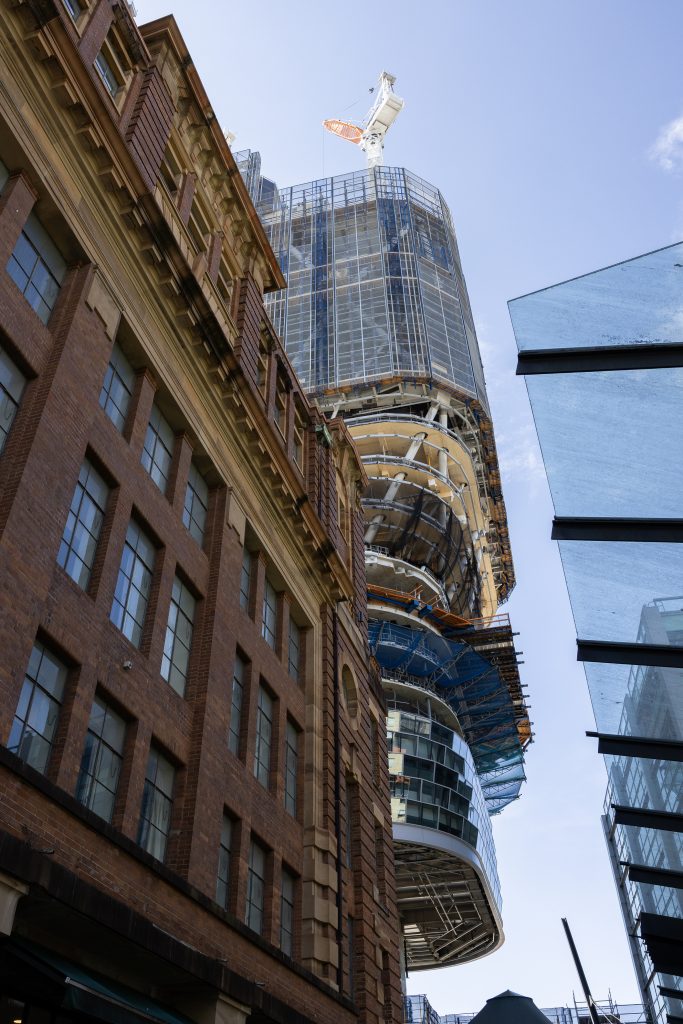
Mass timber is arguably gaining interest in Australia, helped by projects such as the 183 m hybrid timber Atlassian Central building under construction near Sydney’s Central Station, as well as the claimed carbon sequestration benefits. The new Sydney Fish Market captured more than 100 t of carbon in its timber canopy.
According to vendor Rubner Timber Engineering, the timber structure includes 1800 m3 of spruce glulam and 594 parts, sourced from the Dolomites in Northern Italy, with the largest of these 32.7 m.
Babcock said his mantra is “the right material, in the right place, for the right use”.
“Steel would’ve likely required repainting every 10-15 years due to corrosion in the marine environment. Timber, on the other hand, requires very little maintenance.”
The project was delivered by Infrastructure NSW on behalf of the NSW Government, with architecture by BVN/3XN.
IMMERSIVE FEATURE: The innovative engineering behind the new Sydney Fish Market
SCMs catch on
Low-carbon concrete is poorly defined. However, the two most common types are: concrete with supplementary cementitious materials (SCMs, with one or a combination of fly ash, blast furnace slag or silica fume) partially replacing ordinary Portland cement as a binder; and geopolymer, which uses an alumina silicate material and an acid or alkaline activator.
One perspective is that adoption of concrete incorporating SCMs is progressing well. This comes from Ed Bond, Principal at Robert Bird Group (RBG).

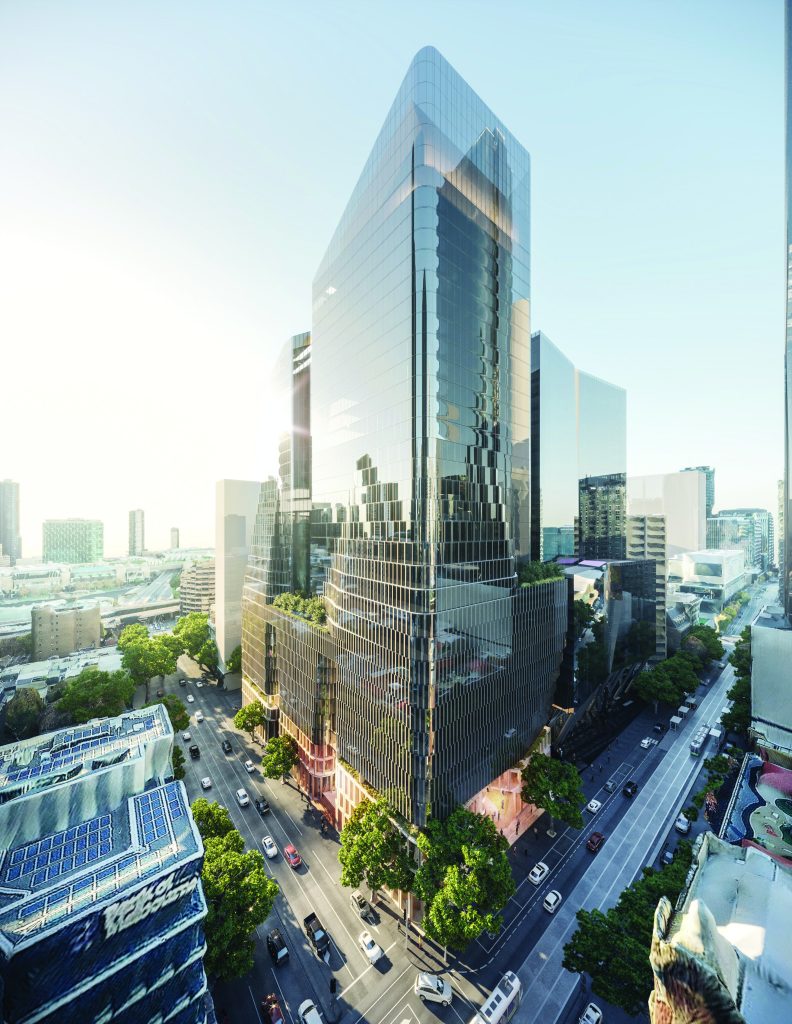
Asked about RBG’s work on 555 Collins, a commercial building with a concrete frame using 30 per cent fly ash in its binder mix, he said things have been “evolving pretty quickly” since design work started on the project in 2019 and completion in 2023.
“I’ve been having discussions with the major suppliers within industry, and they have started to default to low-carbon concrete mixes, in some cases without a premium,” he said. “Also without selling it as something very different to traditional mixes.”
The construction sector “appears to be moving towards a 30 per cent SCM mix as industry standard on larger projects”, and low-carbon concrete mix libraries are now readily available online to help guide engineers.
When it comes to engineers reducing their concrete’s greenhouse gas emissions, Bond made suggestions including not over-specifying strength, with each higher strength class nominated representing up to an extra 20 per cent of embodied carbon. This allowed for strength gain based on a 56-day cycle rather than 28 days, depending on construction program and time when full strength is required, and specifying Portland cement replacement within a mix.
Further complications
One of the real challenges to novel concrete mixes is understanding durability. Long-term performance of long-term structures is no small issue.
“The way our standards are written is that they can, if we’re not careful, be a barrier to implementing these new materials – and we don’t want them to be,” said Foster, who has been on the Australian Standards BD2 committee for the AS 3600 Concrete Structures Code for more than two decades. He also chaired the committee that developed Standards Australia Technical Specification 199:2023, Design of geo-polymer and alkali-activated binder concrete structures.

“We want to work on how we rewrite some of our standards so we’re better aligned with a performance-based specification rather than an empirical-based specification. Removing things such as minimum cement contents out of standards and relying on the performance, whether durability or serviceability. Strength is usually not the key issue. Durability is.
“There’s no point using materials that all of a sudden in 10-20 years we’re going to have to replace because they haven’t performed, because there’s nothing sustainable in that.”
Tubolets gave a somewhat tongue-in-cheek hypothetical example, naming the wonder-material Clarecerete. This new combination of climate-positive concrete and thought experiment is able to capture atmospheric carbon, and has been demonstrated to meet important performance requirements, she said.
It has passed the Accelerated Mortar Bar test and the Concrete Prism test, two accelerated tests for alkali silica reactivity. But given that it was synthesised six months ago, exposure testing results only go back that far.
“We certify our bridges for 100 years, our roads for 40 years and our buildings for 50 years,” Tubolets said.
“Do we feel comfortable that the known tests are actually giving us that accelerated result when we don’t necessarily have data to support that over, say, a 30-50 year timeline?”
Another thorny issue for new materials is that it’s a collection of stakeholders needing to trust something unknown.
“There must be designers actually selecting for that material, the engineers saying, ‘Yes, we can actually put that into that build’, and the architects, again, making decisions about which materials are going to be used. Then you’ve got the asset owner who has to sign that off.”
Though mass timber is not a new material, its adoption faces some hurdles on the way to widespread adoption in the Australian market.
Put simply, Babcock said, the supply chain in Australia is not as mature as it is in Europe, where his company ultimately had to look.
Without a strong supply chain and subcontracting market experienced in the delivery of timber buildings and structures, it becomes challenging for clients to achieve cost-effective solutions.
“We look at a number of schemes each year where the client wants to adopt timber,” he said. “It’s about understanding and communicating the implications.
“Basic considerations such as floor-to-floor heights on certain building typologies increasing, making buildings taller and facades more expensive; or design coordination needing to happen earlier to meet supply chain lead-times to prevent impacts on construction programs.
“While the raw cost of timber as a material often matches or betters that of steel and concrete, it’s the industry’s lack of familiarity with timber, the supply chain maturity and the perceived risks compared to traditional construction that can really drive up overall project costs.”
Accelerated ageing tests
Concrete needs to perform appropriately in its workability (how easily it can be moulded), strength and durability, said Professor Vute Sirivivatnanon, Research Director at SmartCrete CRC.
He added that the first two are the easiest to test for. The third involves understanding how well a type of concrete will last in a certain environment, which is “possibly the most difficult and most challenging test”. This is what accelerated ageing involves.
Sirivivatnanon showed a slide from a recent presentation citing Thomas and Innis’s three methods for judging the usefulness of accelerated ageing tests. These are based on ease and time taken, repeatability and reproducibility (precision), and predictive ability.
So how do you predict the durability of a bridge that might have to last 100 years, when a deterioration issue such as cracking from the reaction of alkali in cement and reactive silica in the rock (ASR) might only show up 20 years in?
There are three broad ways to accelerate ASR, said Sirivivatnanon, whose career includes nearly two decades as a CSIRO Senior Principal Research Scientist, leading a research team and conducting work on concrete durability in particular.
One is to increase the temperature. One is to increase the alkalinity in the specimens. And then aggregate in the concrete can be made into smaller particle sizes to increase the exposure surface.
Short-term tests are compared against long-term exposure sites, such as the CANMET site, to gauge their predictive accuracy.
This story was originally published in the May 2025 edition of create with the headline “Breaking the testing bottleneck”.
EVENT: Witness innovation in structural engineering at Australasian Structural Engineering Conference.