
A new national framework is set to reshape the infrastructure, standards and skills landscape around AI in Australia. Engineers Australia National President and Board Chair Tom Goerke FIEAust CPEng EngExec explains what engineers should be watching as the framework takes shape.
Australia is moving towards a new regulatory framework for AI, with engineers likely to play a key role in both implementing the changes and shaping how AI is used across the profession.
The Federal Government announced its proposed national framework in July, including plans for a new set of Australian standards for AI, new requirements for large data centres, and a new Office of AI within the Department of Prime Minister and Cabinet.
The goal is to give Australia clearer rules for navigating the AI boom, while also ensuring the country has a say in how the technology is developed and deployed.
Following a meeting of the National Cabinet on 26 August, the government confirmed that Commonwealth legislation is being developed for early 2027.
While many of the details are still to come, the announcement offers a glimpse into how AI will be governed and regulated in Australia over the coming years.
According to Engineers Australia National President and Board Chair Tom Goerke FIEAust CPEng EngExec, the new National Standards will most likely be a positive development for engineers, giving them greater certainty about what they are designing for and how those systems should be implemented.
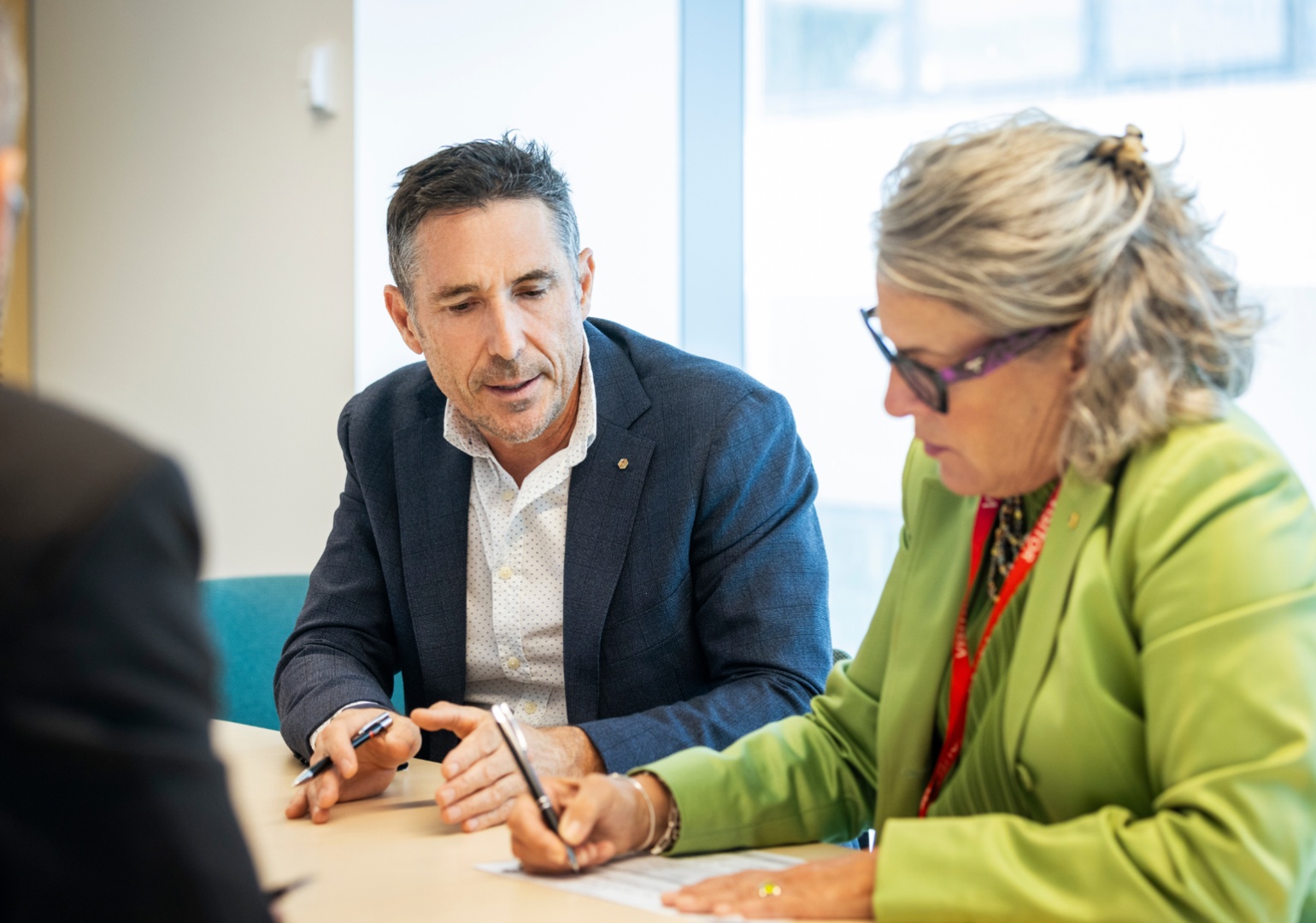
“What we’re also hoping to see out of the standards is who is accountable. We speak a lot about AI augmenting what engineers do, but responsibility and accountability are [a key part of that],” he said.
“AI isn’t going to remove engineering accountability. If anything, it’s going to make it clearer and more important.”
READ: How model-based design is building trust in generative AI
Extending opportunity
One of the framework’s key aims is to bring greater consistency to Australia’s approach to AI.
Rather than engineers and organisations having to navigate a fragmented set of policies and requirements, nationally consistent standards could provide a clearer idea of what constitutes a sound approach.
The exact scope of the standards is still being developed, but the government has confirmed they will establish clear requirements for large data centres, including their energy supply, connection costs, power use and water efficiency.
That means opportunities for engineers are likely to extend well beyond software and computing.
“Data centres themselves – and everything that goes into them, whether it’s CPUs, GPUs, heating, cooling, networking – they’re the building blocks,” Goerke said.
He expects the build-out to generate demand for electrical, mechanical, civil and construction engineering expertise. However, he said, even more opportunity could emerge from the systems being built on top of that infrastructure.
“The bigger growth will be for forward deployment engineers – the engineers that sit between the virtual and physical infrastructure and the business problem,” he said.
As AI becomes integrated into existing enterprise systems, engineers who can understand both the technology and its practical application will become increasingly valuable.
“The programming will typically be automated, but someone is [always] responsible for architecting how that system is going to work.”
READ: Ethical AI in engineering: Is it possible?
From sovereign capability to “sovereign agency”
Australia’s AI ambitions cannot rest on physical infrastructure alone. The country also needs the skills and expertise to make use of it, said Goerke.
“What I’d like to see is not just having harmonised standards, but also ensuring that we have sovereign capability and agency over AI,” he said.
“There’s no point having an amazing regulation and governance standard if you don’t have the capability that it’s going to regulate.”
Universities will be a key part of that equation, he said. Australia needs to ensure it is developing software architects, engineers, computer scientists and other specialists with the depth of expertise needed to build and interrogate increasingly complex AI systems.
As well as sovereign capability, he said Australia should also think about “sovereign agency”, or the ability to understand and control systems even when the underlying technology is not produced domestically.
“When we are reliant on international organisations to provide key services, which we are … How can we ensure that we can control where the data is, what computers are being used, or whether they are aligned to the guidelines and regulations that we’ve put in place?”
That is why Goerke argues engineers need a seat at the table before the standards are finalised – not after.
“Engineers are the ones that are typically building these solutions – in the same way we design and build bridges, we design and build software architectures,” he said.
“So it’s really important to have those people that understand the deep technology working with you when you’re defining these standards. Because you need to know what’s possible, but also what’s practical.”
READ: How AI is solving engineering’s capacity problem
Acting now
Although the final standards and legislation are still some way off, Goerke said engineering organisations should not wait for the government to define every aspect of responsible AI use.
“Engineering firms should be identifying where they’re comfortable from a risk appetite perspective,” he said.
The risk appetite will look different depending on what the AI is being asked to do. An inaccurate marketing draft is one thing, but an incorrect decision embedded in an energy or hospital system can be catastrophic.
He recommends organisations understand what AI can and cannot safely do, trial emerging technologies in controlled environments and develop their own guidelines.
Engineering firms will also need to evolve their approach to AI skills development.
As AI becomes increasingly agentic and capable of connecting systems and performing tasks autonomously, engineers will need to retain strong technical knowledge while developing their ability to evaluate AI-generated outputs.
“The role of the engineer increasingly shifts towards judgement and critical thinking – understanding the problem, interrogating the output and determining whether it is appropriate in the real-world context,” said Goerke.
As AI automates some of the tasks traditionally assigned to junior engineers, firms may need to find new ways to provide early-career engineers with the experience needed to become senior practitioners.
“It’s not about preserving junior work and trying to keep the past – but we should preserve the learning pathway that creates experienced engineers,” Goerke said.
The bottom line
For all the changes AI will bring to engineering, Goerke said there is one principle that should remain unchanged: the engineer remains accountable for the systems they design and the decisions they make.
“Whether it’s a calculator, software or AI, it is incumbent on the engineer to understand how those tools operate and the limits of what they can do, and then apply the appropriate guardrails,” he said.
“Engineering has never really been about calculation – it’s about applying knowledge and judgement to create safe, effective systems in the real world. AI changes those tools, but it doesn’t change the fundamental responsibility.”
EVENT: Information, Telecommunications and Electronics Engineering Symposium