


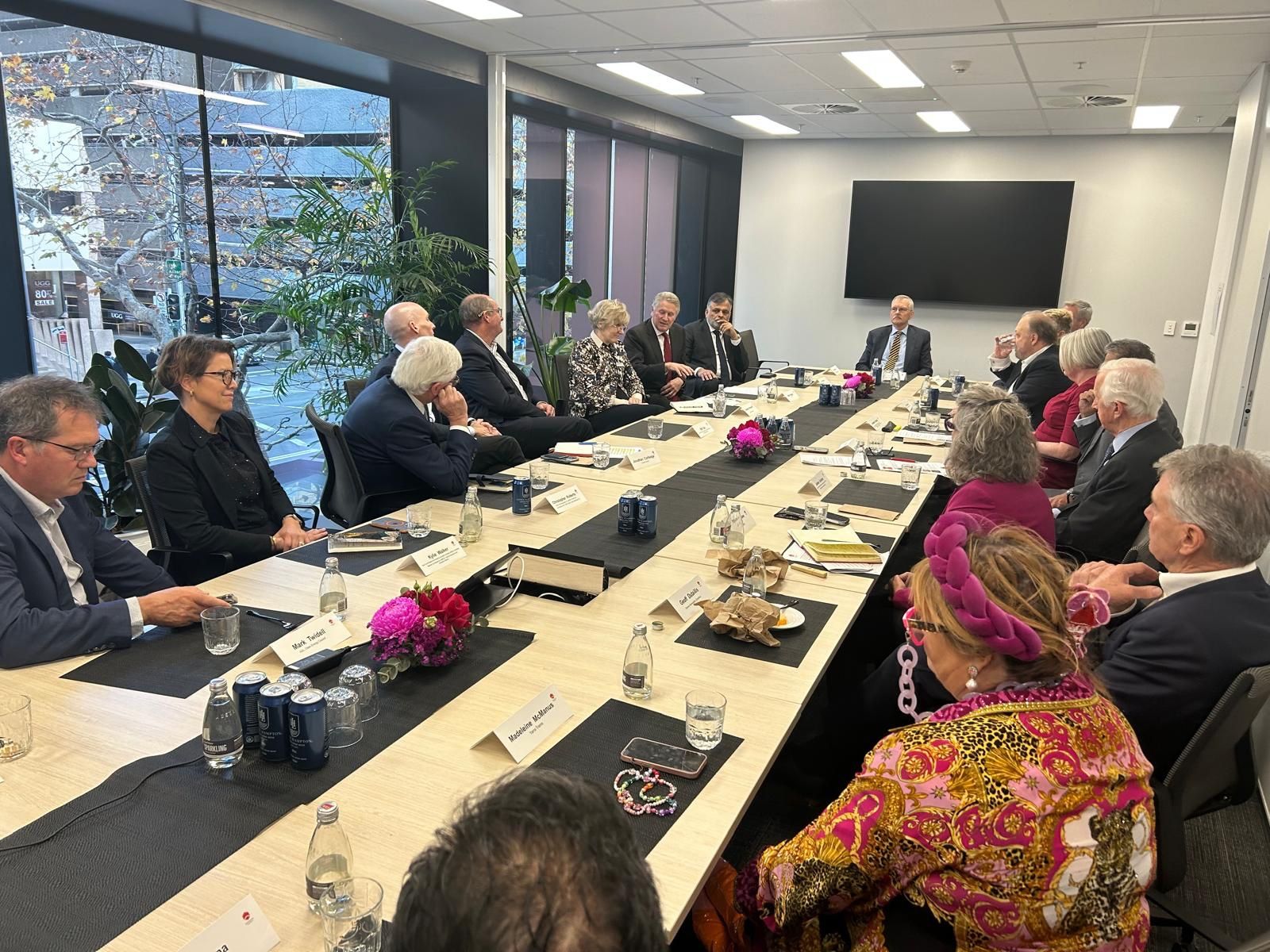
Engineers Australia, Consult Australia and the Australian Institute of Company Directors convened an exclusive roundtable in June to explore an urgent question: how can boards better tap the commercial, systems and problem-solving strengths of engineers?
Held under the Chatham House Rule, the discussion brought together prominent chairs and senior board directors with engineering backgrounds to reflect on the opportunities and obstacles for engineers in governance.
This session forms part of the Engineers with Influence series, a joint initiative designed to amplify engineers’ voices in leadership, governance, policy and business.
Engineers are national assets
Dr Raj Aseervatham, Engineers Australia President and Board Chair, opened the conversation by underscoring the economic weight of engineering in Australia’s economy. Around 48 per cent of industry value added comes from “engineering-heavy sectors” like mining, infrastructure, energy and advanced manufacturing, Aseervatham said.
Three ideas “capture the spirit of engineering today”: systems thinking, innovation and sustainability. This mindset is vital as boards grapple with complexity, risk and long-term challenges.
Jonathan Cartledge, CEO of Consult Australia, emphasised the influence of engineering businesses, which generate around $18 billion in annual revenue and employ 280,000 people nationally. “As we engage with government, it’s important to understand where engineers sit within decision-making structures,” he said.
Strategic and technical experts
From the moment we wake up to the moment we go to bed, we interact with the work of half a million engineers who make our country function, noted Engineers Australia’s Chief Engineer, Katherine Richards AM.
Yet, engineers remain underrepresented in governance roles. Fewer than 3 per cent of corporate directors come from STEM backgrounds. Boardrooms favour candidates from law, finance and executive management.
Engineers excel at solving complex problems, which is why they can make good directors, CEOs and chairs, the group agreed. But cultural and social biases can stand in their way. Too often, organisations see engineers as “technical” specialists, rather than strategic problem-solvers adept at engaging stakeholders, managing costs, timelines and quality, navigating commercial realities and creating value for society.
More than one participant described being the sole engineer on the board as “lonely”. Others agreed that, when engineers are present, they consistently bring rigorous analysis, risk literacy and commercial acumen.
As one director observed: “Building a business is an exercise in design. You analyse the past, but you have to design the future.” No other profession is better qualified to do this. Another participant put it this way: engineers “hold the minute detail and the big picture together”.
A nuanced skill mix
Boards – like all workforces – benefit from diversity of thought around the table, noted AICD CEO Mark Rigotti. But a diverse board isn’t just demographics. It’s about “cognitive diversity”.
This observation reflected a broader theme: the opportunity is not simply to install “more engineers on boards”, but to rethink how boards value cognitive diversity, systems thinking, problem-solving and commercial breadth.
Participants identified recurring barriers that limit engineers’ participation:
- Narrow CVs: Engineers often present themselves as technical experts rather than commercial leaders.
- Recruiter bias: Automated screening tools can overlook engineering backgrounds.
- Perceptions: Engineers are sometimes seen as too detail-oriented or insufficiently broad in outlook.
However, there was strong consensus on how to overcome these barriers: expand access to board readiness and mentoring programs, and share how companies with engineers on boards outperform.
“If the challenge is to convince boards that they need something they don’t yet know they need, the best way is to tell success stories – and highlight the role of engineering in that success,” one participant suggested.
A strategic vision
Engineers Australia is launching its new strategy, with one of its long-term aspirations – or “moonshots” – being the integration of engineering into policy, social and educational decision-making. Four out of five Engineers Australia members rank this as a high priority; and this sentiment is shared by non-members too.
Romilly Madew AO, CEO of Engineers Australia, reinforced the organisation’s focus during the roundtable: “We’re ensuring that engineers understand the skills they need to secure board positions, and that boards recognise their value.”
Engineers Australia is also expanding its board readiness programs. The successful pilot AICD/Engineers Australia course recently run in Perth offers a strong model for future development, Madew suggested.
The next hot ticket
The Engineers with Influence series continues in 2025 as part of a dedicated CEO and board engagement program with leading ASX companies and market leaders. These structured lunchtime conversations will contribute to a strategic influence campaign to ensure engineers’ voices are present wherever decisions are made.
Upcoming invitation-only events include:
- 14 October: CEO focus on elevating engineering voices in business
- November: Senior engineers in government exploring the nexus between policy and public sector governance
Summaries from these roundtable discussions will be shared in create digital and Consulting Matters.
Enhance your engineering career and professional profile with Engineers Australia’s Build Your Brand toolkit. Explore tailored resources designed to help you unlock skills, advance your career and gain greater recognition.




I attended the EA short course Engineers on Boards in 2022 and started applying for Board roles with zero response and zero success. Majority of roles are categorised for Law, Accounting, IT, Social Justice, Philanthropy, Fundraising and almost none make reference to technical or analytical skills.
Keep trying, we need more engineers on boards. Perhaps you can broaden the scope of your CV to include a little more fundraising, law and accounting skills, although not necessarily formal qualifications.
Famously, court room lawyers don’t like engineers as jury members. We tend not to be swayed by emotion or play acting. We demand, and respond to, hard evidence and facts.
I suspect that approach might not sit well with many boards that have fallen into either (a), a group-think mind-set and/or (b), have vested interests in how they got to where they are collectively. Having said that; there are great exceptions, such as Sir Rod Eddington, who combine their engineering education and skills with acute insights into human psychology and leadership.