


In his new memoir, Learning a Life, Professor Robert Care AM HonFIEAust CPEng(Ret) offers a timely reminder that solving the problems faced at work can sometimes be easier than confronting the ones carried within.
At 65, Professor Robert Care stood before a room of engineers to deliver a keynote about his career.
He breezed through a number of interesting projects quickly before switching to a topic rarely found in an engineering presentation: his multi-year struggle with severe depression.
“I was candid,” Care said, “touching on parts of the experience that back then (and still today) cause emotions to well up and bring tears to my eyes.”
In the Q&A that followed, many questions focused on how depression had affected his career and leadership and after he sat back down came an extraordinary moment. The CEO of a successful engineering consultancy leaned in to tell Care that he had attempted serious self-harm three times. He wanted to know how Care got to the point where he could talk about his depression so openly.
“It gushed out, like a release, and at once I saw a chink open in him through which something new wanted to emerge. The conversation that followed between us was deep and rich,” Care said.
“A friendship developed, one that remains to this day. The chink was open, permanently. Light was coming through.”

Behind the mask
Care’s struggle with his mental health is, unfortunately, indicative of a problem that remains particularly relevant to men in Australia, and the male-dominated profession of engineering is certainly not exempt.
Beyond Blue reports that only 28 per cent of Australian men seek professional mental health support, compared with 50 per cent of women. Of the nine people who take their own lives every day, seven of them are men.
The contradiction for engineers is stark: a profession built around identifying risks, solving problems and designing resilient systems often struggles to create space for conversations about personal vulnerability and mental wellbeing.
Care knows the contradiction intimately.
On paper, his career is a model of professional achievement. He has led many thousands of people in senior international leadership positions with Arup, continues to serve as a Professor of Practice at UNSW, and is the Chair of RedR Australia and RedR International. He has also received an Order of Australia for contributions to engineering, business, humanitarian programs and athletics.
But beneath that success was a quite different story. A story that came to a head at age 50.
“Despite my many external successes, my internal life was defined by great fear and confusion. On many occasions my impostor syndrome and fear of failure was overwhelming,” he said. “But most troubling was how effectively I concealed it from those around me. I was still able to operate at a high professional level and appeared to have the world at my feet.”
That sentiment may resonate with more engineers than Care could ever know.
Learning a Life is not simply a memoir of a distinguished engineering career. It is an examination of the assumptions that can accompany professional success: that resilience means enduring, that leadership means certainty, that vulnerability is weakness, and that personal difficulties should be kept separate from professional life.
Care ultimately discovered something different: that authenticity could create honest connection. After he’d sought professional help and began to open up about his own experiences, other people felt able to share theirs – an idea that extends beyond mental health right into the heart of what it means to be a leader.
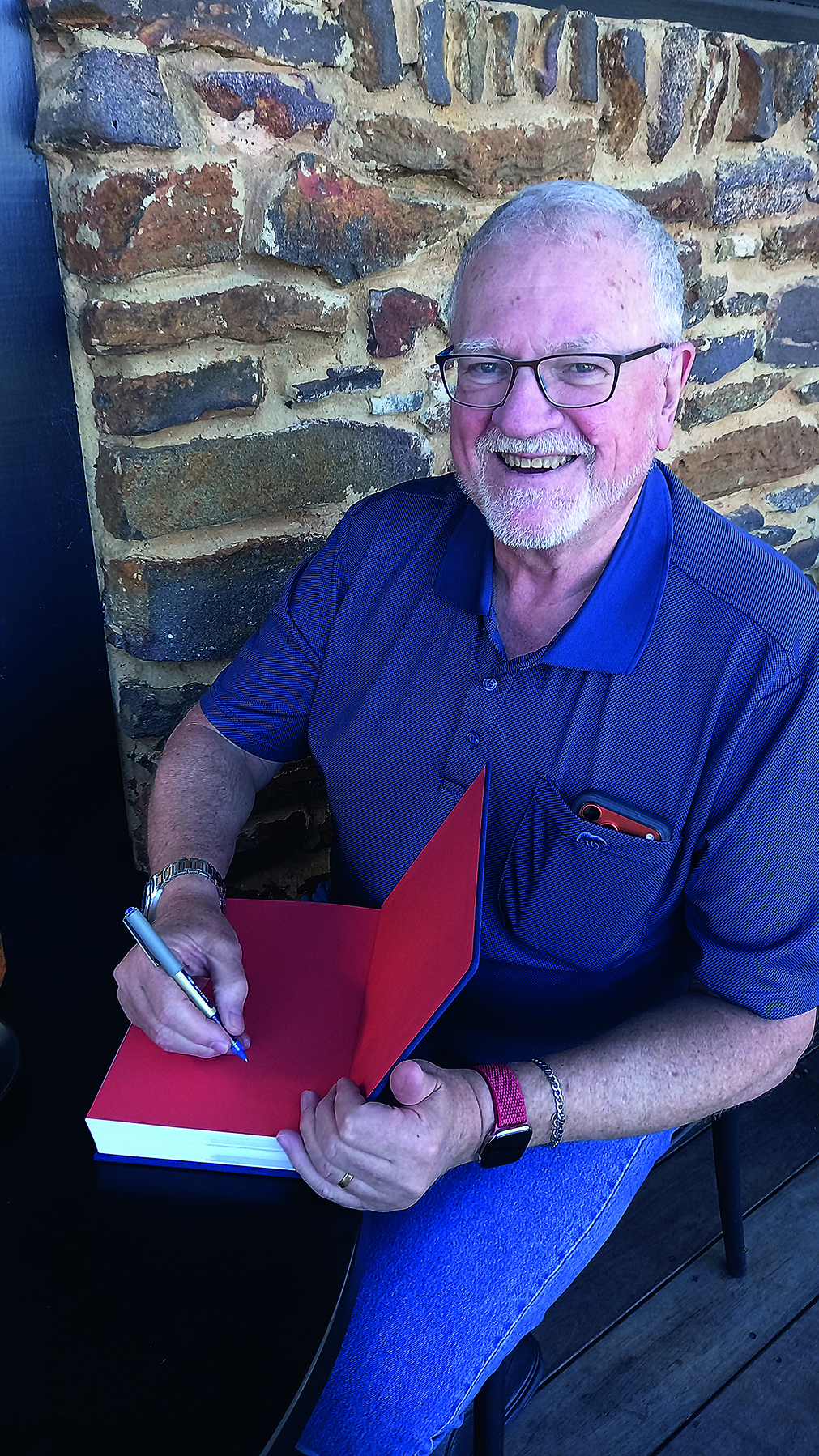
Reflecting on his career and life, Care constantly interrogates this question of leadership – not simply of organisations or businesses, but “of my own life”. His answer is less about achievement than awareness: recognising your strengths and limitations, caring for yourself, finding balance, and identifying the purpose that gives your work meaning.
“We are all born into a unique life with unique gifts and a unique purpose,” he said. “Our one and only job is to learn how to live our life to the best of our ability and seek out those gifts and that purpose.”
There is no neat formula in Learning a Life, and Care makes no claim to a perfect recovery. He describes his depression as an ongoing “work in progress.”.
But perhaps that is the point.
For engineers accustomed to designing solutions, managing uncertainty and fixing what is broken, Care’s story offers a different kind of challenge: sometimes the most important system to understand is yourself.
Learning a Life is now available from Rabbit Hole Books.
Register for an upcoming webinar that explores how deliberate career decision-making supports both professional success and personal wellbeing.