
The agricultural industry has long looked to technology as a way of solving labour shortages. One Australian company is replacing massive soil-compacting machinery with lightweight, intelligent robotics.
Farmers Jocie and Andrew Bate, in the central Queensland town of Emerald, had to compete with the local coal mining industry for workers, while maintaining their reputation for producing a high-quality crop.
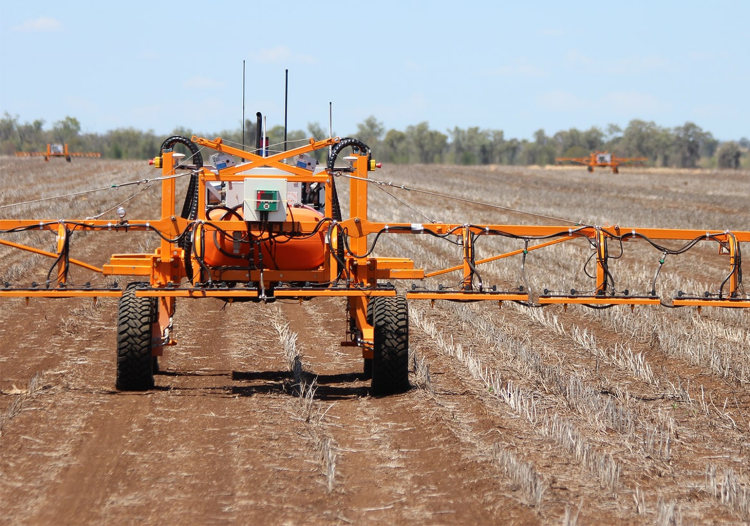
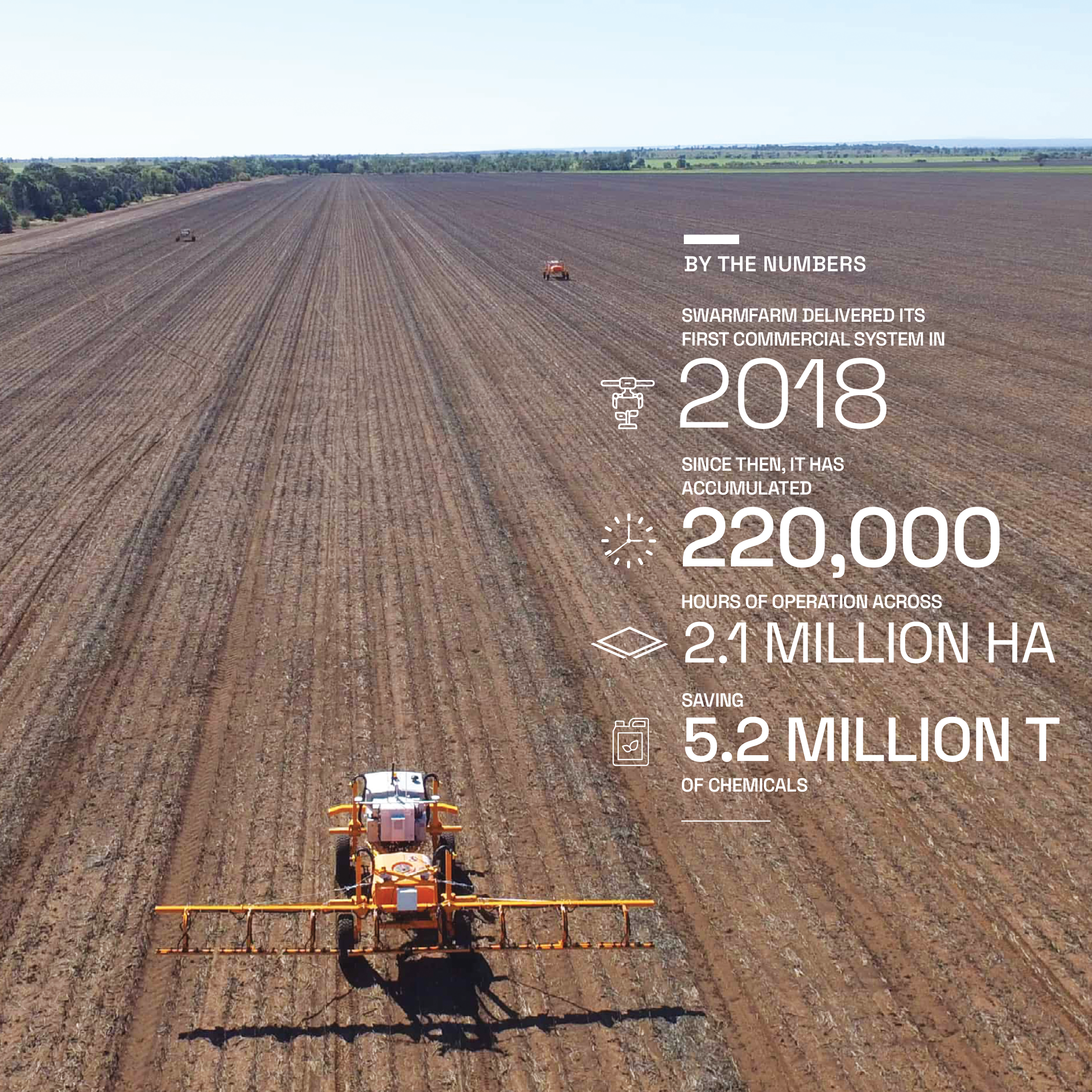
It was 2012, after working too late into the evening atop an enormous and expensive tractor, when Andrew decided there had to be a better solution than larger and ever-more-complicated machines. Together, the Bates founded SwarmFarm, an agricultural robotics company that delivered its first commercial system in 2018 and has since accumulated 220,000 hours of operation across 2.1 million ha, saving 5.2 million t of chemicals.
But while labour shortages formed part of the company’s inspiration, Tom Holcombe, the company’s portfolio manager for Western Australia, said its ambitions extend far beyond that.
“They were getting bigger, faster, wider, heavier machines, but they were compromising on the crop that they were growing,” he said.
“They were doing a blanket application, for example, of a specific pesticide across the whole paddock, when it might have only needed to be applied to 2-3 per cent of the paddock.”
The idea behind SwarmFarm was to use technology to grow better crops rather than simply automating current processes. SwarmFarm’s machines allow farmers to use less pesticide and rotate the ones they do use, meaning weeds don’t build up resistance.
SwarmFarm has added seed planting and mowing tasks to its robots’ repertoire, and SwarmConnect ecosystem permits partners to design further attachments, such as a slasher or spreader.
And this equipment does less damage to the soil than a traditional tractor. Rather than spraying an entire field, one of the robots deployed might be used to target pesticides only at a precise location, for instance, or to pull out a specific weed.
“Eventually we’ll use multiple smaller, lighter weight machines to be able to achieve what we’re doing currently with one big machine,” Holcombe said. “Smaller, lighter machines mean less impact on the soil, so rather than using potentially 20-30 t machinery, we’re down at a fraction of that.
“We have a lot less impact on the soil with compaction, which means that more of the area out in the paddock can be productive.”
READ: How an autonomous mining system operates
Meeting expectations
SwarmFarm began operations by producing eight metre-wide, 25 hp robots (its first prototype was electrically driven), but since then its inventory has grown to include hydraulic-drive robots up to 70 hp, which are able to pull a trailer 27 m wide while carrying 3000 L of chemicals.
Much of this evolution came through adjusting to farmers’ expectations.
“For people to adopt this technology and take it into their farming practices, we needed to fit within current systems to a degree,” Holcombe said.
“A lot of people have controlled traffic farming systems – you’re looking at three-metre wheel centres – so your tractors, harvesters, sprayers and everything driving through the paddock is essentially driving along the same lines.”
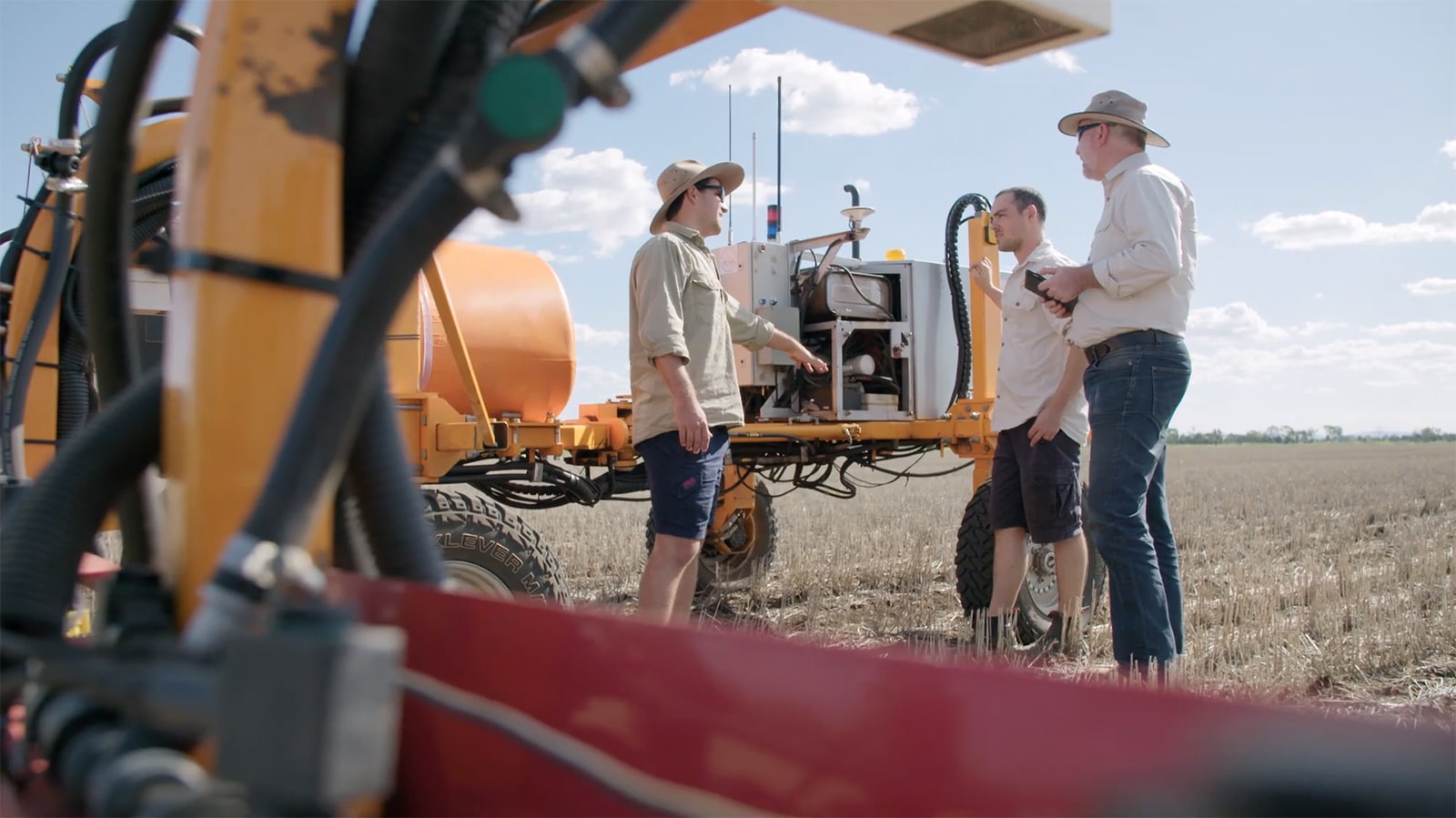
Responding to customer demand has also shaped the level of autonomy delivered by SwarmFarm’s technology. Holcombe notes that some farmers want greater control than others.
He recalls discussing the process of seeding with two brothers who were customers.
“One brother was saying that it’s such an important task to go and carry out, and it’s cheap to put someone in there,” he said. “The other brother was saying, ‘Well, if we can automate it, then why not? Why not automate everything? It means we potentially have higher accuracy. If we have enough sensors on there, we can monitor everything that’s going on.’”
For an activity such as crop spraying, however, many more customers are comfortable with starting the robot and allowing it to do its work.
“It’s going to stop when the weather conditions aren’t quite right and it’s going to get to the end of the paddock having done what it said it has done,” Holcombe said. “Ultimately, you can throw sensors at something, but at the same time, you’ve got to make sure it’s reliable, it actually works and can deliver the result people are after.”
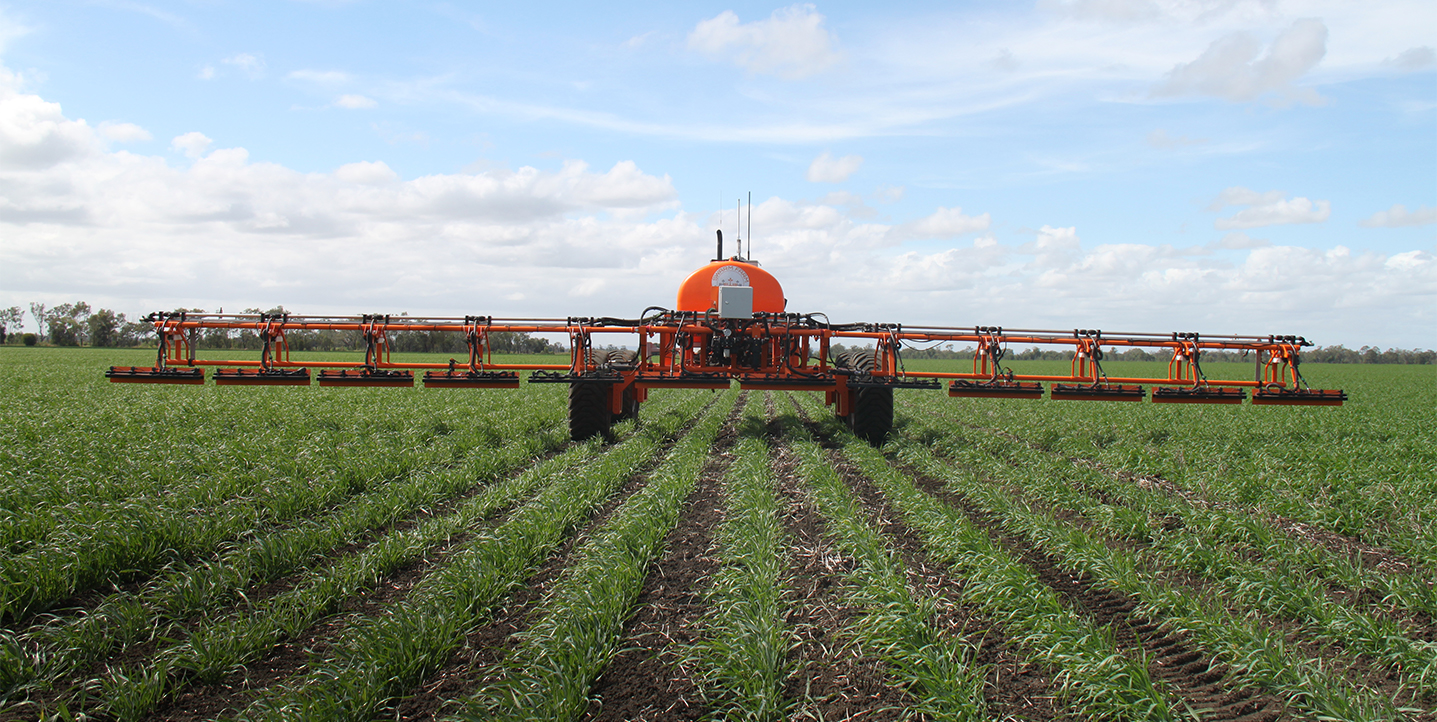
SwarmFarm’s system combines its line-up of SwarmBots, which can be assigned to operate together on a task such as spraying or chipping; the AutoFill station, to which the robots can return to replenish supplies; and the SwarmView app, which sends data to the farmer.
SwarmBot is required to be connected to a network to be able to complete autonomous abilities. With full connectivity, the robot can be assigned tasks and restricted to a geofenced area for safety purposes.
“The software developers can put a new bit of software on a robot straight away,” said Will McCarthy, SwarmFarm’s Chief Product Officer, in a video produced by the company. “Within an hour of completing that software package, it can be out on a robot in a field in real-life conditions.”
READ: How autonomous systems are changing Australian industry
Path planning
That kind of operation requires a lot of planning.
“We’ve got to preload all of that information, so path planning is a massive part of that,” Holcombe said. “Planning a path for the machine to follow through the paddock before it goes out there and trying to set it up for success is a pretty big part.”
As SwarmFarm works to build greater autonomy into its machines, it becomes increasingly important for Holcombe to build trust with customers and understand how they use the technology.
“Being able to share information between each of the machines and where they’re up to is essential as well,” he said. “Knowing what [another robot] has done to be able to share things like section control as applied data, so we’re not doubling up out in the field – or if we do need to double up, we know that we need to double up.”
New markets
With SwarmFarm announcing $30 million in new funding late last year, it’s turning its attention to expanding locally, as well as exploring the North American market.
“There are a lot of obstacles we need to solve along the way, like having machines autonomously running in a field where there are many variables,” Holcombe said. “Whether it’s different soil conditions at different times, weather conditions or an object that comes into a field, there are lots of obstacles we come up against both physically and mentally.”
Ultimately, he said, the company measures success by its ability to help farmers grow crops more effectively and more efficiently.
“Australian agriculture has always had to innovate to compete on the global market.”
This article was originally published in the August 2026 edition of create magazine with the headline “Bots in field”.
WEBINAR: The benefits of robotics in farming