

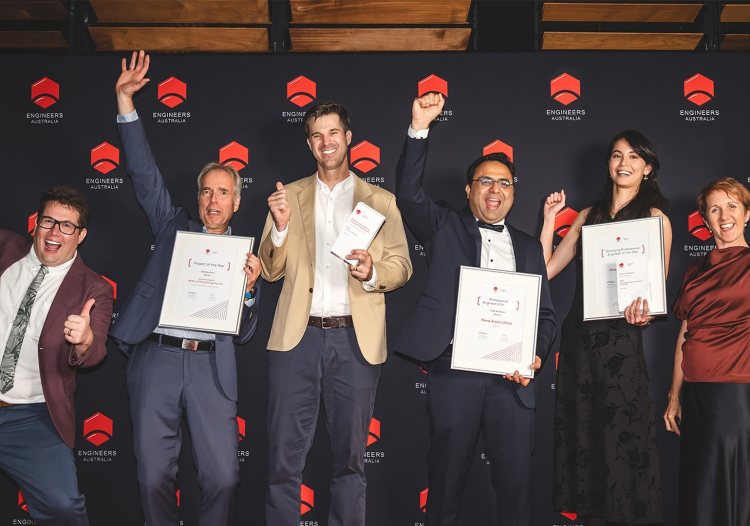
Across September, award ceremonies in every state and territory recognised the incredible achievements of engineers, as part of the Engineers Australia Excellence Awards 2026.
Being named a local winner in the 2026 Excellence Awards is an “outstanding achievement”, according to Engineers Australia CEO Romilly Madew AO FTSE HonFIEAust EngExec.
“Our winning engineers and teams have demonstrated exceptional expertise, innovation and leadership, while our award-winning projects showcase the impact engineering can have when those qualities are put into practice,” she said.
Here is a rundown of all the winners, state by state.
Canberra
- Project of the Year – Australian War Memorial Redevelopment, a seven-year program delivering 25,000 m² of new buildings and 5000 m² of complex heritage refurbishment
- Professional Engineer of the Year – Eric Vanweydeveld, a Fellow and Chartered water engineer, and Director of Aquanex Water Management
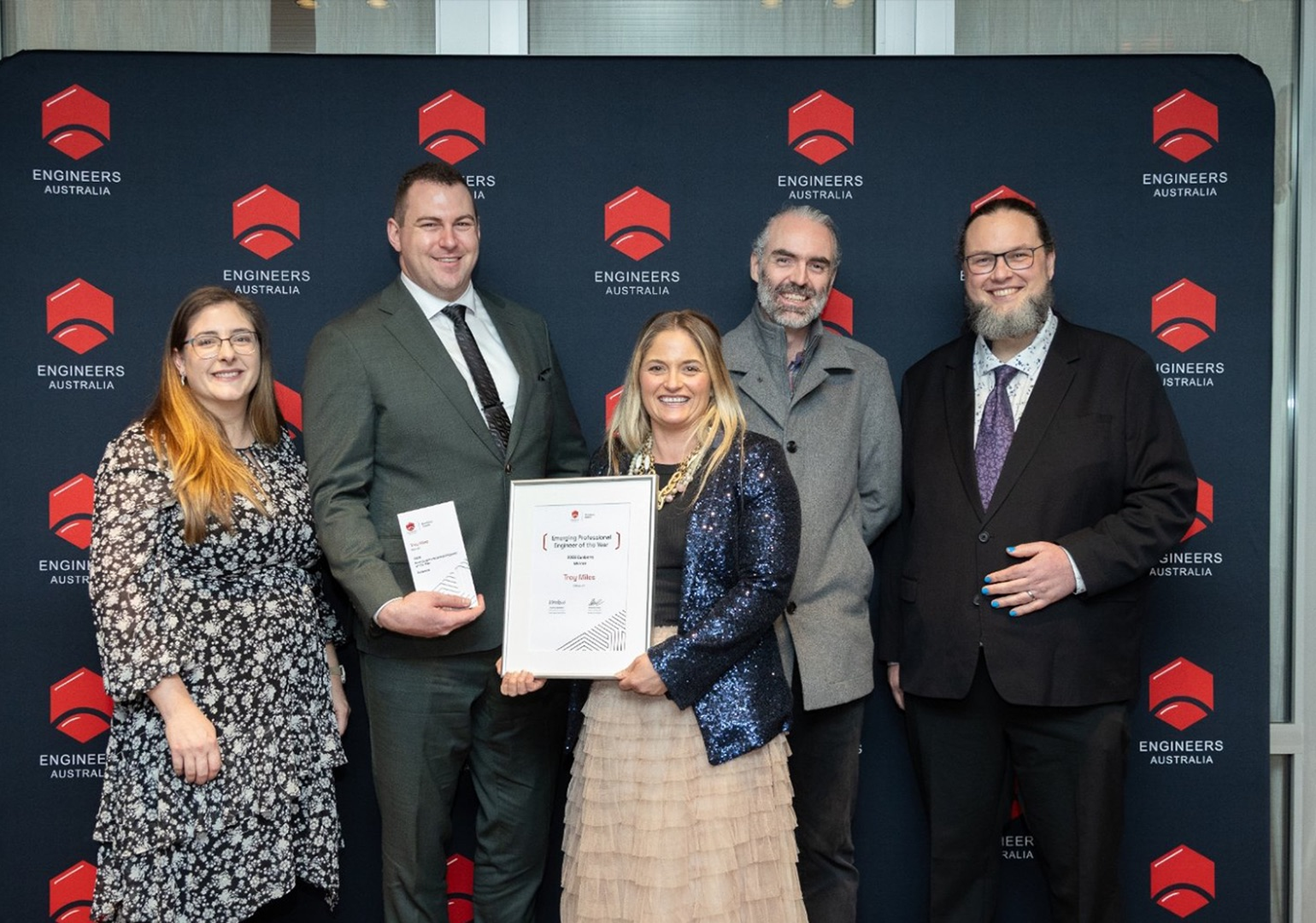
- Emerging Professional Engineer of the Year – Troy Miles of SMEC Australia, a civil engineer delivering projects across ACT and NSW
- AGM Michell Medal – Ian White, who has contributed significantly to materials handling, conveyor design, structural steel detailing, engineering drafting and AutoCAD innovation
Western Australia
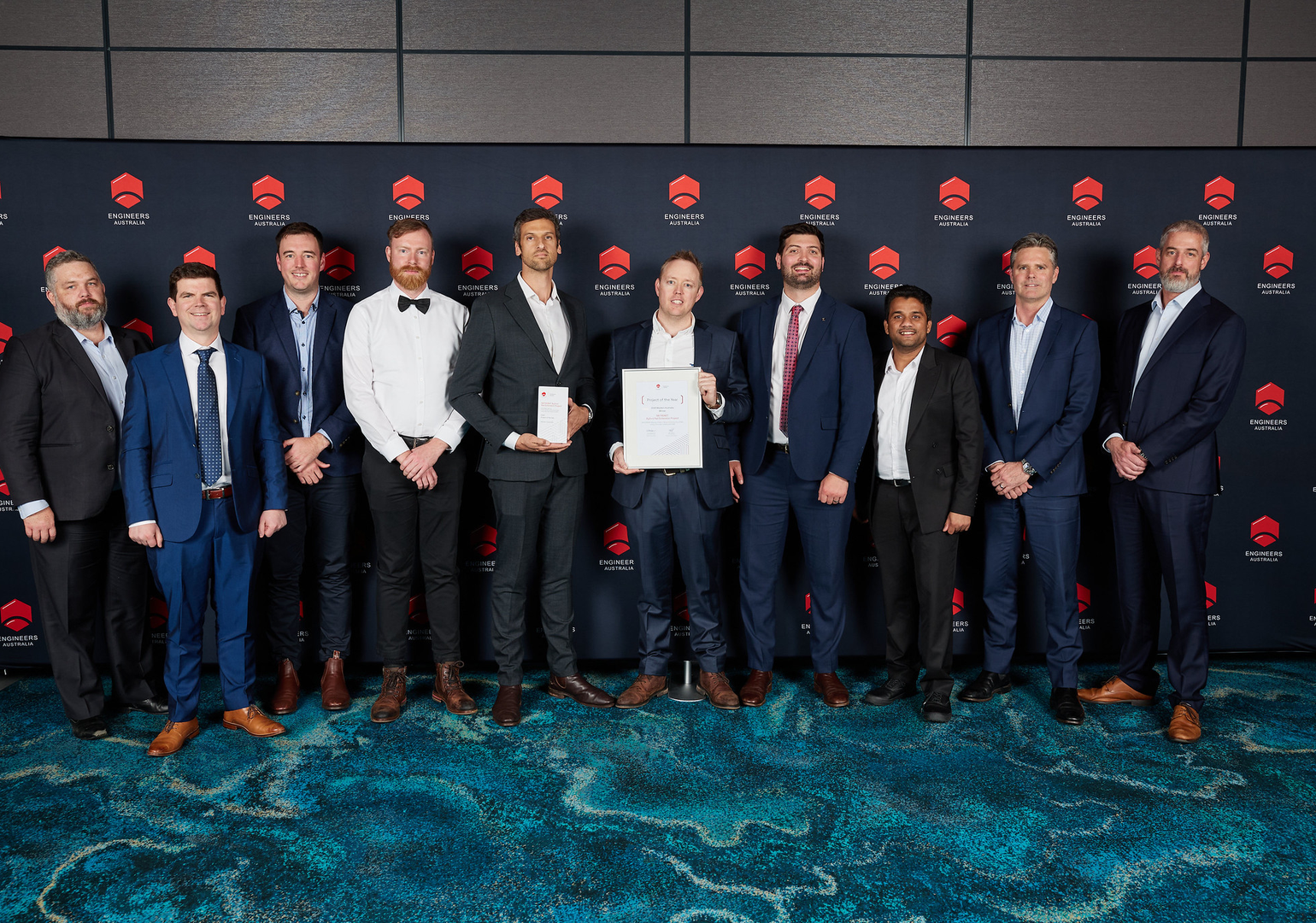
- Project of the Year – METRONET Byford Rail Extension, which delivered an 8 km extension of Perth’s Armadale Line to Byford, connecting the metro rail to one of Western Australia’s fastest-growing regions
- Professional Engineer of the Year – Indumathi V of Engineering Institute of Technology, recognised for leadership in engineering education and workforce development
- Emerging Professional Engineer of the Year – Ryan Collier, a biomedical engineer with WA Health’s Health Technology Management Unit
- Environmental Engineer Achievement Award – Peter Rice of Water Corporation, an engineer with more than a decade of experience delivering innovative solutions in water, wastewater and environmental management
- Sir John Holland Civil Engineer of the Year – Colin Leek, a highly respected Western Australian pavement engineer
South Australia
- Project of the Year – Adelaide Aquatic Centre by Aurecon, a $135 million centre and one of Australia’s first large-scale, all-electric aquatic facilities
- Professional Engineer of the Year – Dr Emily Anderson of Inventor Kids, a Chartered professional engineer with 18 years’ experience across biomedical engineering, national defence and STEM education
- Emerging Professional Engineer of the Year – Julian Zheng of Lucid Consulting Australia, a fire safety engineer delivering safe and sustainable solutions across defence, health care and education
Queensland
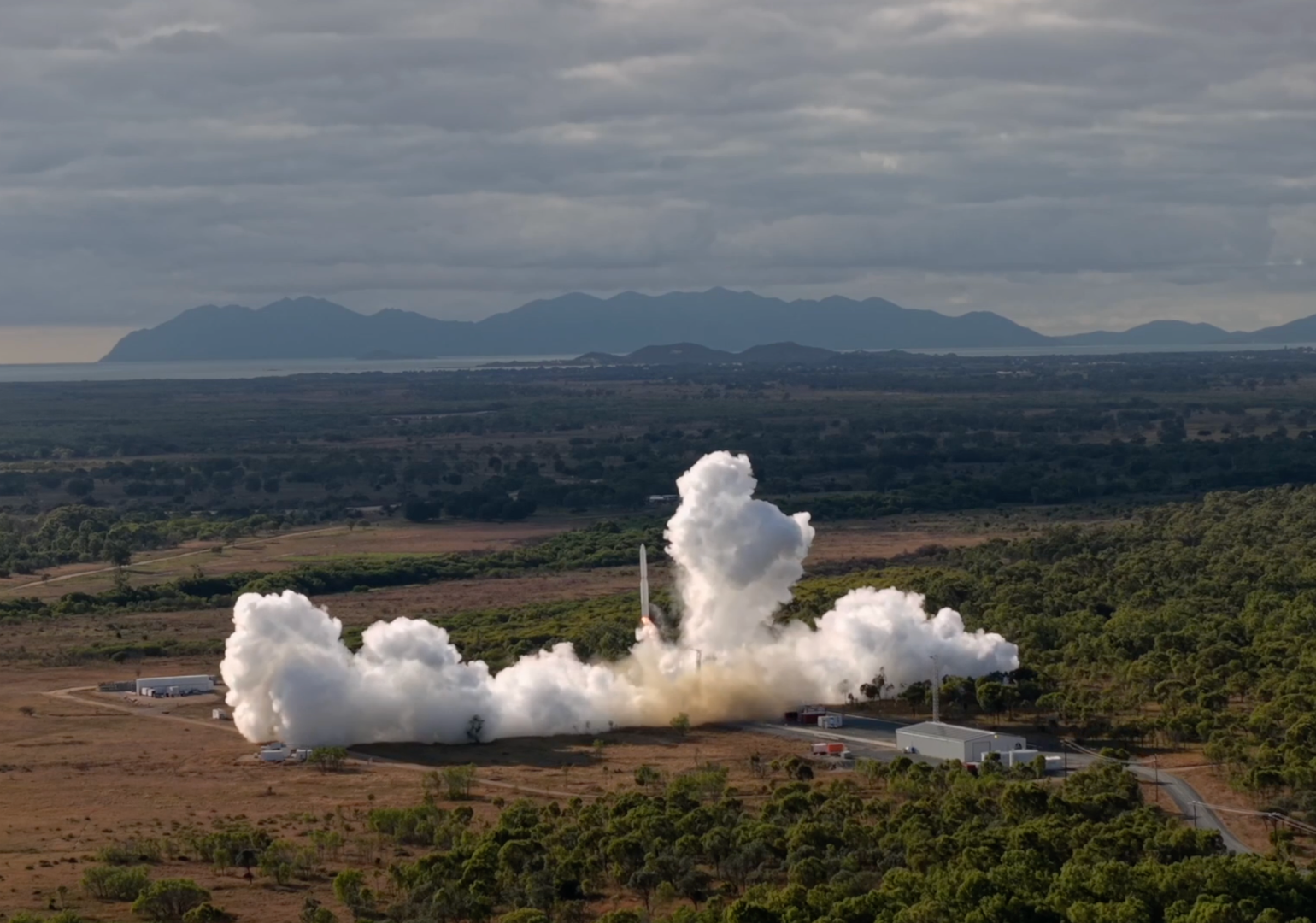
- Project of the Year – Eris TestFlight1, the maiden test launch of Australia’s first locally designed and built orbital rocket by Gilmour Space Technologies
- Professional Engineer of the Year – Angelica Guerrero Calderon of Urban Utilities, a Chartered chemical engineer with more than 15 years’ experience in the water and wastewater industry
- Emerging Professional Engineer of the Year – Hanwen Cui of the Queensland Department of Transport and Main Roads, a civil engineer, delivering infrastructure construction and maintenance projects
- Transport Medal – Shalendra Ram, an accomplished transport executive with more than three decades of experience delivering transformative infrastructure
Northern Territory
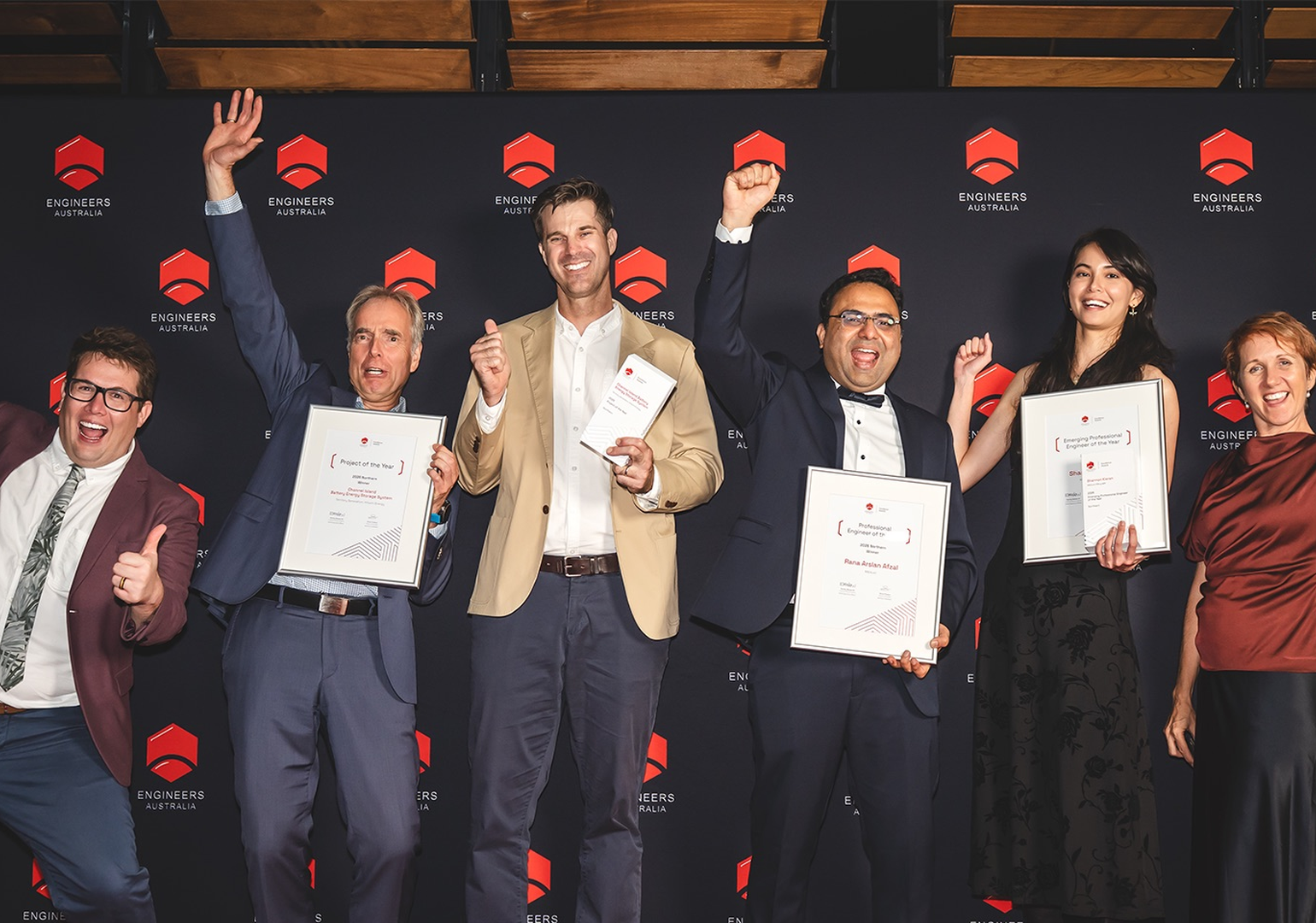
- Project of the Year – Channel Island Battery Energy Storage System by Territory Generation, a 32.6 MW grid-forming battery at Channel Island Power Station
- Professional Engineer of the Year – Rana Arslan Afzal, an adjunct lecturer at Charles Darwin University and engineering and R&D lead at Northern Glass Solutions
- Emerging Professional Engineer of the Year – Shannon Kieran of Aurecon, a senior structural and certifying engineer who has delivered major projects across Australia
Tasmania
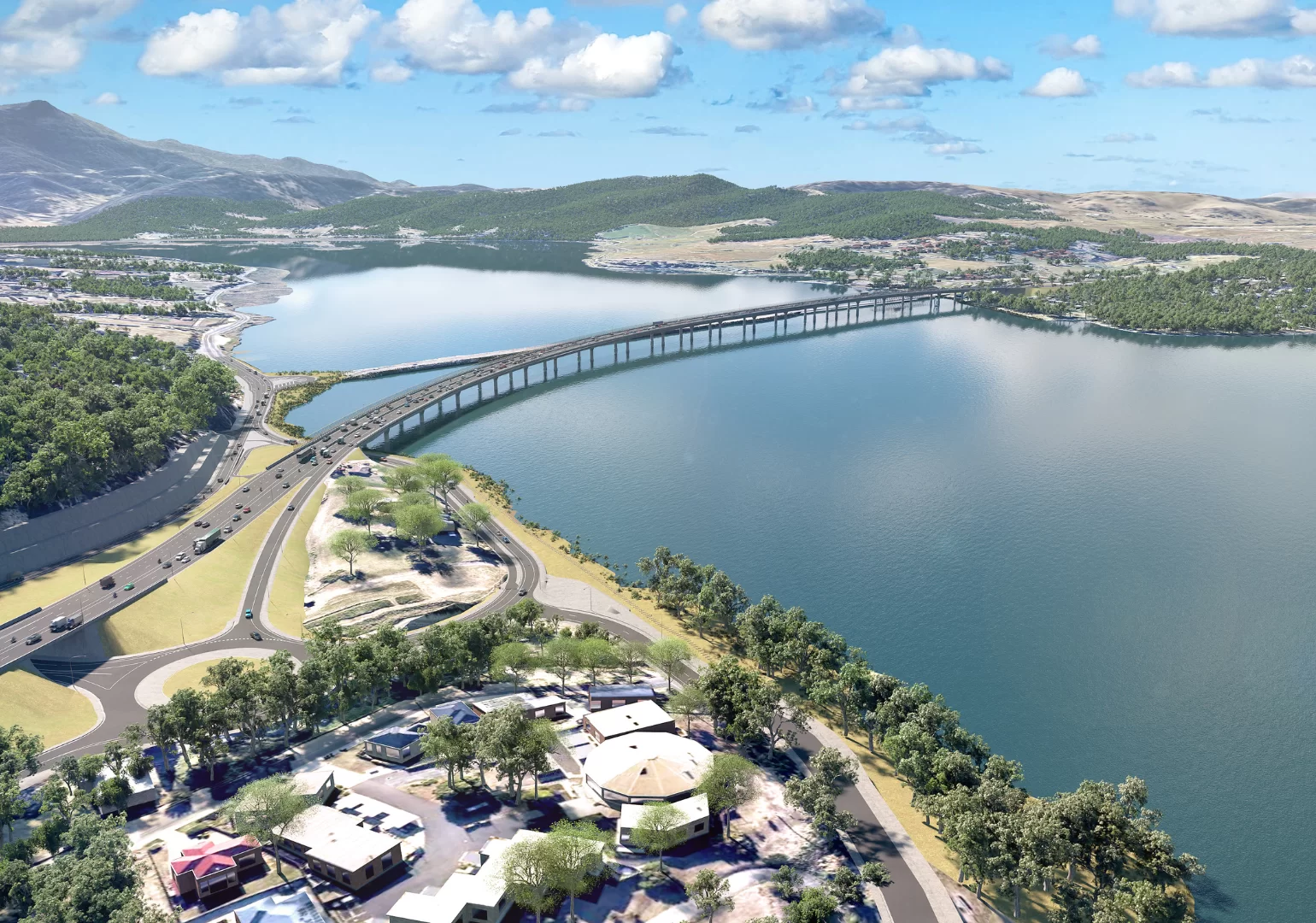
- Project of the Year – New Bridgewater Bridge by McConnell Dowell Constructors, a 1.2 km, four-lane, 22-span twin concrete box girder bridge over the River Derwent
- Professional Engineer of the Year – Richard Grant of Cromarty Automation, a principal electrical engineer with nearly 40 years’ experience in industrial electrical engineering, automation and control systems
- Emerging Professional Engineer of the Year – Jaretha Lombaard of Entura, a senior dams engineer with more than 12 years’ experience across southern Africa and Australia
Newcastle
- Project of the Year – John Hunter Health and Innovation Precinct by Northrop Consulting Engineers, a $835 million hospital redevelopment
- Professional Engineer of the Year – Brooke Griffin of Boeing Defence Australia, a senior engineering manager, leading sustainment of the E-7A Wedgetail’s Airborne Mission Segment
- Emerging Professional Engineer of the Year – Uzair Khan of Power Control Engineers, a Chartered electrical engineer, specialising in earthing, protection and commissioning for renewable energy and data centre infrastructure
- John Connell Gold Medal – Mark Stewart, Distinguished Professor and Director of the Centre for Built Infrastructure Resilience at UTS
Sydney
- Project of the Year – Sydney Fish Market by Mott MacDonald and Infrastructure NSW, a landmark redevelopment of Sydney’s historic fish market at Blackwattle Bay
- Professional Engineer of the Year – Dr Jiao Jiao Li, an Associate Professor of biomedical engineering at UTS, developing innovative therapies for chronic diseases using stem cells, bioactive materials, nanotechnology and biofabrication
- Emerging Professional Engineer of the Year – Adriana Assey of Lendlease, a passionate project engineer delivering major infrastructure projects including NorthConnex, Western Sydney Airport, the M12 Motorway and Parklife Metro
- John Monash Medal – Dr Wayne Johnson, who has 40 years’ experience in cultural resource management, research and industrial archaeology with Placemaking NSW and former agencies
- David Dewhurst Award — Bruce Morrison, who has shared his extensive experience through AusAID projects supporting practice in more than a dozen countries
- MA Sargent Medal – Gurinder Saluja of Transgrid, a senior power systems engineering leader delivering and transforming secondary systems design for large-scale transmission networks

Victoria
- Project of the Year – 5 West Nutrient Removal Plant at the Western Treatment Plant, which is capable of treating 150 million litres of wastewater daily, approximately 15 per cent of Melbourne’s wastewater
- Professional Engineer of the Year – Professor Kate Nguyen, Deputy Head (Research and Innovation) at RMIT University’s School of Engineering
- Emerging Professional Engineer of the Year – El Din Rostom, a biomedical engineer and founder and CEO of Diag-Nose, developing precision medicine technologies for chronic respiratory disease
- Chemical Engineer Achievement Award – Grant Scott of Ambio Holding Pty Ltd, whose work spans contaminated land, process engineering, clean energy systems, PFAS remediation and national leadership roles
- Neville Thiele Eminence Award – Distinguished Professor Karu Esselle of UTS, a world leader in defence, telecommunications and space technologies
- Risk Engineer Achievement Award – Gaye Francis, Executive Director of R2A Due Diligence Engineers
Also receiving worthy recognition was Professor Dato’ Seri Ir. Dr. Noor Azuan Abu Osman FIEAust CPEng, who was awarded Professional Engineer of the Year in the International Category.
Osman is Vice-Chancellor of and Professor of Biomechanics at Universiti Malaya, who was involved in Malaysia’s first prosthetics and orthotics engineering program.
What’s next for our winners?
They go on to compete at a national level, with winners to be announced at a Gala Dinner on 12 November.
This interactive booklet showcases the Excellence Awards 2026 finalists, alongside the recipients of special Achievement Awards, including the Environmental Engineer Achievement Award and the John Monash Medal.
Celebrate the outstanding projects driving the construction pipeline with the Engineers Australia Excellence Awards. Gala Dinner registrations are open now.



I have completed my PhD at 86 years old. This is the subject. It inclues my patent on slip/slide control of the bogie wheels on a locomotive. It also included my intelligent batery chargers for trains. I exported hundredsof battery chargers to 11 countries. I can send you the whole thesis if you request it.
Climate Change assisted by
Hydrogen powered Locomotives using hybrid control
Hybrid Locomotive Powered to power a Hybrid Electric Locomotives controlled by DTC inverters using permanent magnet 3-phase AC traction motors on each bogie axle.
In particular the development includes the Patented Slip/Slide control and Predictive individual wheel circumference compensation of each bogie wheel.
A development to promote Climate Change
Thesis for PhD in Engineering
Bernard Schaffler. BSc Eng. MSc Eng. FIEAust. CPEng. MIEEE
Important note about the purpose of this thesis:
The author, Bernard Schaffler, brings to your attention that the Hydrogen Fuel Cells is not part of the original research and development.
The main purpose is CLMATE CHANGE.
Unless the world makes significant changes to stop pollution, then the Climate will Deuterate.
Hydrogen is required to power the hybrid traction wheels using Direct Torque Controlled Inverters that power the permanent magnet 3 phase electric traction motors. This is to encourage existing locomotive owners to switch to Hydrogen Fuel Cells and away from diesel fuel that is polluting the atmosphere.
If allowed, hydrogen could transform the world and solve CLIMATE CHANGE.
• The aim is to transform the locomotive world away from Diesel to Hydrogen fuel.
• Hydrogen fuel can transform electric trains to hydrogen fuel which would eliminate the need for overhead electric wires to power the electric trains.
• If electric trains worldwide were transformed to hydrogen fuel, it would eliminate the need for filthy coal and gas power stations.
• Transforming to hydrogen fuel would allow any form of train to travel through tunnels and stop in passenger stations because there will be no pollution.
A locomotive is known as a “back to base” vehicle, meaning it travels a predictable number of miles each day due to the route it serves. This repeatability is ideal for managing fleet refuelling expectations, which justifies the need to implement power by hydrogen. This is the research:
Slip/Slide control with predictive wheel circumference compensation of each bogie wheel set.
Bogie wheels on locomotives are in sets of 2 (known as Bo-Bo), sets of 3 (Do-Do) and sets of 4 (Co-Co). for each case set of bogies, the power that drives that set of bogie wheels comes from one source. The bogie wheels, left and right, are connected with a solid axle and are not independent. Power for each bogie wheel set should definitely be sourced from a single source. In existing locomotives, the power to all bogie axles are sourced from a common electric supply therefore it is not possible to control slip and slide for individual bogie wheels sets.
It is the intention of this thesis to allow conversions to be as easy as possible. It is not possible to drive left and right wheels separately. Independent powering of the wheels would be impossible to convert the thousands of existing locomotives to independent wheel traction.
Traction wheels cause a huge amount of damage to the railway lines because they slip and slide on the rails as the power requirement changes. This slip and sliding causes the locomotives to have their wheels changed every 3 years. With this new proposed system, the time of service will be increased to 10 years with this Slip/Slide proposed system in service.
It is the intention that the back bogie wheel be the master. When the front bogie wheel reaches a bend, that wheel will be the first to move sideways which means that the effective wheel diameter has increased. The feedback system must slow down first the front wheels to follow the perimeter speed of the back bogie wheels which are the master control.
Slip/slide control is discussed in detail in synopsis 2.