
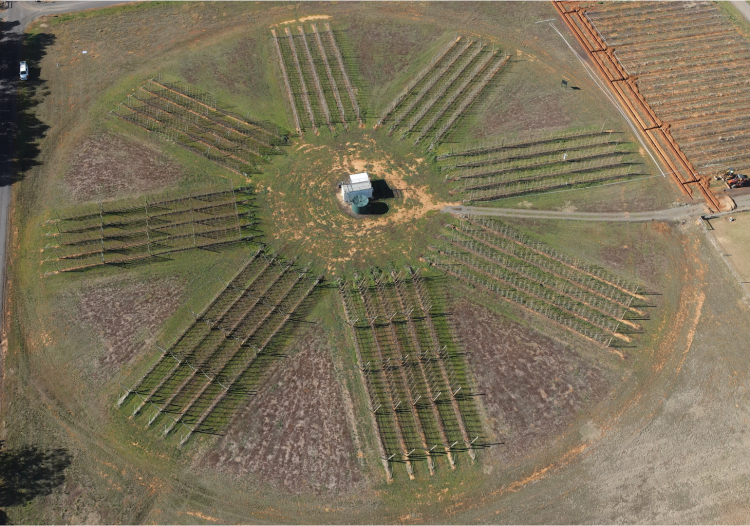

From apple-picking robots to automated solar tracking systems, RMIT University engineers are using digital twins to understand real-world consequences of complex change.
Digital twins are often conflated with immersive 3D visualisations, but graphical rendering is only one layer of presentation.
According to Professor Ben Cheng, Academic Lead for Research Development at RMIT University’s School of Engineering, what defines a digital twin is more on its computational fidelity and live data integration, rather than how it looks.
“A true digital twin depends on automated, bidirectional communication, not a static simulation or a one-way digital shadow,” Cheng said. “Sensors capture real-time operational states from the physical asset to update the model, and the model’s outputs are then fed back to guide real-world operations.”
Within this system, information from the physical world is fed into the model, allowing the testing of various possibilities. The system then delivers outcomes that can be used to inform, train or control the real-world system.
This closed-loop approach lets RMIT researchers move beyond passive monitoring to build digital twins that adapt and act across manufacturing, energy and infrastructure systems.
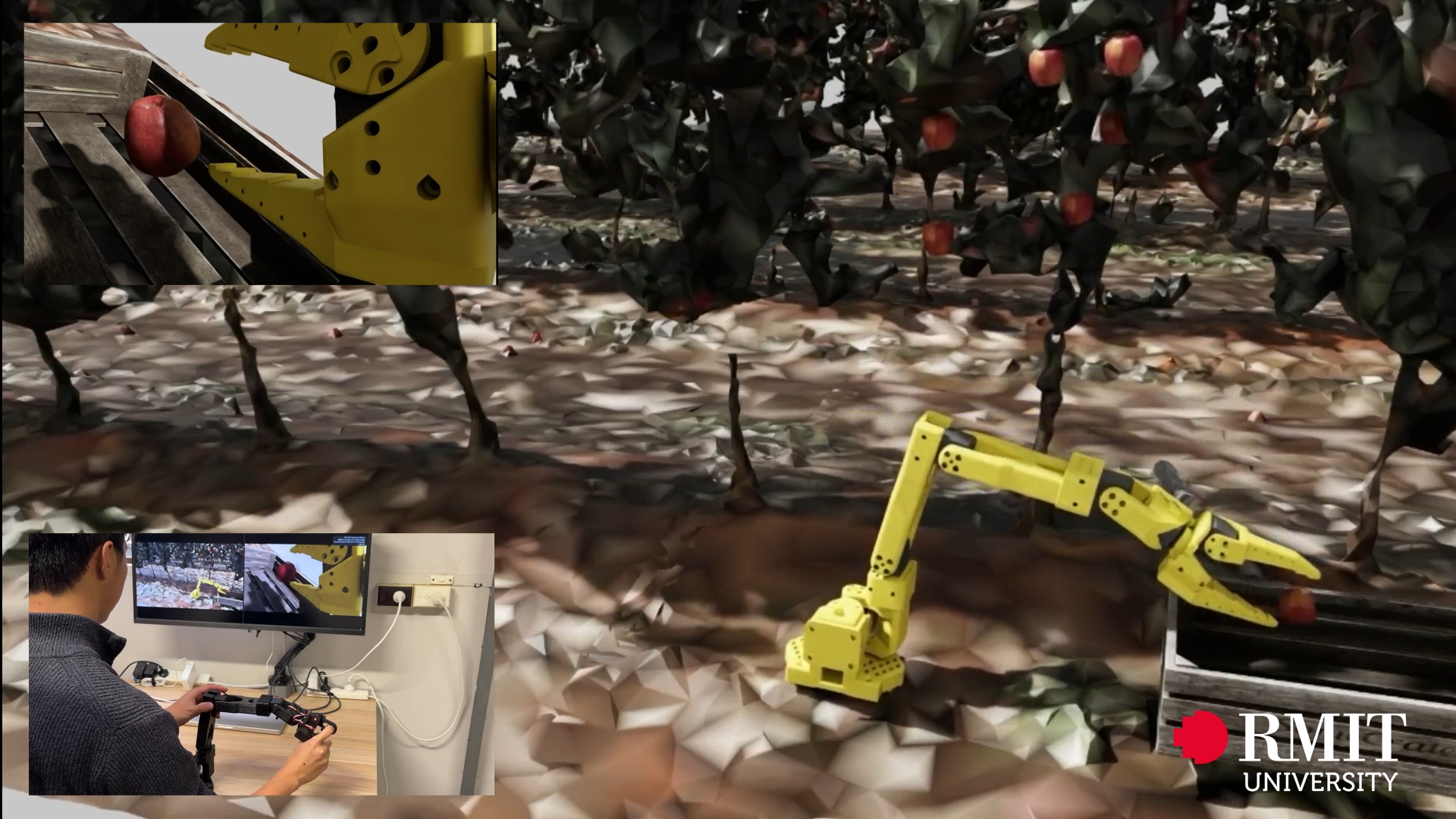
The RMIT team has recently brought together various technologies, including spatial capture, drone photogrammetry, the internet of things, physics-based simulation, and robotics integration, to reproduce reality on a screen and create a digital environment that can be interrogated from multiple angles and for various outcomes.
Rather than proving their systems in the enclosed environment of a mechanical plant or factory, RMIT worked with Food Agility and Agriculture Victoria on the Sustainable Orchard of the Future project, applying digital twin principles to an outdoor environment far less controlled than a building.
Creating a digital twin of nature
“We knew the underlying principles that we used for indoor could be employed for outdoor; we just needed to add more parameters,” said Associate Professor Toh-Yen Pang, Deputy Head of Biomedical Engineering at RMIT.
Outdoor complications, he said, include sunlight, glare and reflection, constant weather changes, unevenness of ground, growth of trees, leaf movement and more.
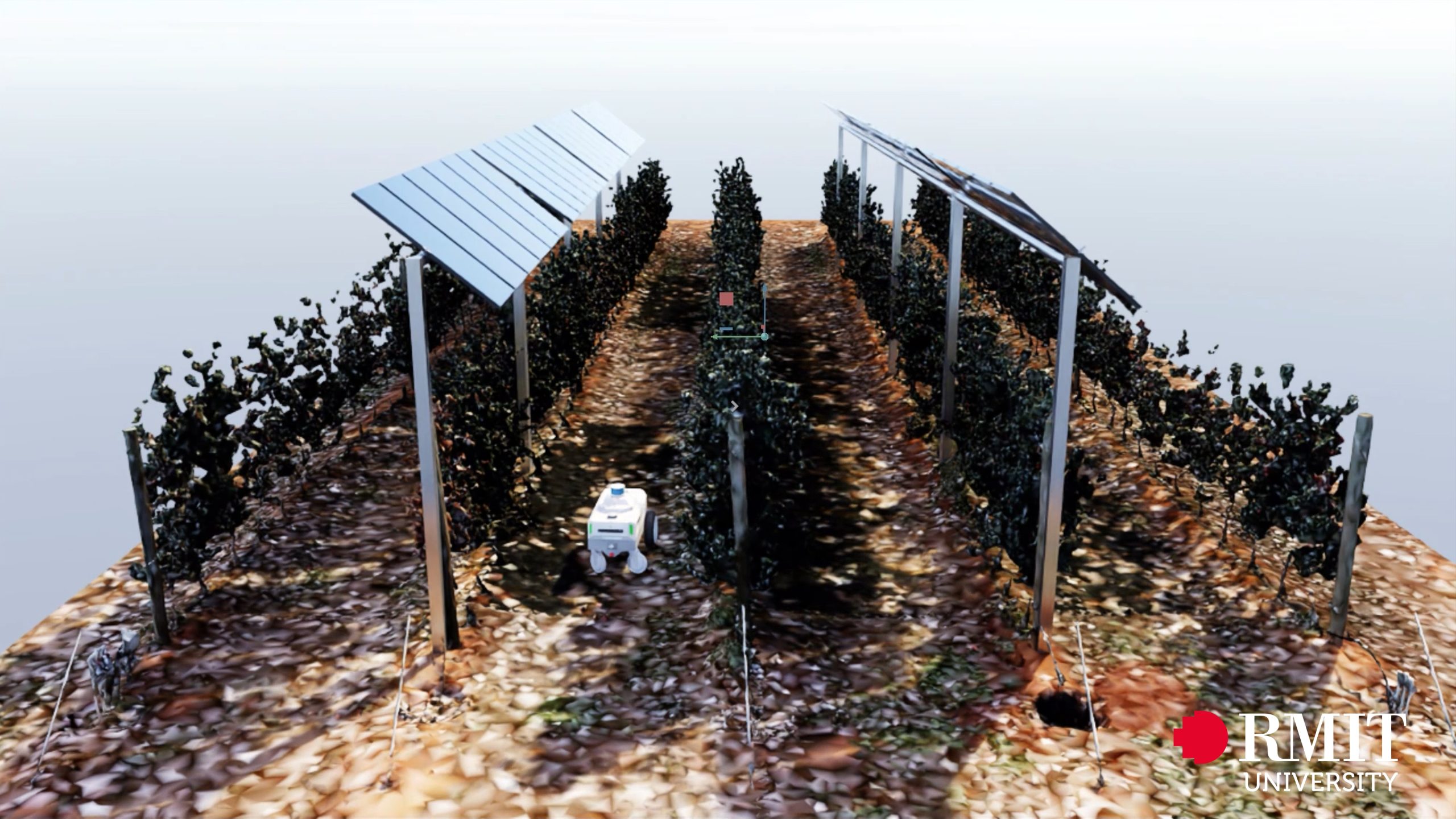
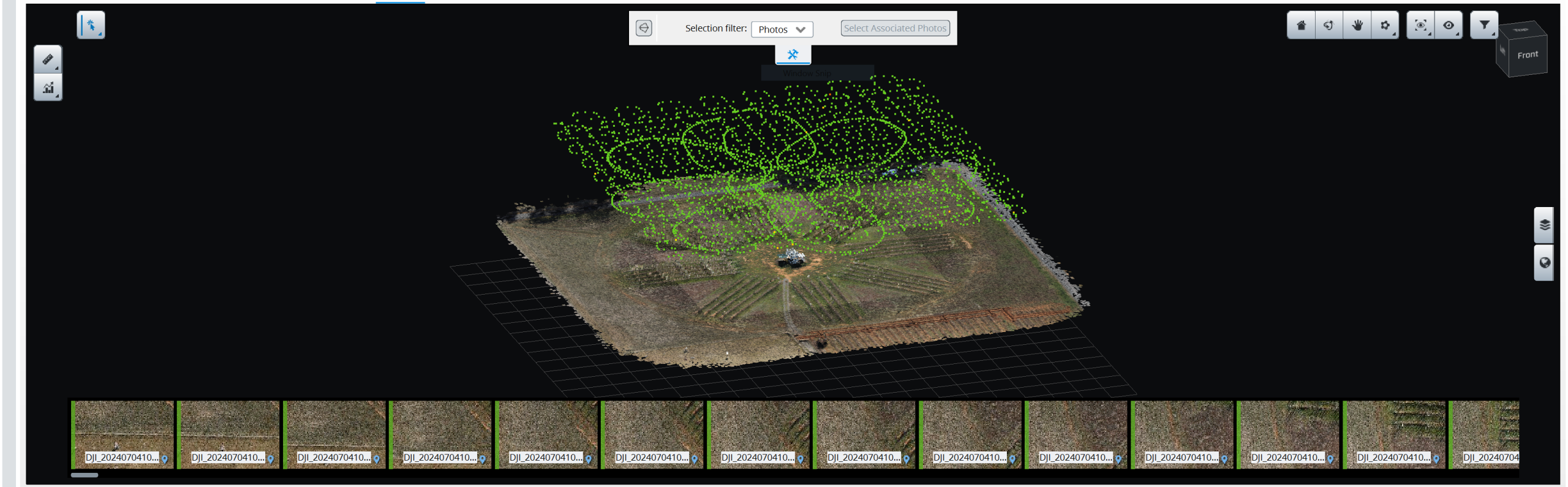
The creation of the orchard in a digital space involved the capture of around 3000 high-resolution images, taken through the use of drone photogrammetry from numerous altitudes and angles. Drone flight paths had to be designed to maximise overlapping reference points to ensure accuracy.
“The process of photogrammetry is to find common points between the images and then use them to help construct a 3D model,” said RMIT Project Manager, George Wu.
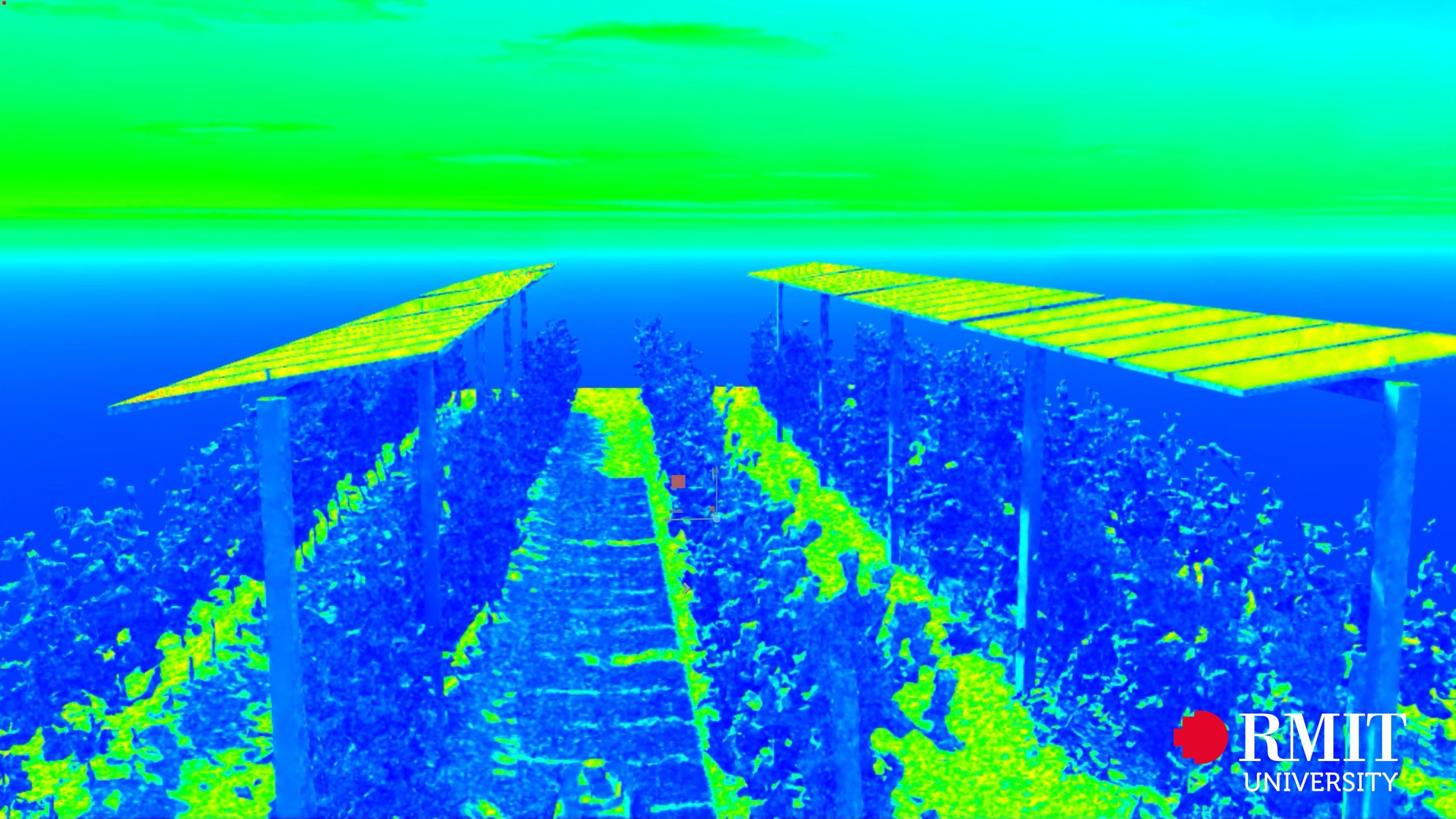
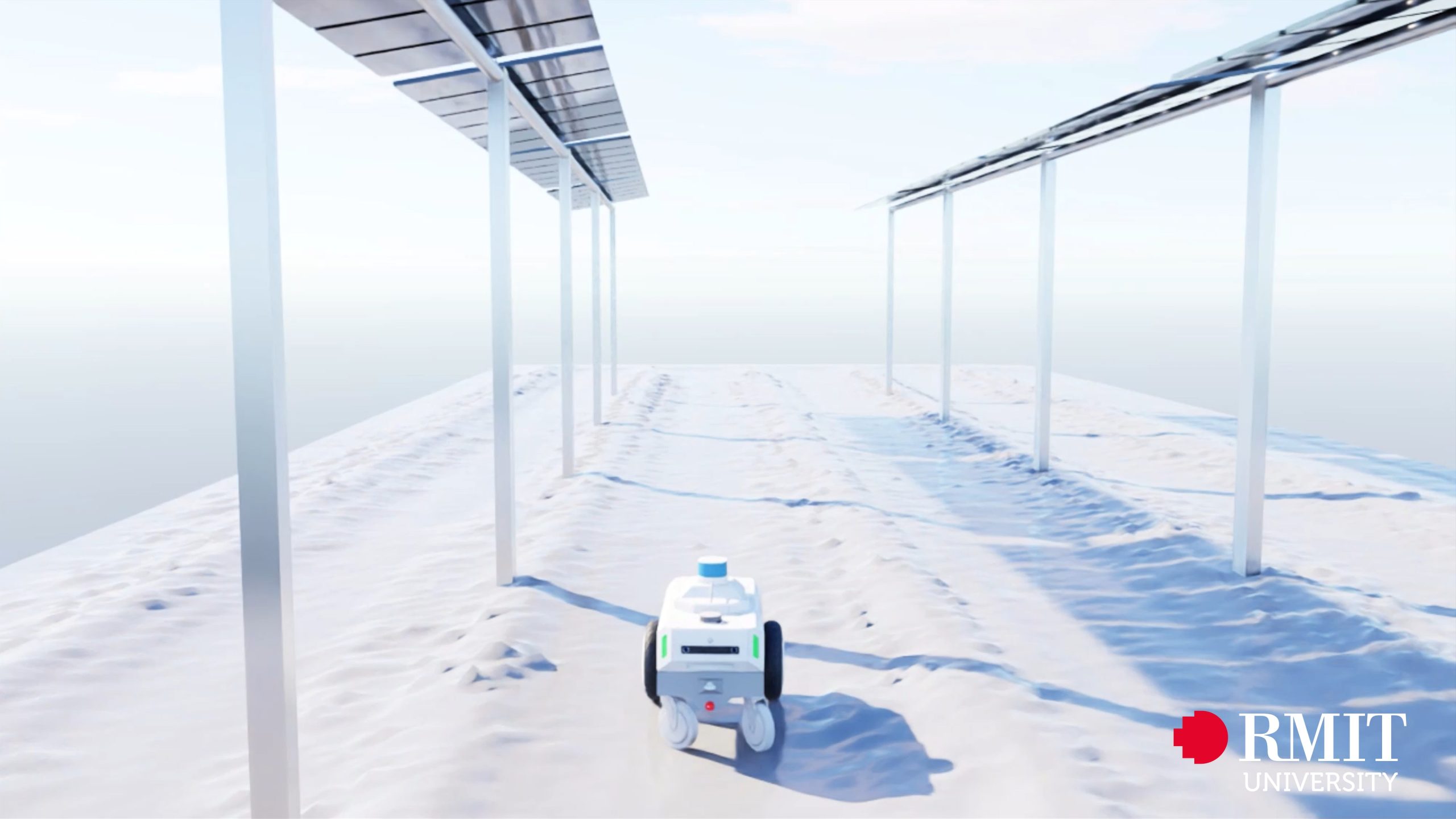
The result is not just a digital representation of an orchard, though. Once all relevant information has been added, it becomes an environment with physics embedded into it.
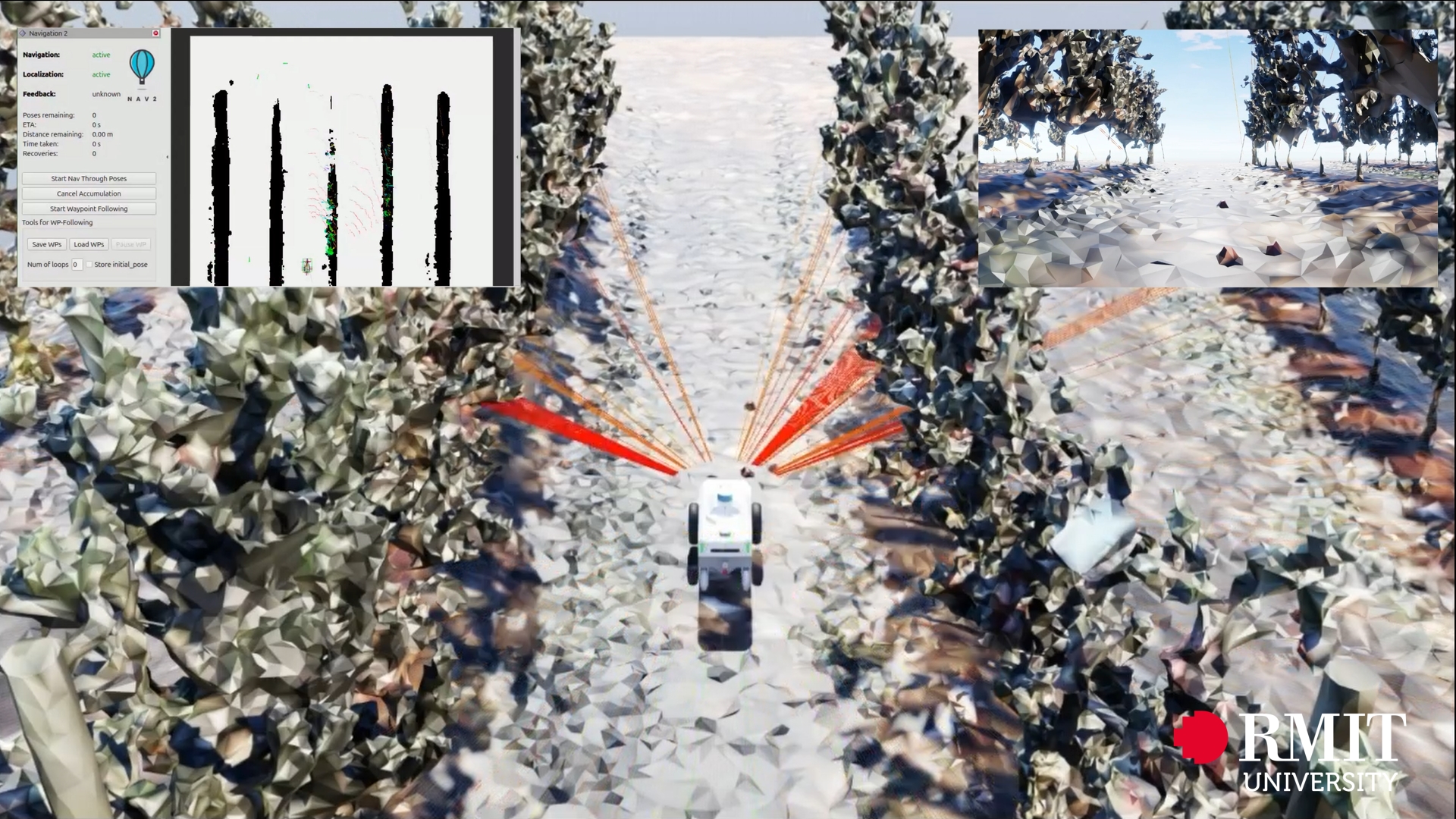
“So, the terrain that the orchard sits on, the robot that moves through it in the digital environment can feel every dip and rise,” Wu said. “And the apples have gravity, so the harvesting robot can learn how to grab and drop them. Various forces can be adjusted and configured.”
Once the model is designed, Wu said, a wide range of scenario analyses are possible.