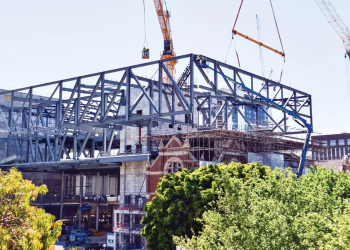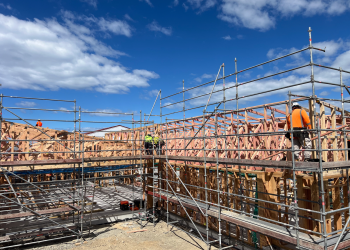

With Nepal facing a major flood disaster, we speak to David Anderson, a humanitarian architect who has designed shelters and safe settlements in crisis zones from Syria to Bangladesh to Nepal.
As Nepal reels from catastrophic floods triggered by a glacier collapse in the Himalayas, the world is once again watching a humanitarian response unfold. Few understand what’s needed on the ground better than David Anderson, a humanitarian architect who’s spent years designing shelters and safe settlements for people in crisis – including in Nepal.
“Watching what’s happened in Nepal, my heart really goes out to those people,” Anderson said. “So much infrastructure has been washed away; the only way into some areas now is by helicopter. I also feel for the first responders and logistics teams trying to get transport hubs working so aid can reach the people who need it.”
Anderson first went to Nepal in 2004 with Architects Without Frontiers (AWF) and Aussie Action Abroad (AAA), later bringing architecture students from Australia to build facilities alongside local communities and tradesmen.
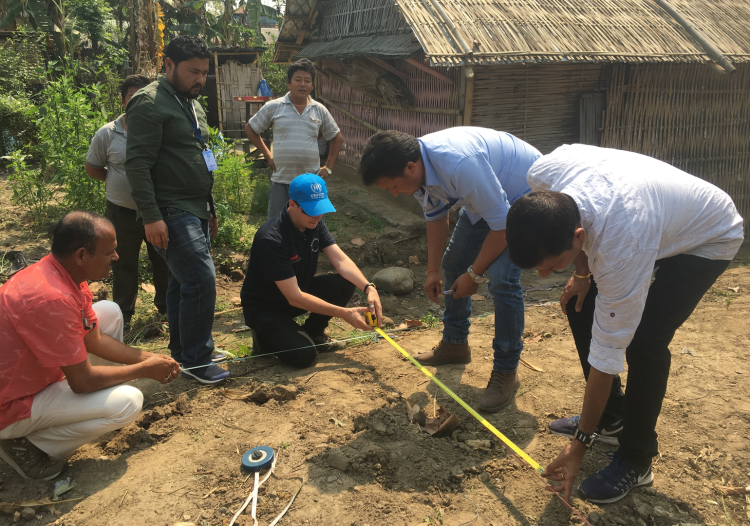
He returned in 2015 with AWF and AAA, following the Kathmandu earthquake that killed around 9000 people, to support villages in the mountainous Gorkha region. In 2018, he deployed with RedR (Register of Engineers for Disaster Relief) to support UNHCR’s response for Bhutanese refugees living in Nepal.
“I helped consolidate two refugee settlements into one, and build new shelters for people with specific needs, mainly elderly residents.”
The pull to give back
After more than 25 years in architecture, Anderson felt a strong pull to give back.
“I use my skills to provide safe, dignified shelter for people in crisis, and settlement design for refugee and displaced communities,” he said.
The work, he said, is less about teaching than collaborating, and it extends deep into engineering.
“We work closely with water, sanitation and health engineers. It’s one coordinated response.”

Good settlement design, he said, is also about safety – providing good sightlines, lighting and separated toilets that reduce the risk of gender-based violence.
“Architecture and engineering skills are incredibly valuable – not only through design, but through coordination, seeing the project as a whole,” he said. “And you’re working alongside communities, so you bring them on the journey too.”
Building a humanitarian career
Anderson works for engineering and architecture firm HDR, which gives him flexibility to take leave for his deployments. As a deployee, RedR pays a salary plus a daily subsistence allowance, and some postings allow him to bring his family.
“My daughter came to Nepal with us at four months old. She’s since been to kindergarten in Romania, school in Tonga, and came to Bangladesh too. I’m hoping that exposure shapes her own career,” he said.
His deployments read like a map of the world’s crisis zones.
During COVID, he worked remotely reviewing camp designs for displaced communities in north-western Syria. In Romania, deployed by RedR to UNHCR, he designed temporary transit accommodation for Ukrainian refugees.
“That was an incredible highlight,” he said. “In Bucharest, UNHCR ran a one-stop enrolment centre for visas and accommodation, and I designed a parents’ and counselling room out the back, with furniture donated by the IKEA Foundation – plus transit settlements where refugees would stay 48 hours before moving on.”
In Cox’s Bazar, Bangladesh – home to the world’s largest refugee settlement – he spent a year heading the site planning unit. And in Tonga, he spent two and a half years as a housing resilience advisor, training communities to build stronger homes to withstand natural disasters.
“The idea is people can stay in their own homes rather than go into shelters, which has on-flow social and psychosocial benefits for the community.”
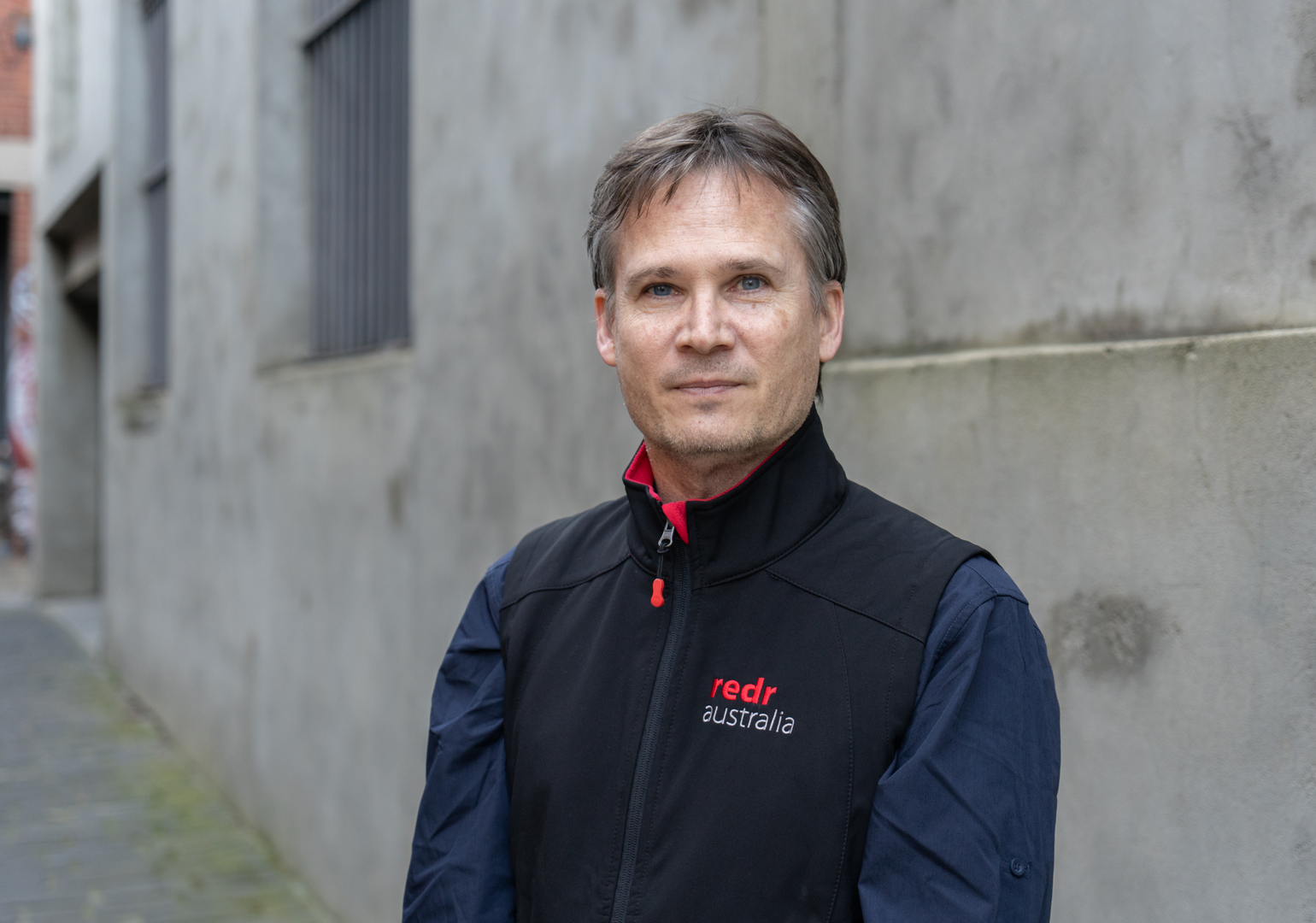
Anderson’s career has since grown into academic research. He’s now working towards a PhD exploring “healing architecture” – borrowing biophilic design principles from hospitals and mental health facilities to see if they can improve the wellbeing of refugees and displaced people.
“I want to understand how to design humanitarian settlements that benefit people’s mental health, so the settlement becomes a true place of refuge rather than adding to the stress.”
Learn more about the work of RedR and how you can help.
“You never stop learning”
For architects and engineers interested in humanitarian work, he suggests starting with volunteering, then investing in RedR training, which he said is “incredibly valuable and necessary to get onto the roster”.
From there, a UN agency sends a request, RedR puts it to roster members, and any available member can apply. The roster covers far more than engineers and architects, including coordinators, gender-based violence workers, WASH engineers and shelter officers.
“Every aspect of a disaster, RedR has skilled deployees for. There’s a real need for that surge capacity.”

Humanitarian work has defined Anderson’s career, and he said he gains as much as he gives.
“I’m humbled to be able to serve. Every day is a school day; you never stop learning in these fields. There are so many crises, so many ways to help. Being able to give back to people in need is so important and so necessary in this industry.”
Celebrate outstanding or high-achieving individuals with the Engineers Australia Excellence Awards. Gala Dinner registrations open 21 September.