
Witness the evolution of crane engineering from Ancient Egypt to the present day, and how engineers are pushing designs to the edge of modern innovation.
Much of the built environment would simply not exist in the absence of cranes. The machine has a long history, from relatively simple applications in Ancient Egypt to the hydraulic innovations of the Industrial Revolution and beyond.
A crane’s ability to lift massive loads safely depends on the vital principle known as dynamic load factor. Cranes are frequently in motion, raising, shifting and lowering loads throughout the working day. Actions such as acceleration, slewing and luffing apply dynamic loads to the structure and its parts. No crane operates in a vacuum, either, meaning wind forces are another critical consideration.
The dynamic load factor, designed to account for these extra stresses, is a multiplier used when calculating the effective force applied to a crane structure during operation. For instance, a crane otherwise built to handle 4000 Lb of force but with a dynamic load factor of 1.5 applied must actually be designed to lift 6000 Lb – increasing crane and construction site safety.
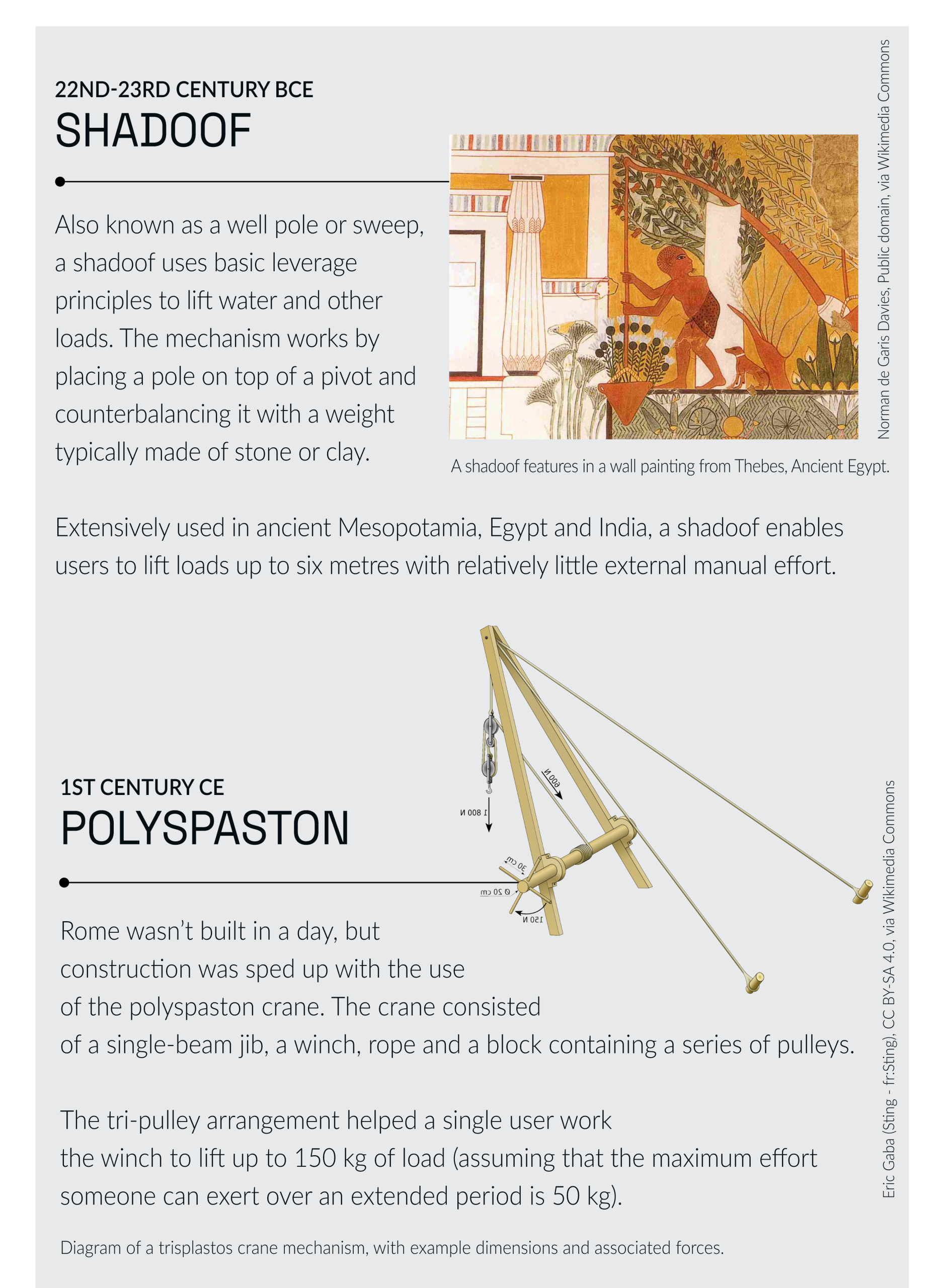
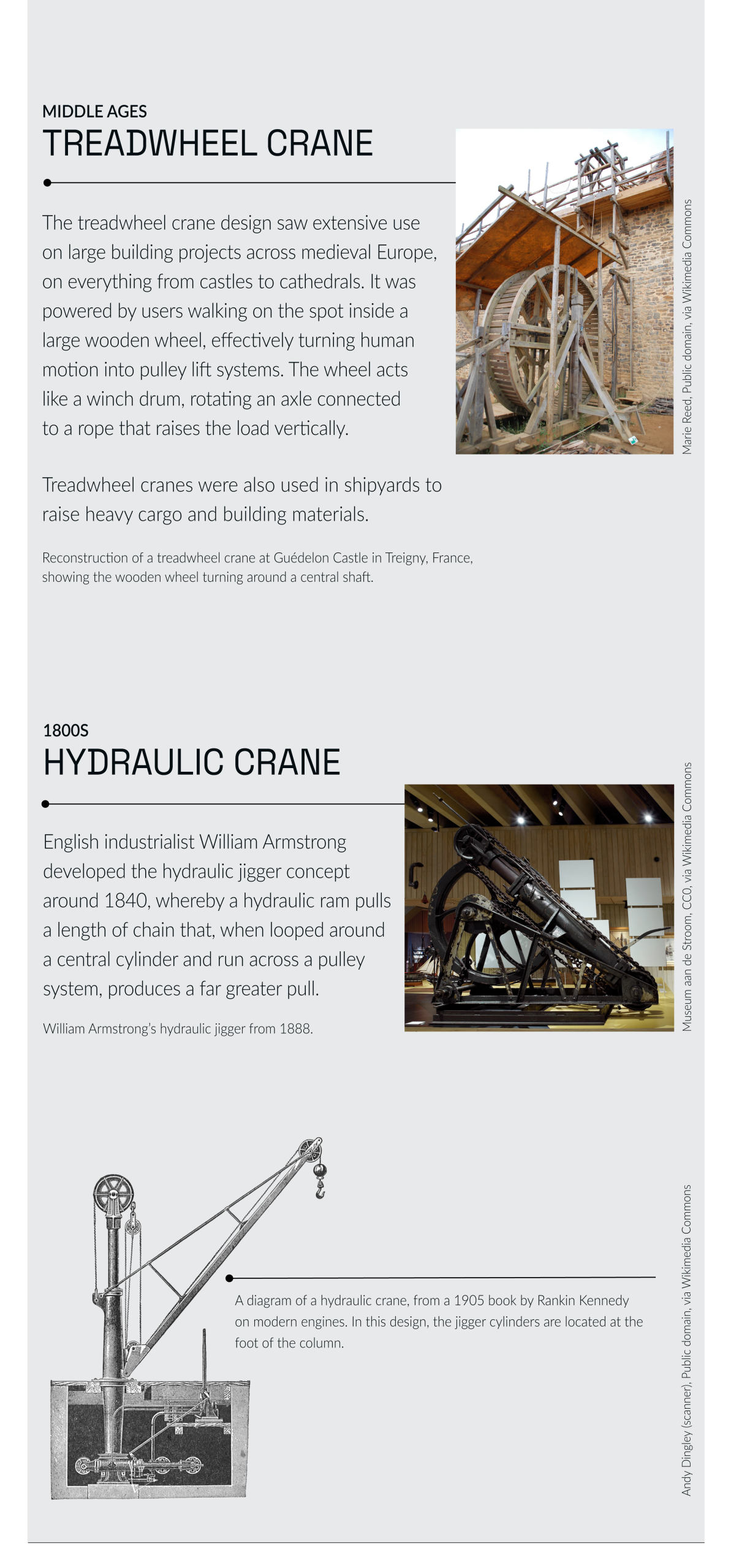
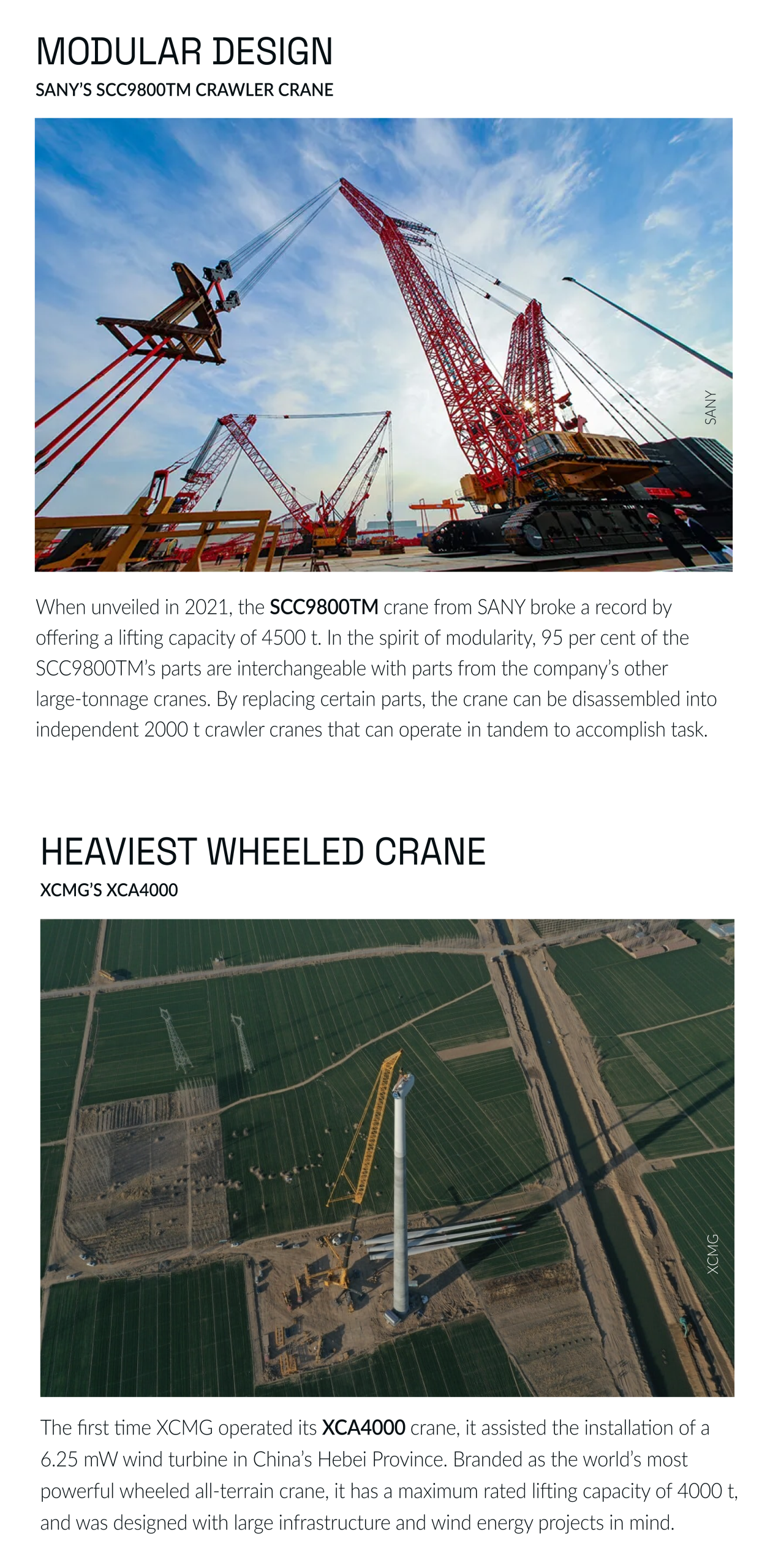
The infographic below shows the progress of crane engineering from Ancient Egypt to the present day, and presents four designs pushing the limits of what’s possible with crane machinery.
Let us know which innovations we missed in the comment section.