

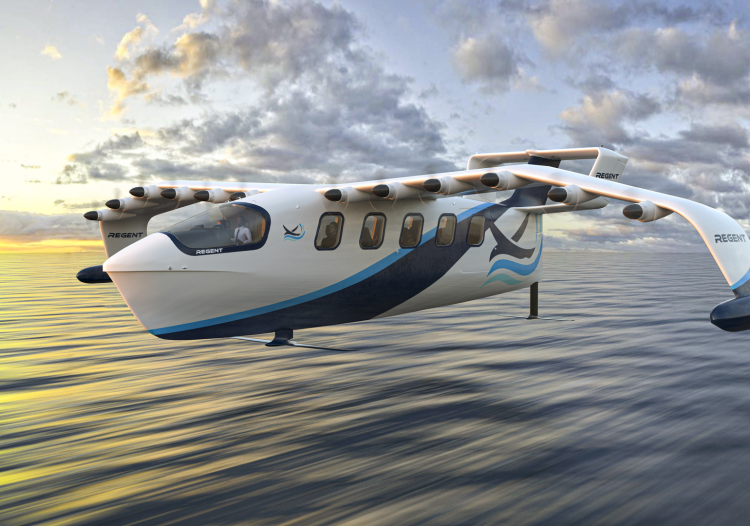
New commercial activity has brought ground-effect vehicles, once a Cold War-era novelty, into the 21st century.
In aerodynamics, the ground effect is the reduction of drag that results from an aircraft’s wings being closer to the ground. A ground-effect vehicle (GEV) or a wing-in-ground-effect vehicle harnesses this reduction in induced drag to increase flight efficiency.
With a given section of wing area producing more lift near the ground than at a higher altitude, the same payload can be transported with a much smaller wing. This results in greater fuel efficiency and lighter aircraft. In a maritime context, a GEV is capable of skimming the water’s surface rather than being partly submerged like a regular boat or ship, while also avoiding the comparatively extreme heights flown by conventional aircraft.
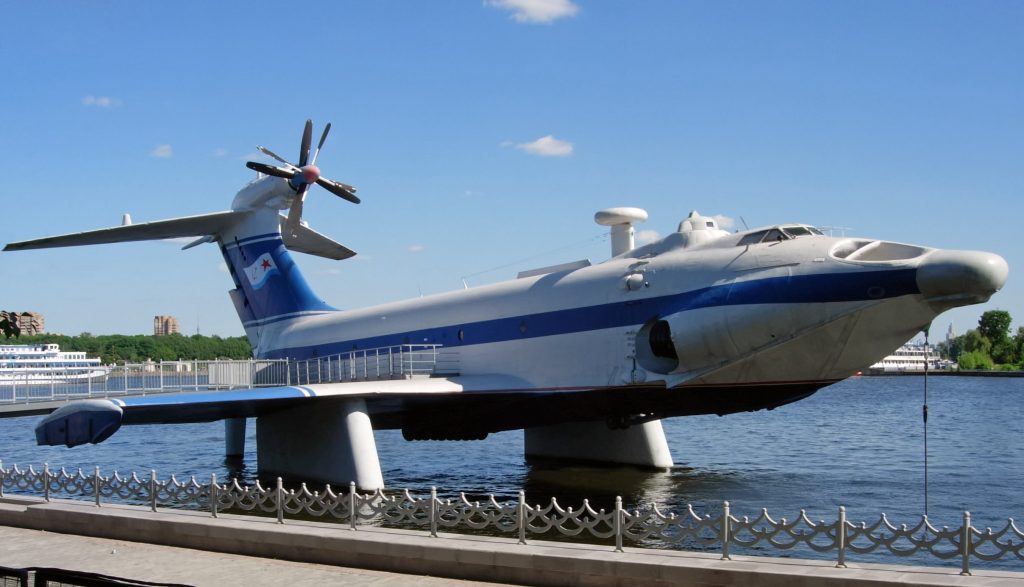
The most famous example of a GEV in action over water was the aptly named Caspian Sea Monster, a Russian prototype GEV designed by the Central Hydrofoil Design Bureau at the height of the Cold War.
The Korabl Maket, as it was officially known, featured 10 single-shaft axial-flow turbojet engines and a maximum speed of 500 kph. With a maximum takeoff weight of almost 550 t, it was also the world’s heaviest aircraft until it was superseded by the Ukrainian Antonov An-225 Mriya in 1988.
In his 2009 book Understanding Aerodynamics: Arguing from the Real Physics, aeronautical engineer Doug McLean explained that when a when a wing flies close to the ground, “the no-through-flow condition at the ground forces the flow field around the wing to change in a way that reduces the downwash in which the wing is flying”.
“This has the general effect of increasing the lift at the given angle of attack … and reducing the induced drag for a given lift,” he said. “It’s clear … that the ground produces substantial percentage reductions in induced drag [which] can be important in many types of flight on minimal power, as, for example, in human-powered flight and the long-distance flight of some birds over water.”
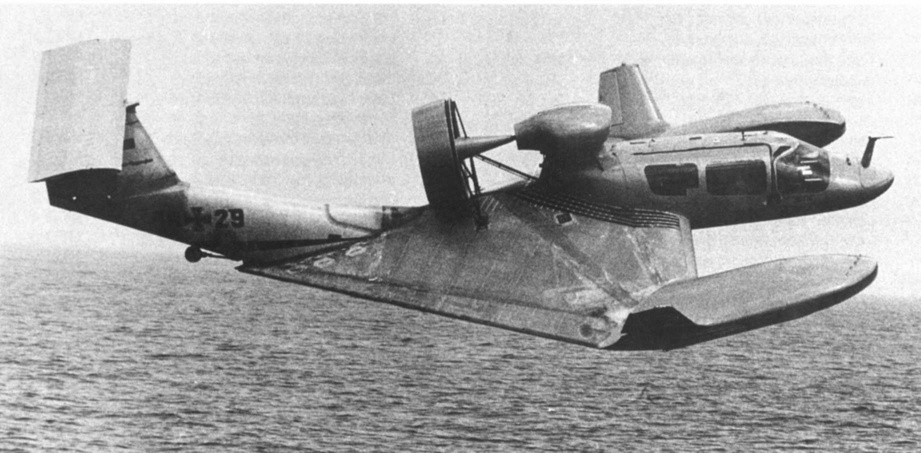
Another way of understanding the ground effect is to consider how it differs from the principle behind a hovercraft.
Whereas the former is “supported by a dynamic air cushion that forms under the lifting wings at large speeds … or/and by the wing-generated lift enhanced due to reduction of the down wash near the ground”, the latter is borne aloft by a static air cushion, according to Kirill Rozhdestvensky in a 2006 journal article.

Despite the implicit aerodynamic efficiencies, McLean points to certain drawbacks of the technology that mean GEVs haven’t been picked up for more extensive deployment.
“The operational disadvantages of flying very close to the surface (relatively low cruise speed, the possibility of conflicts with surface vessels, and sensitivity to weather) have discouraged widespread applications.”
When the Caspian Sea Monster crashed in 1980, it ended Russian dreams of GEV development, if not a hoped-for Cold War victory. But it was far from the last time GEV principles would be embraced by engineers.
READ: How the world’s largest aircraft by wingspan was designed
Modern fly-ability
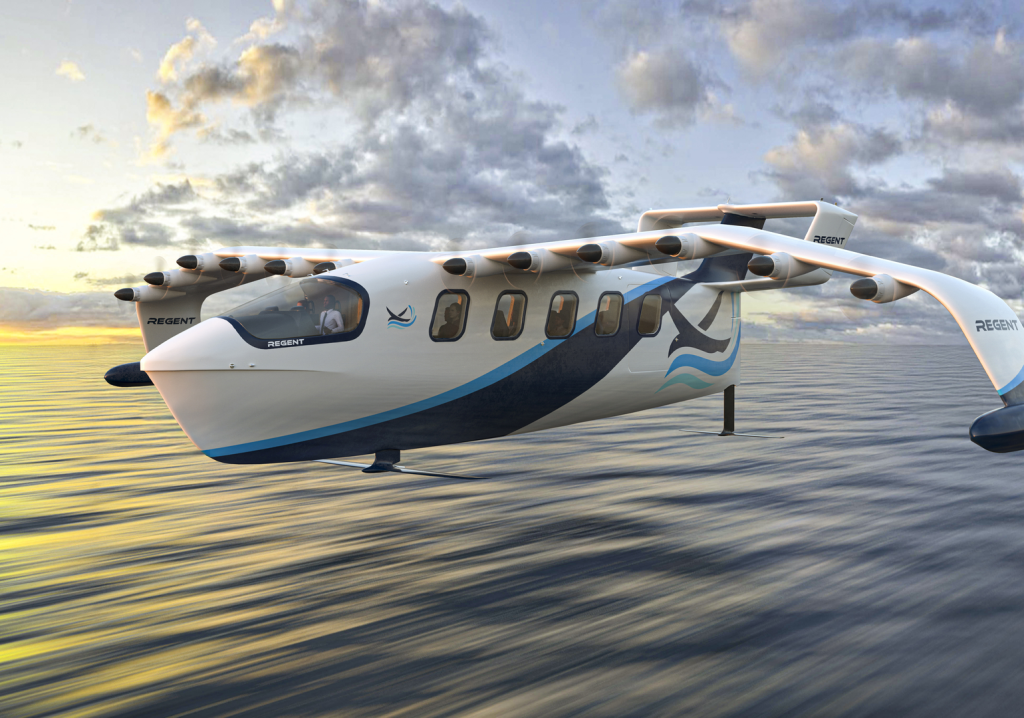
The most advanced commercial program belongs to REGENT, whose fully electric Viceroy seaglider concept boasts a 12-passenger capacity and a range of 300 km. The craft uses hydrofoils for its takeoff run. The company commenced hardware and systems integration of its full-scale prototype in 2024, and investors include Hawaiian Airlines and Japan Airlines.
In Singapore, a 10-seat carbon-fibre composite GEV called AirFish 8, from ST Engineering, is powered by a pair of automotive V8 engines and fuelled by standard gasoline. A successful test flight in 2016 has since seen an order of up to 10 craft was made in 2024 by Eurasia Mobility Solutions in Türkiye.
Military applications have also been investigated, with the Liberty Lifter project from the American Defense Advanced Research Projects Agency developing a proposal for a defence-ready GEV. The project ended in 2025.
The first Australian-made GEV was assembled in Gladstone in 2009 by Sea Eagles International, who made plans to install a regular ferry service from Agnes Point to Yeppoon using craft that could travel at 150 kph. The company’s Chris Holloway at the time described the potential to grow a market among police and customs authorities in archipelago countries such as Indonesia.
More recently, Woolgoolga-based Project Greenlift developed its own version of GEV with a green-coloured design inspired by cicadas. The hybrid cargo craft, which features a hemp-reinforced fuselage, is being positioned as addressing disaster relief and support logistics needs.
This article was originally published in the August 2026 edition of create with the headline “Plane sailing”.
READ: Why airships are experiencing a resurgence
Sources
McLean, D, 2012, Understanding Aerodynamics: Arguing from the Real Physics, John Wiley & Sons
Rozhdestvensky, K, 2006, “Wing-in-ground effect vehicles”, Progress in Aerospace Sciences, vol. 42, no. 3, p. 211-283, doi: 10.1016/j.paerosci.2006.10.001