
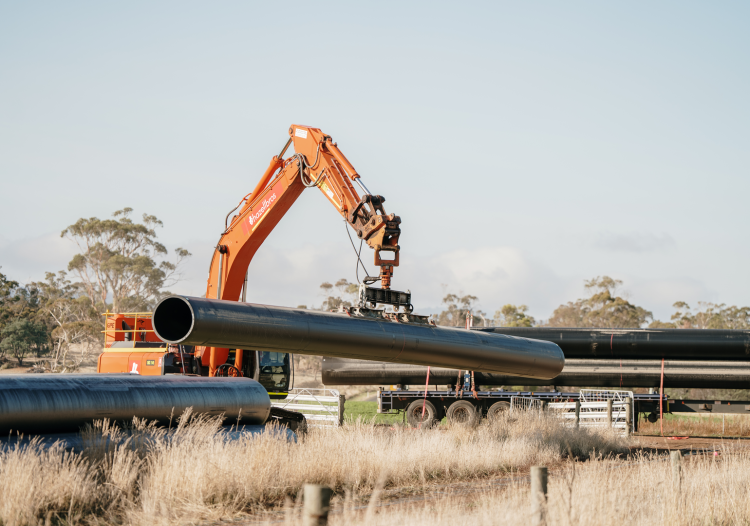
Opening at the beginning of October, the Northern Midlands Irrigation Scheme is providing new, highly reliable water to 50 Tasmanian irrigators.
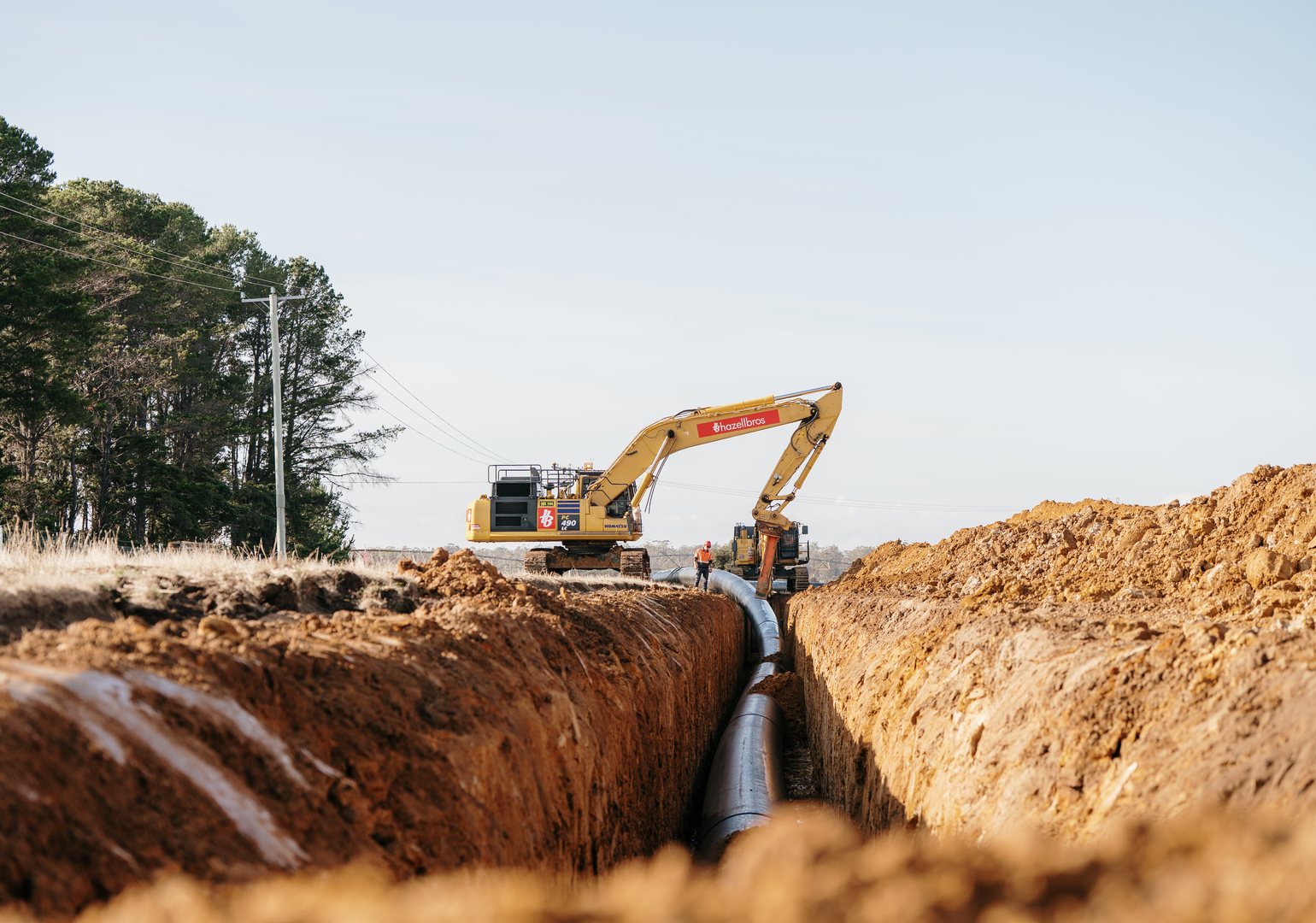
An underground pipeline network, 150 km long, together with a buffer dam, two balance tanks and a trio of pump stations, are delivering 25,500 ML of water to the Northern Midlands region each year, to bolster water security and support sustainable agricultural production.
But the original concept design was for a scheme with a capacity half the size, explained Project Manager Jacob Tierney.
“The doubling of capacity, a decision made early in the design phase, dictated certain aspects of the design,” Tierney told create. “It meant not only bigger pipes, but bigger pumps. We required a buffer dam to be built off the Hydro Tasmania tailrace to give the system a few days of extra storage to disconnect the irrigation water supply from the energy market demands.
“This is the biggest irrigation scheme, both in total water capacity and length of pipe, that Tasmanian Irrigation has delivered to date.”
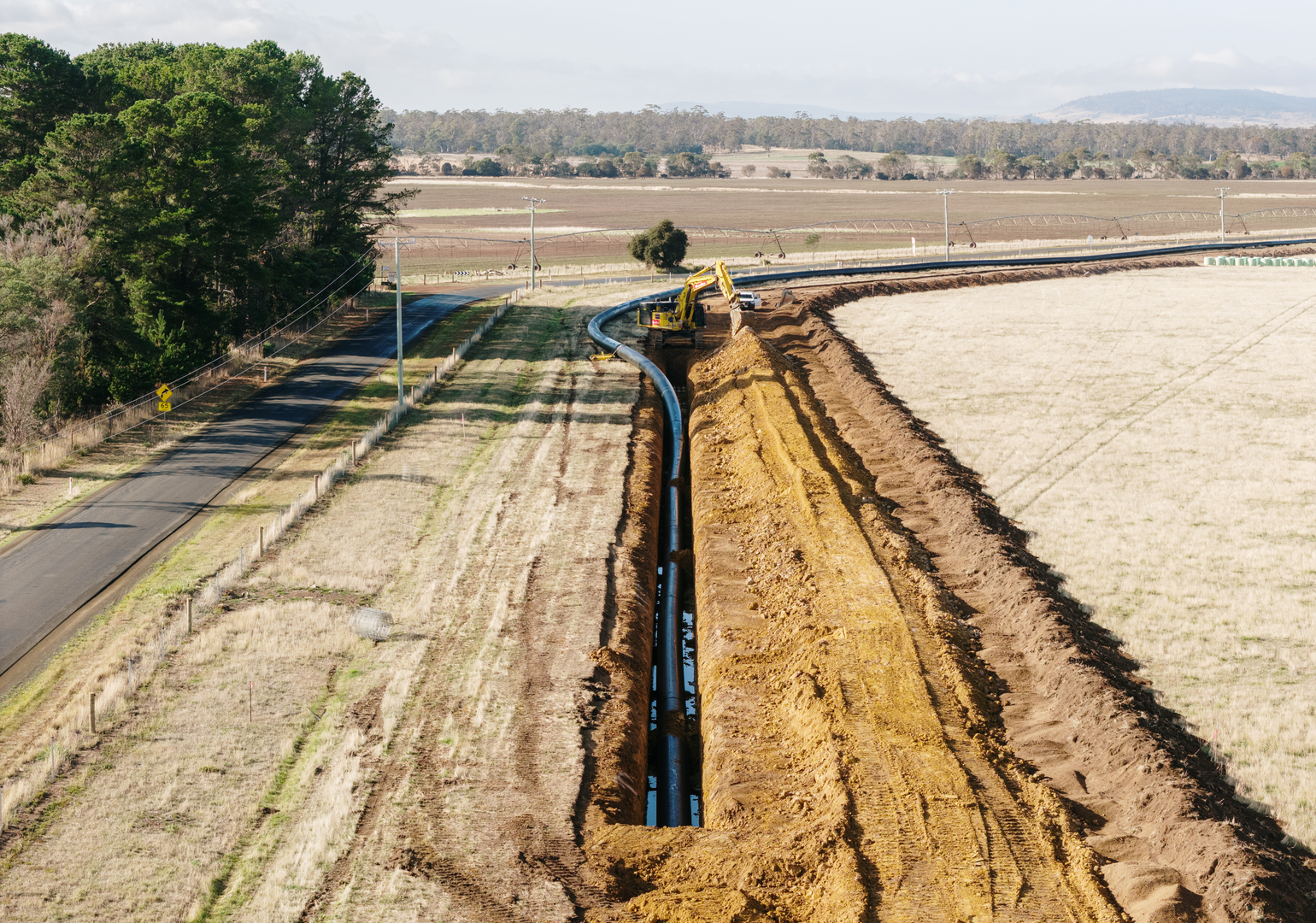
The buffer dam operates almost like a battery, rising and falling in capacity with great speed.
“The dam can be drawn down over a period of 80 hours and refilled in 12,” Tierney said. “If everyone’s using their allocation at maximum demand, this gives us roughly three days of storage for irrigators to have consistent water supply.”
Due to a lack of geotechnical information onsite, the original design was for a high-density polyethylene (HDPE)-lined dam which would double as an impermeable barrier controlling the saturation of underlying material and upstream face stability.
Once the land acquisition was finalised, engineers conducted detailed geotechnical investigations and identified substantial amounts of good-quality clay onsite.
“This meant that we could pivot to a compacted clay-lined (CCL) dam while still achieving the design requirements for the rapid fill and drawdown,” Tierney said.
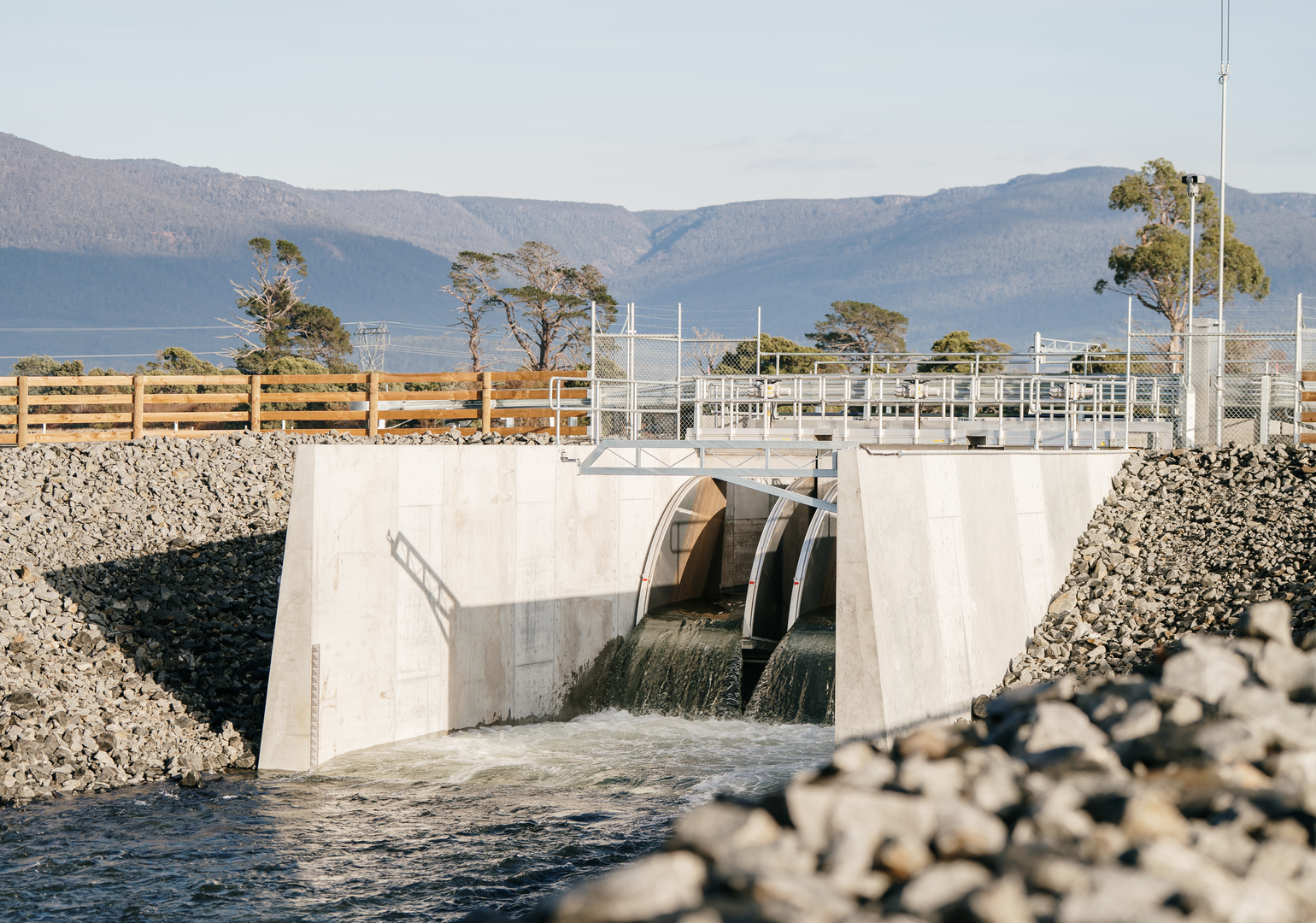
Engineers designed a thick rock layer on top of the clay liner to ensure the stability of the walls wouldn’t be compromised in the rapid filling and drawdown operation.
“That was a significant win for the project. HDP liners only last 20-25 years and the replacement cost of those would have been in the order of $3-4 million every 25 years. This would have added a significant cost to the irrigators.”
The CCL, he said, will provide a design life of more than 100 years.
INFOGRAPHIC: 4 types of dam megastructures (with diagrams)
Milestone success
One of the two balance tanks, located one kilometre downstream of the buffer dam, is 3.5 ML in capacity and is made from a material not usually seen in such structures – stainless steel.
“Originally, it was thought it would be a regular, mild steel epoxy-coated tank,” Tierney said. “But following design reviews, the contractors opted for stainless steel.
“If you think about a 3.5 ML balance tank, about 22 m in diameter and six metres high, that’s not a small structure. Building it out of concrete, we may not have been able to achieve the same design life that we have with stainless steel.
“We believe the stainless steel will last more than 80 years, delivering greater value for irrigators. Whenever we design these schemes, they’re done so with maximum design life in mind, so the maintenance costs are reduced wherever possible.
“If repairs are required, stainless-steel tanks can be repaired quickly and efficiently reducing the duration the tank is out of service.”
It also marks another innovation for Tasmanian Irrigation: “This was probably the first time we’ve ever used that material on such a large scale.”
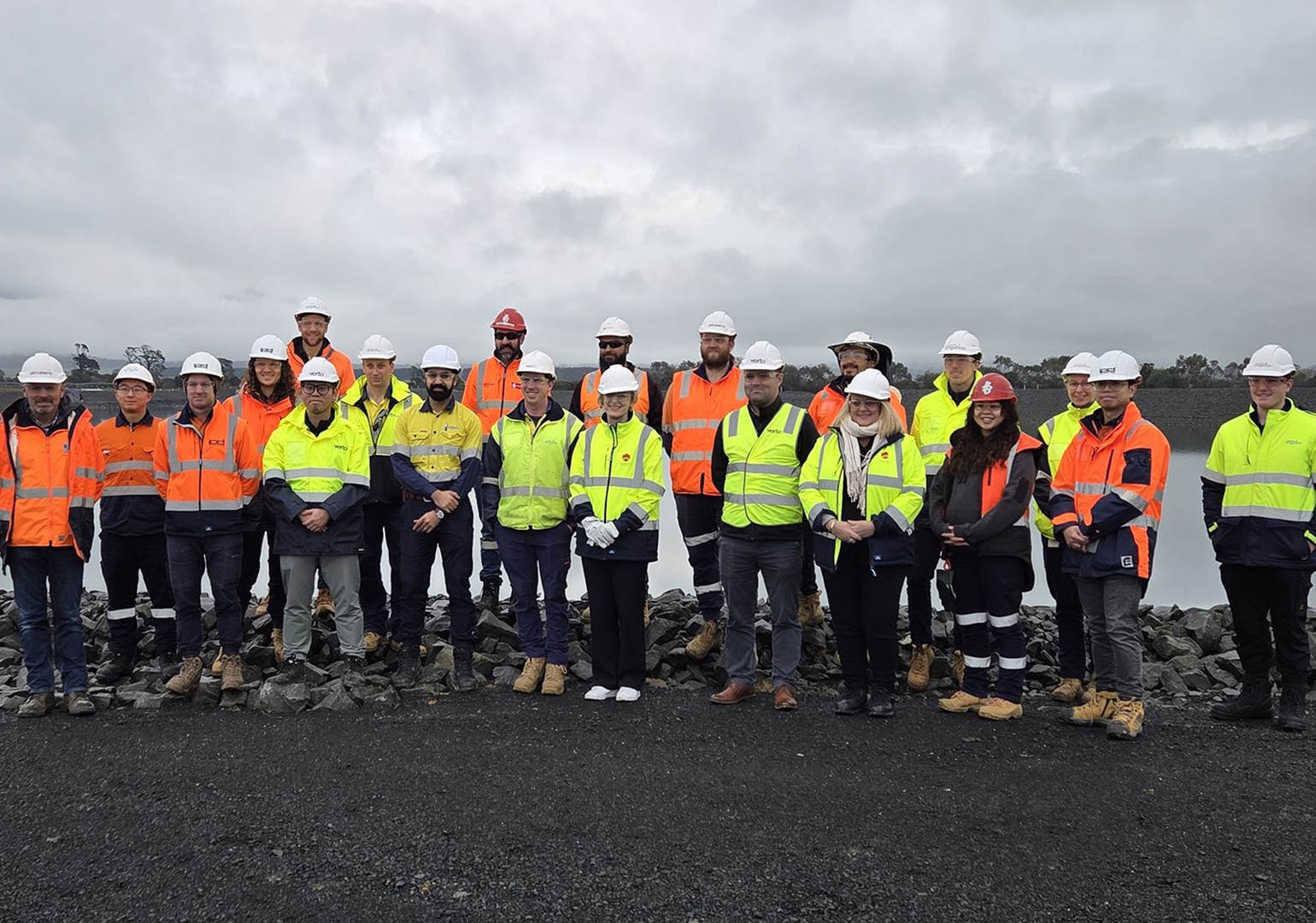
This project signals the role of engineering in creating positive impact in agricultural, energy and infrastructure sectors, according to Engineers Australia Chief Engineer Katherine Richards AM HonFIEAust CPEng EngExec.
“Projects like this underpin regional economic growth while improving resilience in a changing climate,” Richards said.
“This is a story where water where off-flow water which was not being required for the hydroelectricity is redirected, through innovative engineering, to improve the productivity of farms, build better communities and drive economic benefit – all while respecting the environment.
“Engineers Australia wishes the Tasmanian Irrigation team every success.”
Katherine Richards details how to get more young people studying engineering. Hint: it starts with maths.
Problem-solving
Complementing the innovation at play in the dam design and buffer tank material is the use of remotely operated technology. An irrigation scheme of this size is far-reaching.
“Due to the large distances associated with the scheme, to make control of each irrigator’s outlet more efficient, we’ve installed remote control telemetry on those outlets for the first time across an entire scheme,” Tierney said.
“Irrigators can adjust their flow rate by trading with other irrigators in their trading zones. And to increase efficiency, the scheme operator can now adjust those flow rates remotely. They can see water pressures across the network and potential issues in each irrigator’s outlet, which will save time and effort in diagnosing problems.”
Beyond the technical aspects of the project, environmental considerations were a major driver to the project sequencing and delivery. A rigorous EPBC assessment and approval process provided the environmental safeguards for the project with ecological evidence shaping design and construction to reduce impact on sensitive habitats and waterways.
“The presence of eagle nests limited our construction window in their vicinity,” Tierney recalled. “We had to work outside the breeding season, which gave us a six-month window each year to build whatever component was located within that one-kilometre buffer zone.
“The contractor adapted its program to suit and made sure it prioritised those areas as soon as the eagle management constraint period ended. We also undertook pre-clearance checks of frog zones prior to works commencing and made sure that if the construction crew didn’t quite make it to that zone within the required time frame, they were resurveyed.
“It was a challenging process, but it was managed well.”
Tasmanian Irrigation’s Farm Water Access Plans, which every irrigator must have in place, ensure the ongoing minimisation of impact to biodiversity through irrigation operations.
The Northern Midlands Irrigation Scheme is jointly funded by the Australian Government through the National Water Grid Fund ($108.98 million), the Tasmanian Government ($72.26 million) and Tasmanian irrigators ($36.72 million) through water-entitlement purchases.
EVENT: Register for the 44th Hydrology and Water Resources Symposium.